Skip to content
In modern construction, light steel structures are increasingly favored for industrial plants, warehouses, and large-scale facilities due to their lightweight, high strength, and flexibility. One of the most effective design strategies is the integration of crane girders with rigid tie rods, which not only saves material and reduces structural weight, but also enhances overall stability.
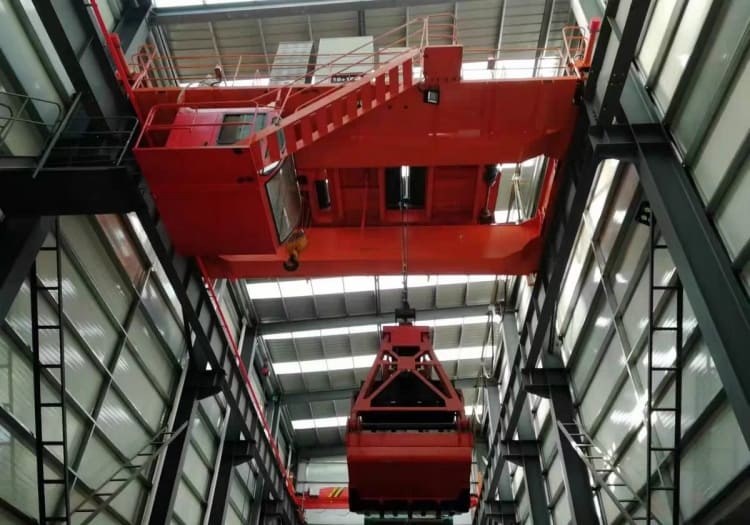
This integrated approach allows crane girders to serve dual purposes: supporting crane operations and acting as longitudinal rigid tie rods in portal rigid frame structures. However, proper design and careful implementation are crucial for safety and performance.
Key Design Requirements for Crane Girders
When crane girders are used as rigid tie rods, several critical requirements must be met:
-
Fire Resistance:
Crane girders must have a fire resistance rating consistent with inter-column bracings. -
Axial Force Consideration:
The axial forces carried by the crane girders should be calculated as part of their function as rigid tie rods. -
Joint Alignment:
To prevent translation or torsion caused by joint misalignment, additional angle braces should be installed to maintain support integrity. -
Support Joint Design:
All connections must comply with structural requirements for bearing axial forces.
Using crane girders as longitudinal tie rods is economical and effective, due to their large cross-section and inherent rigidity. Careful attention to these design aspects ensures structural safety and rationality.
Measures for Crane Girders to Serve as Rigid Tie Rods
1. Side Column Support
-
Cantilever corbels on crane girders help provide lateral support to the inner flange of side columns.
-
Due to crane loads generating lateral bending moments, angle braces must be installed on the upper flange of crane girders and connected to the outer flange of columns.
-
Both ends of each crane girder should have bilateral angle braces to maximize column support.
2. Middle Row Column Support
-
For columns with crane girders on both sides, bilateral angle braces enhance lateral stiffness.
-
Angle braces may cross each other, but can be attached to the upper and lower surfaces of the crane girder flange.
-
Stiffeners on the columns act as connecting plates for the angle braces and should match the crane girder flange thickness.
3. End Span Columns
-
If the crane girder in the end span is not cantilevered, rigid tie rods must be added to ensure structural stability.
4. Construction Stage Considerations
-
Crane girders are often installed later in construction.
-
Temporary measures must maintain stability until crane girders are installed.
-
For facilities with reserved crane positions or long-term absence of crane girders, rigid tie rods are essential to ensure safety.
Benefits of This Integration
-
Material and Cost Efficiency: Reduces the need for extra tie rods and minimizes structural weight.
-
Improved Stability: Angle braces and stiffeners enhance lateral stiffness and resistance to torsion.
-
Dual Functionality: Crane girders act both as crane support and longitudinal tie rods.
-
Flexibility for Large Facilities: Ideal for industrial plants and warehouses with complex crane layouts.
Conclusion
Integrating crane girders with rigid tie rods is a highly effective strategy in light steel structures, providing material savings, reduced weight, and superior stability. By following proper design guidelines—considering axial forces, joint alignment, angle braces, and construction stage requirements—engineers can ensure both safety and efficiency in large-scale industrial and warehouse structures.