Skip to content
Container houses are often seen as affordable, modern, and flexible housing solutions.
But can you actually live in one long-term?
The answer is: Yes — but only under the right conditions.
A container house is not simply a cheaper substitute for traditional housing. It is a modular living solution that works best when lifestyle expectations, design standards, and climate conditions are properly aligned.
Let’s break it down clearly.
1. Is a Container House Comfortable for Long-Term Living?
Comfort is the biggest concern.
Raw shipping containers are not suitable for residential use. However, modern prefabricated container houses are professionally upgraded with:
-
Thermal insulation systems
-
Heat and sound insulation layers
-
Double-glazed windows
-
Moisture-proof treatment
-
Air conditioning or heating systems
When properly configured, comfort can reach a standard comparable to light steel structure housing.

However, space remains compact.
If you prefer large open living areas, you may feel restricted.
If you value minimalist living and efficient design, a container home can feel practical and organized.
2. Can It Meet Daily Living Requirements?
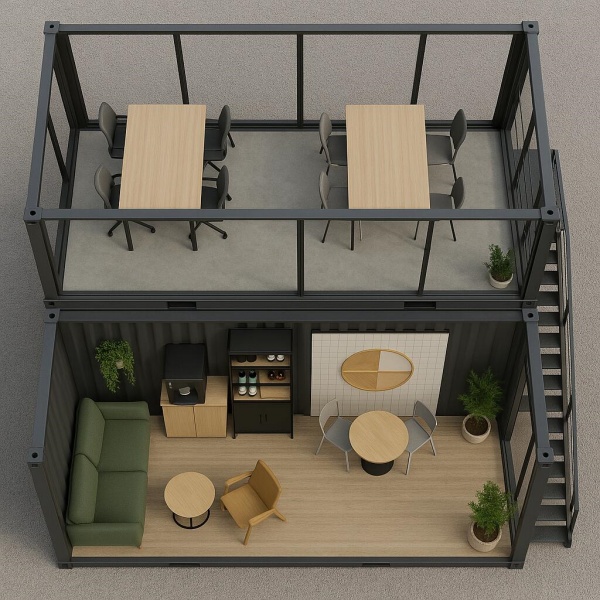
Yes — structurally, container houses can be designed as fully functional residential units, including:
-
Bedroom
-
Bathroom
-
Kitchen
-
Living area
-
Workspace
But long-term comfort depends on detail planning:
-
Is the plumbing system permanent or temporary?
-
Is waterproofing professionally installed?
-
Is the electrical system compliant with residential standards?
-
Is sufficient storage space planned?
Long-term living exposes weak design decisions.
Proper system planning during the design phase is far more important than exterior appearance.
3. Is It Really Cheaper Over Time?
Initial construction costs are typically lower than traditional concrete houses.
However, long-term cost includes:
-
Foundation work
-
Utility connections
-
Insulation upgrades
-
Rust prevention maintenance
-
Energy consumption (cooling & heating)
In hot or cold climates, container homes rely heavily on temperature control systems. Electricity costs may increase if insulation is insufficient.
Short-term: highly cost-effective.
Long-term: cost must be evaluated over the full life cycle.
4. Are Container Houses Safe and Durable?
Shipping containers are structurally strong by design.
But long-term durability depends on:
-
Anti-corrosion treatment
-
Waterproof system quality
-
Fire-resistant materials
-
Construction standards
-
Climate adaptability
In coastal or humid environments, proper anti-rust treatment is critical.
A professionally manufactured container house can remain structurally stable for many years.
Container houses are not inherently unsafe — they are quality-dependent.
5. Who Is Long-Term Container Living Best For?
More Suitable For:
-
Remote project managers
-
Camp operators
-
Minimalist lifestyle followers
-
Vacation home owners
-
Budget-conscious self-builders
Less Suitable For:
-
Large families needing expansive space
-
High-end residential users
-
Urban long-term permanent settlement seekers
Choosing a container house is choosing flexibility and modular living.
6. Should You Choose a Container House for Long-Term Living?
It can be a practical solution if:
-
You clearly define your living expectations
-
The house is designed for long-term use from the beginning
-
You invest in proper insulation and structural upgrades
-
You work with an experienced manufacturer
If a container house is treated simply as a “cheap alternative,” long-term issues will gradually appear.
However, when properly engineered and customized, it can become a stable and efficient living solution.
For example, BST Prefab provides modular and customized container house solutions designed for different lifespan requirements, climate environments, and budget levels. Professional evaluation before construction helps prevent long-term living issues and unexpected costs.
Final Conclusion
Long-term living in a container house is not about whether it is possible.
It is about whether it is properly designed.
With correct insulation, structural planning, and professional manufacturing, container houses can provide:
-
Stable living conditions
-
Controlled construction costs
-
Flexible modular expansion
-
Efficient space utilization
The real key is matching the housing solution to your lifestyle and usage scenario.