Skip to content
If you live in a snowy region, snow load is not just a winter inconvenience — it is a structural design factor that directly impacts building safety and lifespan.
Heavy snow can cause roof deflection, steel fatigue, leaks, and in extreme cases, structural failure. Whether you are planning a new steel building or reinforcing an existing one, understanding snow load requirements is essential.
This guide explains:
-
What snow load is
-
How it affects steel structures
-
How to calculate roof snow load
-
Best roof pitch for heavy snow
-
Practical ways to increase snow load capacity
What Is Snow Load?
Snow load refers to the weight of accumulated snow on a roof surface.
It depends on:
-
Snow depth
-
Snow density
-
Temperature changes
-
Wind exposure
-
Freeze–thaw cycles
Wet snow is significantly heavier than dry snow. Melting and refreezing further increase structural stress.
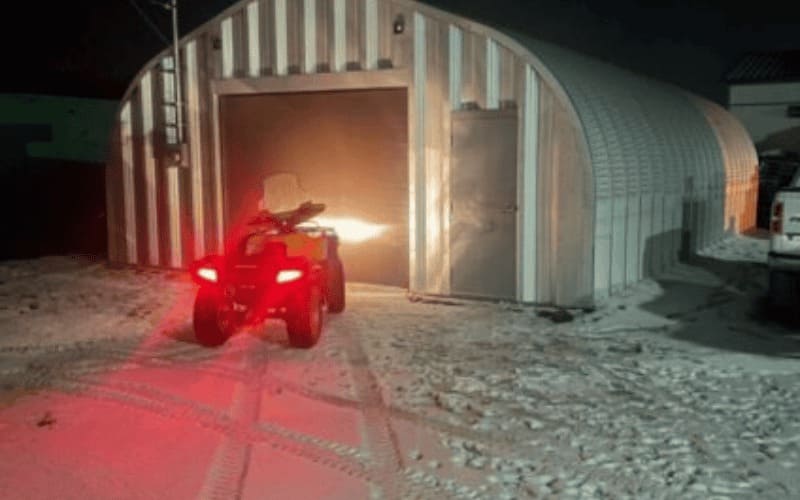
How Snow Load Affects Steel Structures
Your roof carries the primary snow load, making it the most vulnerable component.
Excess snow accumulation can cause:
1. Roof Deflection
Visible sagging under excessive weight.
2. Steel Fatigue
Repeated seasonal loading weakens structural members over time.
3. Reduced Building Lifespan
Long-term stress accelerates material degradation.
4. Uneven Load Redistribution
Snow drifting creates concentrated pressure on weak zones.
5. Increased Maintenance Costs
More frequent inspections and reinforcements become necessary.
Regions such as the Rocky Mountains and the Northeastern U.S. typically require higher snow load standards than milder climates.
How to Calculate Roof Snow Load for Steel Buildings
Accurate calculation is critical for safe steel structure design.
Step 1: Determine Basic Snow Load (S₀)
Formula:
S₀ = γ × d
Where:
-
γ = snow density (kN/m³)
-
d = snow depth (m)
-
S₀ = basic snow load (kN/m²)
Example:
γ = 0.5 kN/m³
d = 0.3 m
S₀ = 0.5 × 0.3 = 0.15 kN/m²
Step 2: Apply Roof Distribution Coefficient (μᵣ)
Roof shape affects accumulation.
-
Flat roof → μᵣ ≈ 1.0
-
Sloped roof → μᵣ ≈ 0.7–0.8
Formula:
Sᵏ = μᵣ × S₀
Example:
μᵣ = 0.8
S₀ = 0.15
Sᵏ = 0.8 × 0.15 = 0.12 kN/m²
This value represents the effective roof snow load.
Step 3: Consider Special Factors
Adjust for:
-
Multi-level roofs
-
Parapets
-
Wind drifting
-
Thermal effects
-
Local building codes
Always verify calculations against regional regulations.
Best Roof Pitch for Heavy Snow
Roof slope plays a major role in snow shedding performance.
Recommended Roof Pitch: 30°–45°
Benefits:
-
Encourages natural snow sliding
-
Reduces accumulation
-
Extends structural lifespan
Low-pitch roofs are more prone to snow buildup. Although steeper roofs may increase construction cost, they significantly reduce long-term maintenance expenses.
For Moderate Snow Regions
Recommended pitch: 15°–25°
This range:
-
Allows effective rain runoff
-
Maintains cost efficiency
-
Provides adequate light snow shedding
Design should balance snow performance with structural complexity.
Steel Structure Metal Carport Snow Load Considerations
Metal carports are cost-effective and durable, but they require proper snow load design.
Without reinforcement, heavy snowfall can cause structural failure.
Key Design Improvements
Reinforced Framing
Add cross-bracing and additional beams to distribute load evenly.
Stronger Materials
Use high-strength structural steel such as:
-
ASTM International A992
-
ASTM International A572
These grades provide higher yield strength and better snow resistance.
Increased Roof Pitch
Minimum 25° recommended in heavy snow areas.
How to Increase Snow Load Capacity
If you are upgrading an existing structure, consider the following strategies:
Structural Reinforcement
-
Add steel trusses or support beams
-
Reduce column spacing (e.g., 3m instead of 5m)
-
Use galvanized steel for corrosion resistance
Design Optimization
-
Increase roof slope to 25°–35°
-
Install heavy-duty snow guards
-
Improve load distribution points
Maintenance Practices
-
Remove snow after heavy accumulation (6+ inches)
-
Conduct post-storm inspections
-
Monitor for bending or cracking
Preventive maintenance significantly reduces long-term repair costs.
Our Expertise in Prefabricated Steel Structures
Snow load is not a seasonal issue — it is a structural design priority.
As a prefabricated steel building manufacturer, we focus on:
-
Region-specific snow load analysis
-
Reinforced framing systems
-
Optimized roof pitch design
-
High-grade structural steel selection
From residential buildings to commercial workshops and metal carports, our engineered solutions meet or exceed regional snow load standards.
If you are building in a snowy region, proper design today prevents costly failures tomorrow.
Conclusion
Snow load directly impacts the safety, durability, and performance of steel structures.
By:
-
Accurately calculating snow load
-
Selecting the correct roof pitch
-
Reinforcing structural components
-
Performing regular maintenance
You ensure long-term structural integrity and lower lifecycle costs.
A well-designed steel building does not fear winter — it is engineered for it.