Skip to content
Capsule houses are changing the way travelers experience glamping. Unlike capsule hotels or sleeping pods, these compact homes offer more living space, stronger privacy, and upgraded comfort. With modern amenities and sustainable materials, capsule houses perfectly match the expectations of today’s eco-minded and design-focused travelers. This article explores why capsule houses have become a superior choice for modern resorts.
1) Space and Privacy Make the Biggest Difference

Capsule houses provide significantly more room compared to traditional sleeping pods. While a sleeping pod may be just large enough for a bed—about 2 cubic meters—a capsule house typically offers 20 to 60 square meters of usable space.
Privacy is another major advantage. Unlike pods, capsule houses come with solid walls, a lockable door, and often a private bathroom. Many models even include outdoor decks or patios, allowing guests to enjoy fresh air or outdoor dining in a personal space.
Overall, these features make capsule houses feel like fully functional mini-homes, not just sleeping units.
2) Premium Amenities Drive Higher Nightly Rates

Modern capsule houses often include premium amenities that elevate the guest experience. Many units feature:
-
Climate control
-
Queen-size beds
-
Kitchenettes
-
Smart-home features such as keyless entry and voice-controlled lighting
Resort owners often take this further by adding special upgrades—hot tubs, panoramic windows, rooftop seating, or stargazing skylights—making the units even more attractive.
Because of these features, owners can charge higher nightly rates, achieve better guest reviews, and secure more year-round bookings. Upgraded capsule homes often deliver a higher occupancy rate compared to simpler glamping units.
3) Plug-and-Play Mobility Fits Any Terrain

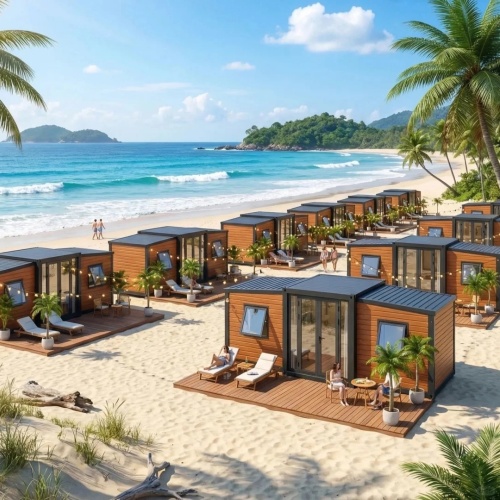
Capsule houses are designed for fast deployment. With a crane, the units can be dropped into place, unfolded, and connected to utilities in just a single day.
Unlike traditional cabins, they don’t require deep foundations, reducing installation time and cost. This flexibility makes capsule houses ideal for a variety of terrain:
-
Beaches
-
Forests
-
Mountain slopes
-
Remote campsites
Resorts can also relocate units seasonally, rearrange layouts, or simply add more houses as demand grows.
Real Example:
A resort in Canada installs capsule houses during summer and removes them before winter snowfalls, protecting the structures and extending their lifespan.
4) Lower Operating Costs and Faster ROI
Capsule houses arrive about 95% factory-completed, meaning very little construction is needed on-site. Most units can be installed within 1–2 days, compared to weeks or months for regular cabins.
Since each unit is private and self-contained, resorts save on:
-
Cleaning staff
-
Repair work
-
Shared-facility maintenance
A 2024 GlampTech Australia report found that capsule units reduced annual maintenance costs by 32% compared to standard glamping tents and pods.
Real Example:
A beachfront eco-resort in Byron Bay replaced ten aging cabins with capsule houses. Installation was completed in five days, and the resort achieved full ROI in just 13 months, while lowering monthly operating costs by more than 25%.
5) Instagram-Ready Design Fuels Free Marketing
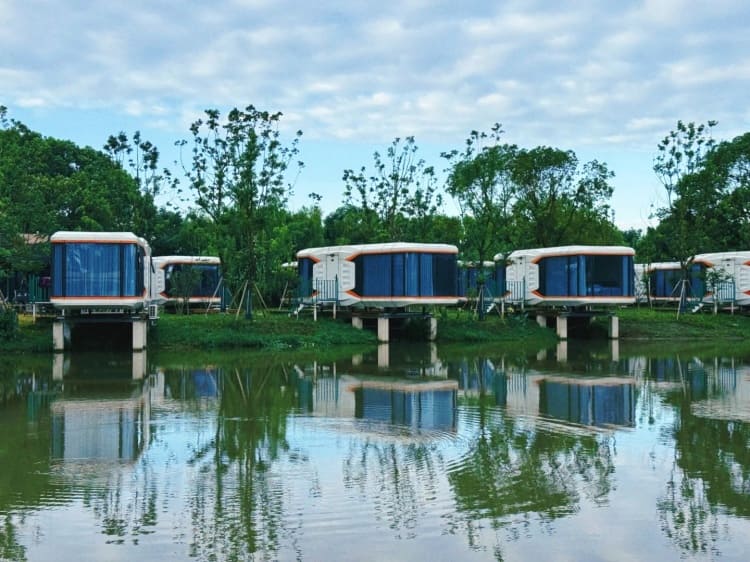
Capsule houses stand out visually with:
-
Curved glass façades
-
Dome-style roofs
-
Clean modern lines
-
Expandable side wings
These elements naturally inspire guests to take photos and share them on Instagram, TikTok, and Facebook—essentially providing free marketing.
A single viral post from a travel influencer can attract thousands of potential guests, reducing the need for paid ads.
Real Example:
In 2024, a boutique eco-resort in Ubud, Bali installed six capsule houses with rooftop hammocks.
Guests posted more than 300 tagged photos within two weeks, helping the resort gain 2,000 followers without spending on advertising.
6) Sustainability Credentials Attract Eco-Focused Travelers
Capsule houses are increasingly used in eco-tourism thanks to their strong sustainability features.
They often include:
-
Recycled steel frames
-
Precision factory construction with up to 60% less waste
-
Solar panels
-
Grey-water recycling systems
-
High-performance insulation
These features reduce energy use, save water, and lower the carbon footprint—making them ideal for environmentally responsible resorts.
Real Example:
In 2023, a glamping site in Queenstown, New Zealand installed solar-powered capsule houses with composting toilets.
The resort earned eco-certification and saw a 35% increase in bookings within six months.
Conclusion
Capsule houses offer a unique blend of space, privacy, luxury amenities, mobility, and sustainability—qualities that traditional glamping tents or pods often lack. Their fast installation, lower operating costs, and Instagram-ready designs provide resorts with a strong competitive advantage.
For modern destinations looking to scale profitably while meeting traveler expectations, capsule houses stand out as one of the smartest investments in today’s glamping industry.