Shipping a portable home overseas involves long distances, changing climates, and heavy handling.
While most people focus on price or container type, few pay attention to risk prevention—the part that determines whether your portable home arrives safely or arrives damaged.
This guide explains how to protect your portable house with proper packaging, moisture control, insurance, and risk-management strategies.
1. Use Professional Export-Grade Packaging
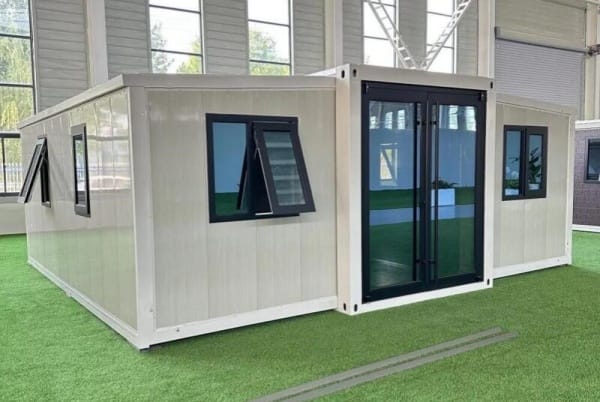
Proper packaging can reduce damage risks by more than 70%. A portable home includes metal frames, wall panels, electrical systems, glass, and interior fixtures—each requiring different protection.
✔ Best Packaging Practices
Galvanized steel frames → wrap with foam + corner protectors
Glass windows/doors → use wooden crates + shock sensors
Wall panels → stack evenly with rubber separators
Interior fixtures → pack in reinforced cartons
Exterior edges → use anti-collision padding
Real Example
A company shipping foldable houses to Canada added anti-collision foam to all module edges. During unloading, a crane swing hit the side, but the foam absorbed the impact—saving $2,000 in repairs.
2. Control Moisture to Prevent Mold and Rust
Sea journeys expose your shipping container to humidity changes and condensation—known as “container rain.” This can damage insulation, floors, and steel frames.
✔ Moisture Protection Checklist
Add 10–20 desiccant packs per 40HQ container
Use waterproof plastic membrane around wood materials
Seal all electrical components
Ventilate wooden crates
Inspect for humidity before sealing the container
Example
A builder shipping to Malaysia found moisture damage on laminated panels. After switching to waterproof film + desiccants, their next shipment arrived perfectly.
3. Inspect and Photograph Every Step Before Loading
Inspection records are essential for claims, insurance, and quality control.
✔ Take Photos At
Pre-packing stage
Palletizing stage
Container interior (empty condition)
Loading progress
Final sealed container with seal number
Why This Matters
If any item is damaged during transport, photos prove the supplier packed it correctly—and insurance companies rely on this evidence.
4. Secure Everything Inside the Container
Movement at sea is unavoidable. Without proper securing, even heavy modules can shift.
✔ Use the Right Securing Materials
Steel straps
Wooden blocks
Ratchet belts
Anti-slip mats
Plywood braces
Edge protectors
Example
A company shipping modular office units to Chile used only belts without floor bracing. Rough sea movement shifted the modules, bending the side frames. Cost of repairs: $3,300.
5. Buy the Right Marine Insurance (Not Just Basic Coverage)
Many buyers choose the cheapest insurance—but this often excludes the most common causes of damage.
✔ Choose “All Risk” Coverage When Possible
It typically includes:
Water damage
Loading/unloading damage
Storm impact
Loss overboard
Container collision
Mishandling
Avoid “Free of Particular Average (FPA)” unless the shipment has very low value. It covers almost nothing.
Example
A customer shipping 3 expandable homes to Panama bought full-value marine insurance for $220. The shipment suffered crane impact damage—insurance reimbursed the full repair cost.
6. Add Shock, Tilt, and Humidity Indicators
These small indicators attach directly to cartons, crates, or steel frames. They record whether the shipment is dropped, tilted, or exposed to moisture.
【Image Placeholder – Shock & Tilt Indicators】
✔ Benefits
Discourages careless handling
Helps identify responsibility if damage occurs
Supports insurance claims
Ensures better treatment during loading/unloading
Example
A tiny home manufacturer added tilt indicators. When a shipment arrived with a red signal (over-tilt), the forwarder accepted responsibility and compensated $1,100 for damaged appliances.
7. Apply Smart Labeling for Faster, Safer Handling
Good labeling prevents confusion and mishandling during transshipment.
✔ Recommended Labels
“Fragile – Glass”
“This Side Up”
“Do Not Stack”
“Forklift Entry Here”
“Center of Gravity”
Pro Tip
Use QR codes linking to:
assembly instructions
handling requirements
interior layout images
inspection checklist
This reduces handling errors dramatically.
Conclusion
Protecting your portable home during overseas shipping is just as important as choosing the right container or route. With proper packaging, moisture control, securing methods, photos, insurance, and smart labeling, you can prevent damage and avoid unexpected costs.
A well-protected shipment ensures your portable home arrives safely—ready for installation without delays or extra repairs.