Both formats offer hospitality value — but only one offers the speed, pricing power, and flexibility that modern resort developers demand. Here’s the honest comparison.
When resort developers and scenic area operators evaluate their accommodation options, they typically face a binary choice: invest in permanent structures like log cabins or hotel blocks, or explore modular alternatives like capsule houses and glamping pods. This article breaks down the real-world differences across every dimension that matters to B2B buyers.
Construction & Deployment
Traditional cabins
A traditional resort cabin requires site preparation, foundation work, utilities installation, and construction — typically spanning 8 to 18 months depending on location and regulatory environment. In remote scenic areas, logistics costs alone can add 20–35% to the base build cost. The result is a fixed, permanent structure with a 30–50-year lifecycle.
Capsule houses
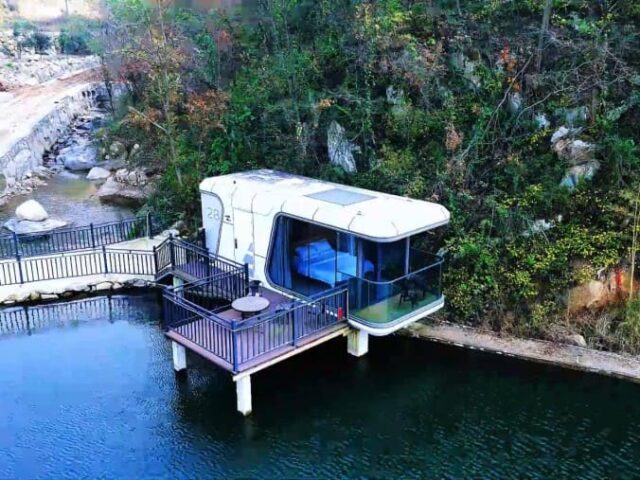
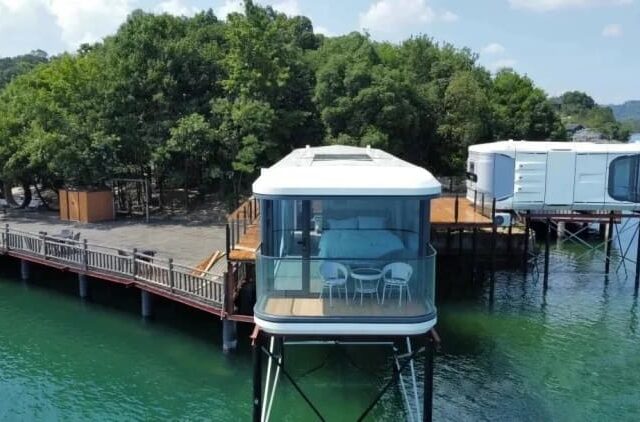
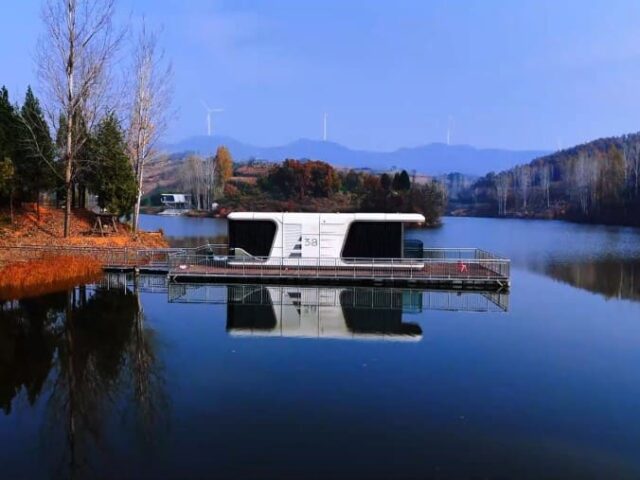
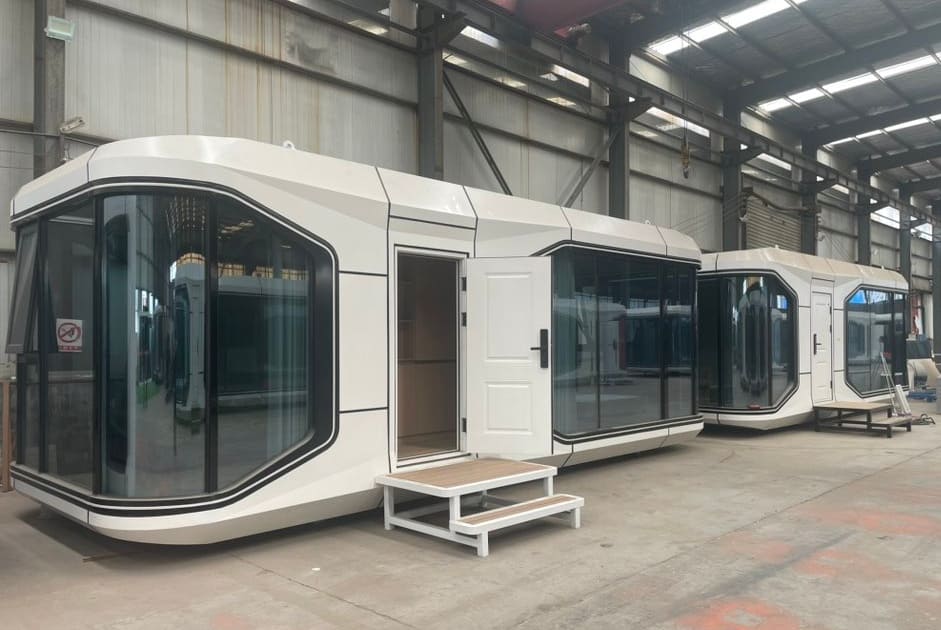
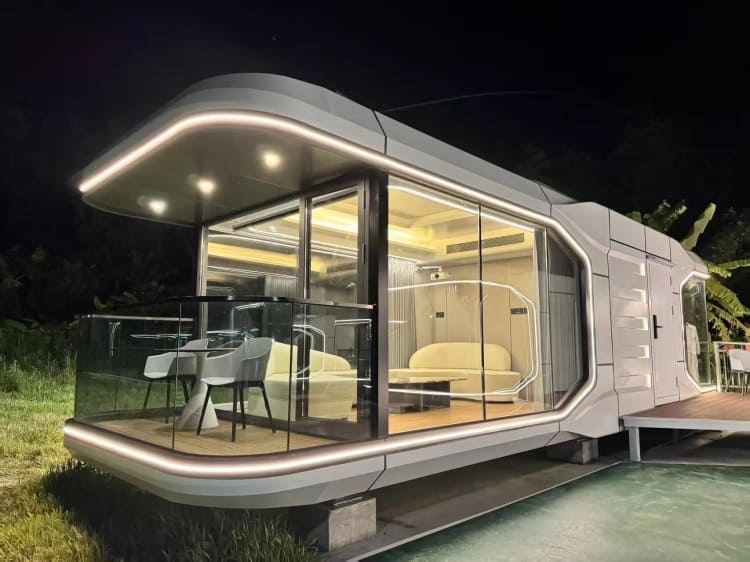
Capsule houses arrive as factory-finished units. Site preparation involves a platform or minimal anchor system, utilities connection, and landscaping. Total deployment time: 4 to 12 weeks. In many jurisdictions, capsule houses qualify as temporary structures, significantly reducing planning permission complexity and time.
B2B advantage:A 10-pod capsule house installation can be operational in the same season you place your order. A comparable traditional cabin cluster typically won’t welcome guests for 18–24 months.
Capital Expenditure
Cost comparisons must account for the full deployment cost, not just the unit price:
- Traditional cabin (fully fitted, 40 m²): $120,000–$350,000 per unit including build, fit-out, and utilities connection
- Capsule house pod (premium, 15 m²): $25,000–$70,000 per unit including manufacturing, shipping, installation, and connection
The lower capex per capsule unit means operators can deploy more inventory for the same budget, increasing total capacity and distributing occupancy risk across a larger unit portfolio.
Guest Experience & Pricing Power
This is where capsule houses genuinely surprise first-time buyers. The intuitive assumption is that a larger, more permanent structure commands higher rates. In scenic hospitality, the opposite is often true.
Capsule houses derive their pricing power from:
- Scarcity and novelty — there are still relatively few quality pod installations globally, and guests treat them as bucket-list experiences
- Social shareability — the visual drama of a pod in a scenic setting generates organic social media content that drives bookings at zero acquisition cost
- Intimacy with nature — the transparent or panoramic design of most capsule houses delivers an immersive connection with the landscape that no traditional cabin can replicate
Feature-by-Feature Comparison
| Feature | Traditional Cabin | Capsule House |
|---|---|---|
| Deployment speed | 8–18 months | 4–12 weeks |
| Capex per unit | $120K–$350K | $25K–$70K |
| Planning permission complexity | High | Low–Medium |
| Guest Instagram/social appeal | Moderate | Very High |
| Nightly rate premium (scenic) | Standard | 30–100% above standard |
| Environmental footprint | High | Low |
| Relocatability | None | Yes (modular) |
| Long-term structural permanence | High (30–50 yr) | Medium (15–25 yr) |
| Suitable for protected land | Often not | Usually yes |
When Traditional Cabins Still Make Sense
We’re not arguing that capsule houses are always the right choice. Traditional cabins remain preferable when:
- The development is a permanent flagship resort requiring multi-decade infrastructure
- Local climate conditions (extreme cold, heavy snowfall) make pod maintenance challenging
- Guest segments strongly prefer larger family-format accommodation
- Brand positioning demands a traditional architectural aesthetic
For most scenic area operators and resort developers exploring new revenue streams, however, capsule houses offer a faster, more capital-efficient, and higher-yielding entry point into the premium short-stay accommodation market.
Compare options for your specific project
Tell us about your site, your budget, and your guest target — our team will recommend the optimal capsule house configuration and provide a detailed specification sheet.