Have you ever wondered how electricity runs inside a modular home?
Every light, switch, and socket works through a carefully planned electrical fitting system that delivers power safely and reliably throughout the house.
From capsule houses to container homes, modular buildings rely on the same core electrical principles as traditional houses—just designed for factory production and fast installation. This guide explains how electrical fitting works, what components are included, safety standards, and what buyers should check before ordering.
1. Definition and Scope of Electrical Fitting
Electrical fitting refers to the complete system that brings electricity into a home and distributes it safely to every room. This includes wiring, switches, sockets, lighting, protection devices, and grounding.
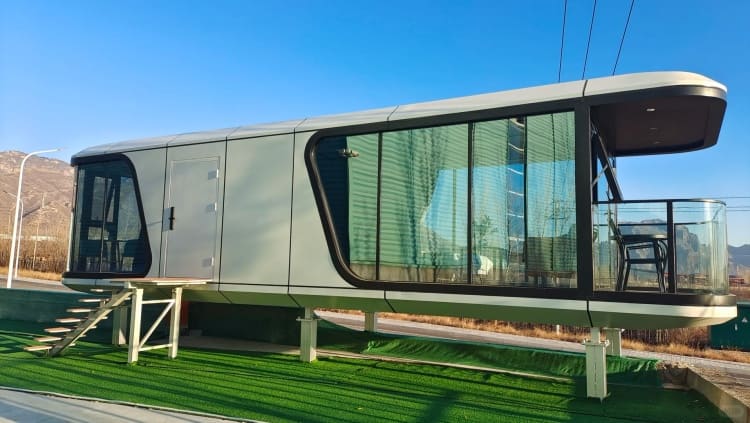
In modular housing—such as capsule houses, container homes, and dome houses—the principles are the same as conventional buildings. The difference is where and how the system is installed.
Most modular homes are built in factories, where:
Electrical wiring is pre-installed inside walls and ceilings
Distribution boards and protection devices are mounted
Circuits are tested before delivery
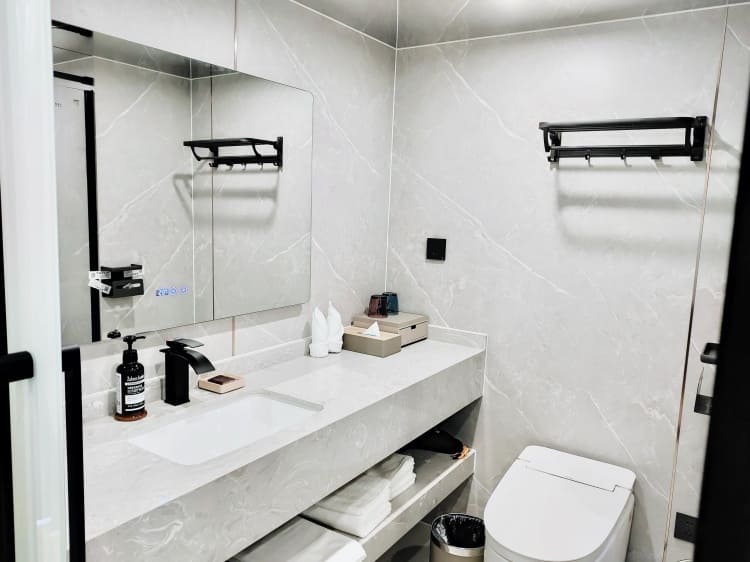
Once delivered on-site, a licensed electrician connects the home to the local power supply. This final step is known as the on-site electrical tie-in.
In simple terms, electrical fitting covers:
Entry: Where power enters the house
Protection: Devices that prevent shock and overload
Distribution: How power is routed to rooms
Endpoints: Switches, sockets, and lights
2. Core Electrical Components You Should Expect
i) Utility Inlet and Isolator
The utility inlet is the point where electricity enters the home from the grid or generator. It includes:
A sealed cable entry to block dust and water
A lockable isolator switch for safe shutdown during maintenance
ii) Main Distribution Board (DB)
The distribution board acts as the control center of the electrical system.
It contains:
Circuit breakers for lights, sockets, and appliances
RCDs, RCBOs, or GFCIs for shock protection
Clear circuit labeling
Spare capacity for future expansion
iii) Earthing and Bonding System
Earthing safely directs fault current into the ground. Bonding connects all metal parts to the same electrical potential, reducing shock risk.
A proper system includes:
Earth bars
Clearly accessible bonding points
Secure connections tested before handover
iv) Wiring System
All internal wiring is typically copper, chosen for durability and conductivity.
Key features include:
Correct cable sizing based on load
Wires routed through protective conduits
Clearly labeled junction boxes
This ensures long-term safety and easy maintenance.
v) Endpoints: Switches, Sockets, and Lights
Endpoints are where users interact with electricity.
Features often include:
Standard indoor switches and sockets
IP-rated outdoor fixtures for weather resistance
Pre-installed lighting in most models
vi) Surge and Overvoltage Protection
Surge Protection Devices (SPDs) protect the home from:
Lightning strikes
Grid voltage spikes
They are usually installed near the main distribution board to safeguard sensitive electronics.
3. Electrical Specifications by Usage Scenario
i) Voltage and Plug Standards
Electrical systems must match local standards:
230V / 50Hz (Europe, Asia, many regions)
120V / 60Hz (USA and Canada)
Matching voltage and plug type ensures safety and appliance compatibility.
ii) Circuit Sizing
Different circuits require different wire sizes:
Lighting circuits use smaller cables
Socket and appliance circuits require thicker cables
This prevents overheating and ensures stable power delivery.
iii) Outdoor and Wet Area Protection
Bathrooms, balconies, and outdoor areas require:
RCD or GFCI protection
IP-rated enclosures (e.g., IP65)
These features prevent electric shock in wet environments.
iv) Solar and Backup Power Integration
Modern modular homes can be pre-configured for:
Solar panels
Inverters and battery storage
Generator inputs with automatic transfer switches (ATS)
This improves energy resilience and sustainability.
v) Future Expansion Planning
Well-designed systems include:
Spare breaker slots
Extra conduit capacity
This allows easy upgrades for air conditioners, heaters, or EV chargers later.
4. Safety and Compliance Essentials
i) Personal Protection
RCDs, RCBOs, and GFCIs instantly cut power when faults occur, protecting occupants from electric shock.
ii) Equipment Protection
SPDs protect appliances and electronics from voltage surges. Status indicators allow quick checks of functionality.
iii) Environmental Protection
Electrical components are housed in enclosures rated for dust, water, and heat resistance—especially important for outdoor installations.
iv) Verification and Handover
Before handover, electricians perform:
Continuity and insulation tests
Breaker and RCD testing
Buyers should receive:
Single-Line Diagram (SLD)
Load schedule
Electrical test reports
v) Compliance with Local Codes
All systems must comply with local electrical standards and regulations. Compliance ensures safety, legality, and insurance acceptance.
5. Buyer Checklist Before Ordering
Before confirming a modular home order, verify the following:
Rated utility inlet and lockable isolator
Main distribution board with labeled breakers and RCD/RCBO protection
Proper earthing and bonding system
Copper wiring inside protective conduits
IP-rated outdoor fixtures and surge protection
Complete handover documentation (SLD, load schedule, test reports)
A complete electrical package ensures safety, easy maintenance, and long-term reliability.
Final Summary
Electrical fitting is the backbone of a safe and functional modular home. From the power inlet to the last socket, every component must be carefully designed, installed, and tested.
A well-executed electrical system ensures safety, compliance, future flexibility, and peace of mind—whether the home is a capsule house, container home, or other modular structure.
Before buying a modular home, make sure its electrical system is complete, safe, and future-ready. So, here at BST we provide homes with fully safe, code-compliant electrical systems. So, contact us today and start your journey.