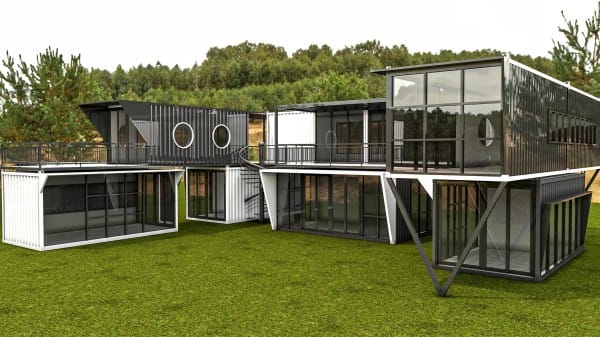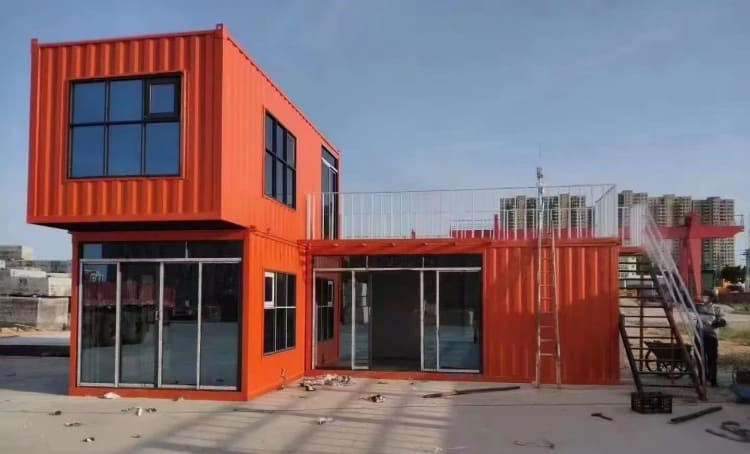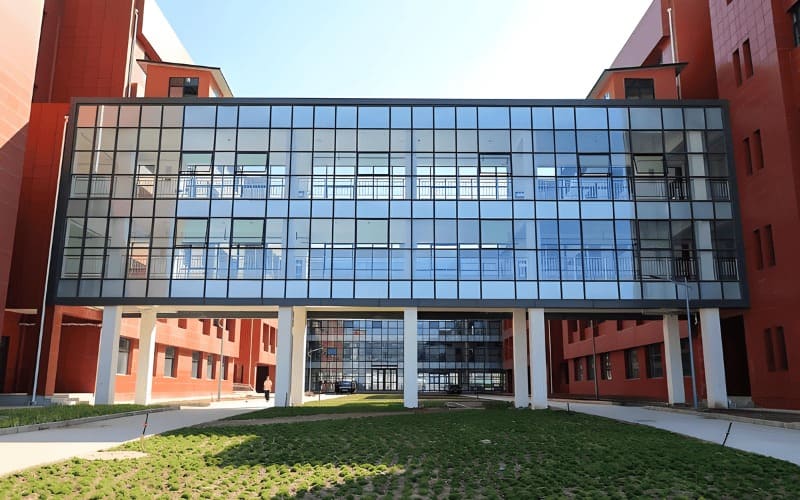
In the homestay and short-term accommodation market, a clear trend is emerging:
More investors are turning to high-end container houses with upgraded designs and luxury configurations.
This shift is not driven by a single factor. It results from a combination of:
Rising construction costs
Project cycle pressure
Capital utilization efficiency
Demand for differentiated accommodation products
Compared to traditional construction, container-based modular accommodation changes the investment logic — especially in terms of time, cost control, and scalability.
Faster Project Delivery = Faster Revenue
Under traditional construction methods, a boutique homestay project typically requires:
Design phase
Structural construction
Interior decoration
Water & electrical installation
Approval procedures
The full cycle often takes 6–12 months or longer.
By contrast, modular container houses can compress the overall delivery time to 4–10 weeks (excluding complex site development).
For commercial accommodation projects, time is capital.
Delayed operation directly means delayed revenue.
Advantages of Initial Investment in Container Homestays
1. More Predictable Costs
Budget overruns are common in traditional homestay construction due to:
Labor cost fluctuations
Material price changes
Design modifications
Container houses are prefabricated in factories. Most structural work and interior finishing are completed during production, leading to more stable cost control.
Typical International Cost Reference
Standard accommodation unit (basic configuration):
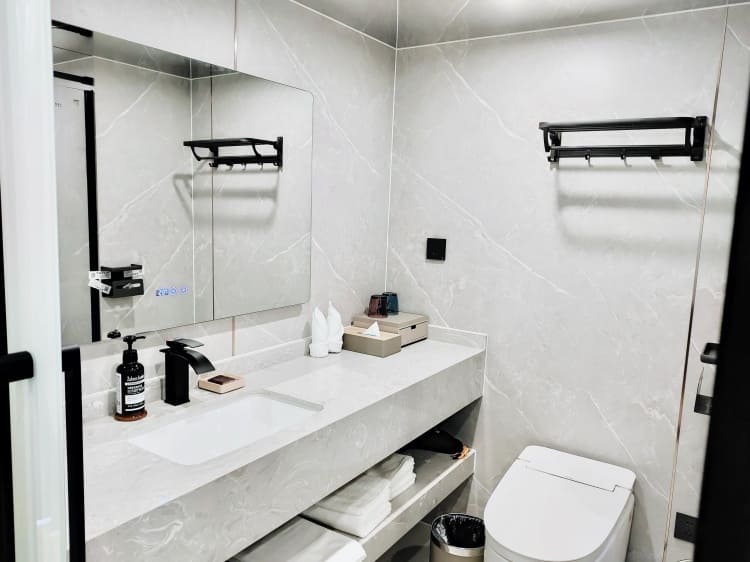
USD $15,000 – $30,000Luxury configuration unit (independent bathroom, insulation system, customized interior):
USD $30,000 – $60,000
Cost differences mainly depend on:
Insulation system (year-round usability)
Interior decoration standards
Door, window, and equipment configuration
Although luxury modules are more expensive, their cost fluctuations are relatively controlled. This makes financial modeling more reliable for investors.
2. Simplified Infrastructure Investment
Traditional buildings often require full foundation systems, accounting for 20%–35% of total project cost.
Container houses can use:
Lightweight foundations
Point-supported structures
Elevated installation systems
In suitable terrains, foundation costs typically account for 10%–20% of total investment.
This is especially advantageous in:
Scenic areas
Farms
Resort camps
Remote tourism destinations
However, complex geology or coastal environments still require professional engineering solutions.
Cash Flow Advantages from Shorter Construction Cycles
1. Earlier Entry into Operation
Assume:
Total investment: USD $1 million
Traditional construction cycle: 12 months
Revenue is delayed for a full year.
If modular deployment is completed within 2–3 months, cash flow may begin 9 months earlier.
In hospitality, earlier opening is often more valuable than minor cost savings because fixed costs (land, management, interest) continue regardless of revenue.
2. Impact on Return Cycle
Example industry averages:
Average room rate: USD $80–$120 per night
Average annual occupancy: 55%–65%
Estimated annual revenue per unit: USD $16,000–$28,000
In many real-world cases, container homestay projects achieve a 2–4 year payback period, while traditional self-built homestays often require 4–6 years or longer.
The key difference is not just construction cost — it is capital turnover speed.
Operational Advantages of Container Homestays
1. Scalable Risk Control
Traditional property development often requires full-scale completion before operation.
Modular projects allow phased deployment:
Start with 5 units
Expand based on occupancy performance
This reduces demand forecasting risk and avoids “all-in” capital pressure.
2. Lower Lifecycle Maintenance Costs
Long-term accommodation projects require continuous maintenance.
Modular container units offer:
Component standardization
Easier partial upgrades
Unit-by-unit renovation
Compared to traditional buildings:
Renovation cycles: 5–8 years
Modular partial update costs: typically 30%–50% lower
Maintenance can be conducted without fully interrupting operations — critical for cash-flow-sensitive projects.
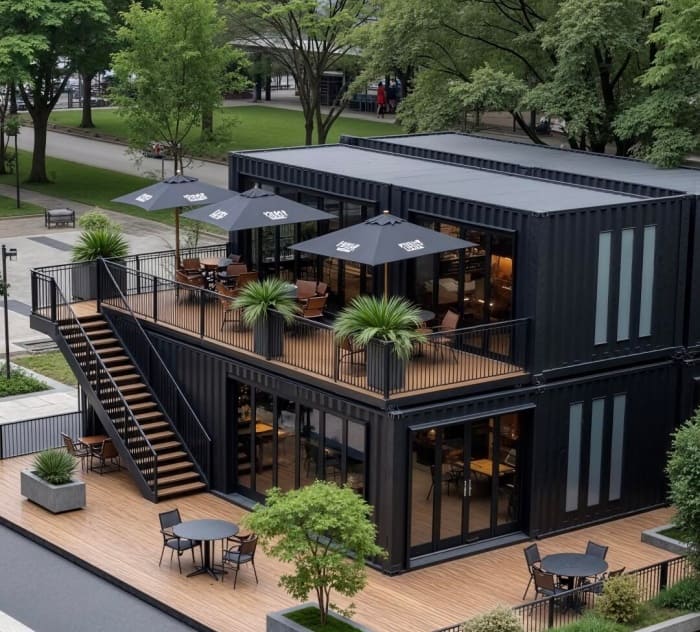
Premium Pricing Potential of Luxury Container Homes
In today’s hospitality market, design directly influences pricing power.
Accommodation products with:
Unique architectural style
Strong visual identity
Landscape integration
Large glass windows and natural light
Often command 20%–40% price premiums over standard room types.
Guests are paying not only for space — but for experience, aesthetics, and shareability.
Luxury container homes naturally align with experience-driven tourism and social media marketing trends.
Overall ROI Structure
For small-to-medium projects (5–10 units, mid-to-high-end positioning):
Construction cycle: 1–3 months
Ramp-up period: 3–6 months
Stable operation stage: within 6–12 months
With reasonable occupancy and pricing assumptions, industry observation shows:
Investment recovery period: 24–48 months (2–4 years)
Advantages compared to traditional construction:
Shorter capital lock-up period
Phased modular expansion
Strong product differentiation
Important note: Market rules still apply.
Site selection, demand analysis, and operational capability remain decisive.
Container architecture optimizes cost and timing models — not market fundamentals.
Suitable Investors and Scenarios
Container homestays are not suitable for every project, but they perform well in specific environments.
1. Scenic and Tourist Destinations
In natural landscapes or resort areas, traditional buildings often face:
Long approval processes
Environmental restrictions
Construction limitations
Modular container solutions offer faster deployment and lower site intervention.
2. Light-Asset or First-Time Investors
For investors entering the hospitality industry, market uncertainty is high.
Container homes allow:
Gradual expansion
Lower initial risk
Flexible exit strategy
This represents a more conservative investment approach.
3. Campgrounds, Farms, and Resort Projects
Experiential tourism favors:
Unique designs
Themed accommodation
Nature-integrated architecture
Container houses adapt well to these needs.
4. Brand-Focused Projects
In a highly competitive accommodation market, visual differentiation drives marketing efficiency.
Container homestays with strong design identity often gain:
Higher visibility
Better online exposure
Stronger brand storytelling potential
Professional Manufacturing Support
To maximize investment returns, working with an experienced manufacturer is critical.
For example, BST Prefab provides modular and customized container house solutions tailored to project lifecycle, climate conditions, and positioning strategy. Professional configuration planning helps investors evaluate feasibility and long-term return structure before deployment.
Conclusion
Luxury container homestays are not simply a low-cost alternative to traditional buildings.
They represent:
Faster capital turnover
Predictable cost structures
Scalable investment models
Premium experiential positioning
For investors focused on efficiency, flexibility, and differentiated market appeal, container-based modular accommodation can offer significant strategic advantages.
However, ultimate profitability still depends on:
Location
Market demand
Operational capability
Brand positioning
When properly planned, container homestays can become a high-efficiency, experience-driven hospitality investment model.