Building a capsule house is exciting — until you meet zoning laws, permits, and compliance codes. Each country has its own language when it comes to construction laws. Understanding them early can save you time, money, and stress.
In this article, we’ll break down how the USA, Australia, and the European Union (EU) regulate capsule houses — and how you can easily comply.
1️⃣ Why Understanding Building Codes Matters
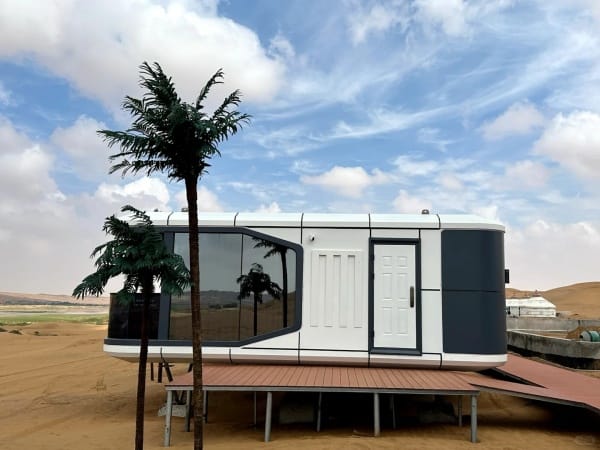
If you’re planning to export, import, or build capsule houses internationally, it’s not only about cost and design — it’s also about legal compliance.
i) Smooth Customs Clearance
Meeting code requirements simplifies customs checks, reduces paperwork, and speeds up product approval.
ii) Avoid Delays and Penalties
Ignoring codes can result in denied shipments, fines, or mandatory redesigns before approval.
iii) Ensure Structural Safety
Capsule houses must meet fire, ventilation, and structural standards to protect occupants.
iv) Build Trust and Credibility
Compliance signals professionalism and quality — helping your brand gain trust in every market.
2️⃣ European Union (EU) Building Codes
The European Union enforces some of the world’s strictest building standards, ensuring safety, sustainability, and energy efficiency.
i) Structural Standards (Eurocodes EN 1990–1999)
Capsule houses must meet Eurocode requirements covering:
Load-bearing capacity (people, furniture, snow, and rainfall)
Wind load resistance for storm-prone regions
Snow load support to prevent roof damage in cold climates
ii) Fire Safety (EN 13501)
Building materials must resist fire for 30–60 minutes
Smoke detectors are mandatory in every living unit
Each capsule must include an accessible fire escape route
iii) Energy Efficiency (Directive 2010/31/EU)
Insulation must meet U-value limits to minimize heat loss
Use energy-efficient lighting, appliances, and water-saving fixtures
Integrate sustainable materials like recycled wood and low-VOC paints
| Regulation Area | Key Standard | Capsule House Requirement |
|---|---|---|
| Structural Strength | EN 1990–1999 | Load, wind, snow resistance |
| Fire Safety | EN 13501 | 30–60 min fire resistance |
| Energy Efficiency | Directive 2010/31/EU | Insulation & eco materials |
3️⃣ United States Building Codes
The U.S. has no single national code — each state adjusts the main standards. Understanding the most common ones helps ensure compliance.
i) Structural & Safety (IBC & IRC)
IBC (Commercial Use): Structural integrity, wind and seismic safety, and one-hour fire ratings.
IRC (Residential Use): Simplified rules for small homes, including Appendix Q for tiny houses (<400 sq ft).
Key IRC features:
Loft sleeping areas allowed with ladders
Minimum room sizes for kitchen, bath, and bedroom
At least one escape window for safety
ii) Fire Safety (NFPA Standards)
Smoke detectors in sleeping areas and exits
Fireproof doors and materials required
At least one full-size exit door (32 inches)
iii) Energy Efficiency (IECC & LEED)
Capsule houses must follow IECC insulation levels:
Walls: R-13–R-21
Roof: R-30–R-49
Floors: R-19 (if raised)
Energy-saving programs like Energy Star and LEED for Homes reward:
Solar panels
Water-efficient plumbing
Low-VOC finishes
4️⃣ Australian Building Codes
Australia’s codes emphasize durability, bushfire safety, and climate efficiency.
i) Structural Standards (AS 1170 Series)
Covers live loads, dead loads, and environmental loads (wind, snow, earthquakes).
Wind & Cyclone Resistance (AS/NZS 1170.2)
Ensures anchorage and bracing
Special cyclone-resistant design required in northern regions
ii) Fire Safety (AS 3959)
Follows Bushfire Attack Levels (BAL) for risk zones
Requires fire-resistant roofs and cladding
Mandatory smoke alarms and escape windows
iii) Energy Efficiency (NatHERS)
Homes must achieve a 6-star minimum energy rating.
| Regulation Focus | Key Code | Capsule House Requirement |
|---|---|---|
| Structure | AS 1170 | Withstand loads & weather |
| Fire Protection | AS 3959 | Bushfire-resistant materials |
| Energy Rating | NatHERS | Min. 6-star efficiency |
5️⃣ How to Ensure Compliance
Follow these best practices to ensure your capsule homes meet global standards:
Partner with Certified Builders — Choose manufacturers experienced with international compliance (e.g., CE, ICC, CodeMark).
Obtain Pre-Certifications — CE mark (EU), ICC-ES (USA), CodeMark (Australia).
Pre-Test Before Shipment — Check insulation, fire resistance, and structure to avoid customs rejections.
Document Everything — Keep inspection reports and certificates ready for customs and clients.
🏁 Conclusion
Understanding international building codes[^1] isn’t just about paperwork — it’s about building safe, compliant, and market-ready capsule houses. By following regional standards in the EU, USA, and Australia, developers can ensure smooth export processes, gain customer trust, and avoid costly rework.
With certified construction partners[^2] and early planning, your capsule house can pass every regulation — and reach the world safely.
[^1]: Exploring this link will provide insights into the significance of international building codes for safe construction.
[^2]: This resource will help you understand how to choose reliable partners for successful construction.
❓ FAQ
Q1: Are capsule houses legal in every country?
A1: Yes, but each region has its own approval process and standards. You must comply with local codes before installation.
Q2: What certificates are required for export?
A2: Typically, CE (Europe), ICC-ES (USA), and CodeMark (Australia) certifications are needed for smooth customs clearance.
Q3: Can capsule houses meet energy-efficient standards?
A3: Absolutely. With proper insulation, solar panels, and efficient HVAC systems, capsule homes can exceed energy codes.
Q4: Who ensures compliance before shipment?
A4: The builder or manufacturer is responsible for third-party testing and certification to prove compliance.
Q5: What happens if my product doesn’t meet local codes?
A5: Non-compliant units may face import bans, fines, or mandatory redesigns — making pre-certification essential.