Have you ever spotted a house floating on water and wondered, “How does that even work?” Floating houses seem to defy conventional building norms, but they are designed to be safe, stable, and fully functional residences.
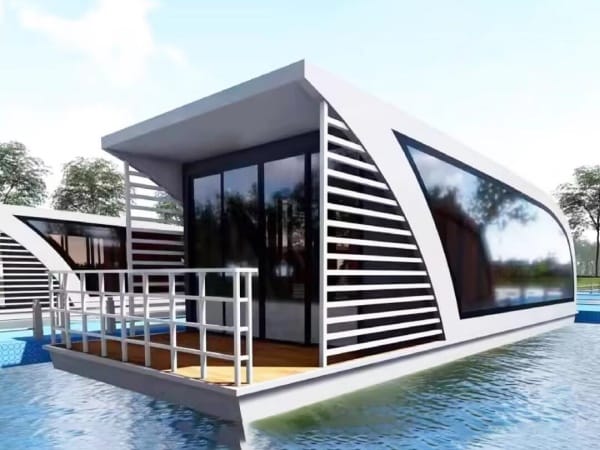
A floating house is a permanent home built on a buoyant platform—usually concrete or steel pontoons—anchored to a dock and connected to shore utilities. These homes are gaining popularity for their waterfront lifestyle, eco-friendly designs, and unique architecture.
What Is a Floating House?
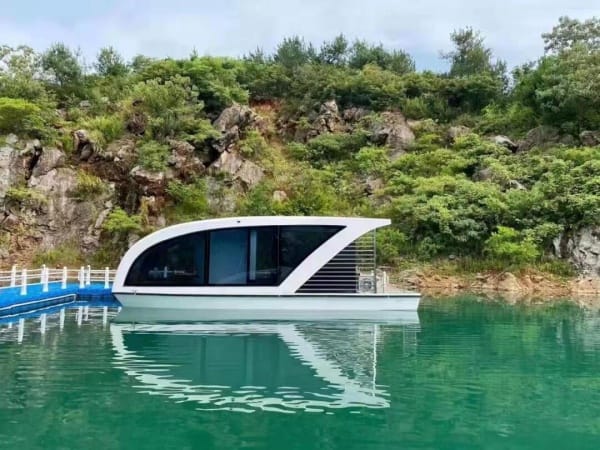
A floating house is a home built on water instead of land. It rests on a floating platform that allows it to rise and fall with water levels. Unlike houseboats, floating homes are stationary, connected to docks, and equipped with plumbing, electricity, and living amenities.
How Floating Houses Are Built
i) Floating Base
The foundation is the most crucial part of a floating home. It ensures stability and level positioning on water. Common bases include:
Concrete pontoons or hollow blocks
Plastic or steel floats
Foam-filled or barrel platforms for lighter models
ii) Structure Above
The upper house is constructed similarly to a land-based home, using:
Lightweight concrete, wood, or steel
Water-resistant materials to reduce weight
Large windows and decks for panoramic water views
iii) Anchoring and Stability
Floating houses are secured to prevent drifting:
Moored to docks or vertical poles
Anchored to the lake or riverbed
Flexible connections allow for rising and falling water levels
iv) Utilities and Services
Modern floating homes may include:
Water, electricity, and sewage connections
Solar panels and rainwater collection for off-grid living
Types of Floating Houses
Floating houses come in different types depending on use and design:
i) Permanently Moored Floating Homes
Stationary homes connected to utilities; examples include Seattle and Amsterdam.
ii) Modular or Prefabricated Floating Homes
Built on land near water, designed to float during floods. Ideal for flood-prone areas.
iii) Amphibious Homes
These homes sit on land but can float if water levels rise, offering resilience against floods.
iv) Floating Eco-Homes
Designed with solar panels, rainwater harvesting, and sustainable materials for minimal environmental impact.
Floating Houses vs. Houseboats
Although both float on water, floating houses and houseboats are quite different in design, purpose, and lifestyle.
🏠 Floating House
Mobility: Stationary — anchored or moored in one location
Structure: Built like a regular home with solid foundations
Use: Designed for permanent residence
Utilities: Connected to city water, electricity, and sewage services
Design Focus: Comfort and long-term living
Legal Category: Considered real estate
Example Locations: Amsterdam, Seattle, Vancouver
⛴️ Houseboat
Mobility: Can move freely on water
Structure: Built like a boat, optimized for floating
Use: Ideal for travel or vacation stays
Utilities: Limited or self-contained (often relies on onboard systems)
Design Focus: Mobility and compact living
Legal Category: Considered a vessel
Example Locations: Rivers, lakes, marinas worldwide
✅ Key Takeaways
Floating houses are more like traditional homes — comfort-focused, permanent, and legally considered real estate.
Houseboats prioritize mobility, compactness, and are legally vessels, perfect for vacations or travel on water.
Benefits of Floating Houses
Waterfront Lifestyle
Enjoy daily nature views and a strong sense of community with neighbors.
Cost Savings
Often less expensive than traditional waterfront homes, with lower property and initial costs.
Eco-Friendly Living
Many floating homes incorporate solar power, rainwater collection, and low-impact materials, reducing environmental damage.
Potential Challenges
Limited Location Choices: Restricted to areas with available moorings or docks.
Maintenance Needs: Moisture can cause rust, mold, and structural damage.
Financing and Insurance: Conventional mortgages may be harder to secure; insurance costs are higher.
Utility Access: Electricity, water, and sewage hookups can be more complex.
Weather Risks: High winds or rough waters can affect comfort and safety.
Practical Tips for Buying a Floating House
Research Local Regulations: Check zoning laws and legal classifications for floating homes.
Choose the Right Location: Calm waters, reliable docking, and nearby services are essential.
Inspect the Structure: Examine the floating base, plumbing, and potential water damage.
Understand Utilities: Confirm connections to electricity, water, internet, and sewage.
Consider Maintenance Costs: Budget for humidity control, corrosion prevention, and general upkeep.
Explore Financing Options: Look for lenders and insurance providers familiar with floating homes.
Popular Locations for Floating Houses
Seattle, Portland, Vancouver, Amsterdam, and Copenhagen offer ideal water conditions, established communities, and supportive regulations. Residents enjoy stunning views, sustainable living, and the unique lifestyle of living on water.
Conclusion
Floating houses provide a distinctive lifestyle with access to nature, scenic views, and innovative living. While they have unique challenges like maintenance and limited locations, careful planning, proper utilities, and suitable financing can make water living both practical and enjoyable.
📄 Summary
Floating houses are stationary homes built on buoyant platforms. They offer scenic waterfront living, eco-friendly designs, and innovative construction while differing from mobile houseboats. Proper location, utilities, and maintenance planning are key to enjoying life on water.
FAQ
1. What is a floating house?
A home built on a buoyant platform, anchored or moored, designed for permanent residence.
2. How do floating houses differ from houseboats?
Floating houses are stationary and resemble land-based homes, while houseboats are mobile and boat-like.
3. What types of floating houses exist?
Permanently moored, modular/prefabricated, amphibious, and eco-friendly floating homes.
4. What are the main benefits of floating houses?
Waterfront lifestyle, lower costs than land-based waterfront homes, and eco-friendly options.
5. Where are floating houses popular?
Cities like Seattle, Portland, Vancouver, Amsterdam, and Copenhagen.