When people first encounter an expandable container house, the most immediate question is often not price — but reliability.
Can a structure that folds and unfolds really be durable?
Many buyers subconsciously associate expandable container houses with temporary sheds or lightweight cabins. However, modern expandable modular buildings are far more complex than they appear.
Durability is not determined by a single material. It is the combined result of:
Structural engineering
Material quality
Manufacturing standards
Anti-corrosion systems
Expansion mechanism design
Environmental conditions
Let’s break down what truly determines long-term performance.
What Determines the Durability of an Expandable Container House?
The lifespan of an expandable container house depends on engineering quality — not simply whether it is “converted from a container.”
Key durability factors include:
Steel structure strength
Anti-corrosion treatment
Expansion mechanism reliability
Connection node reinforcement
Waterproofing and sealing systems
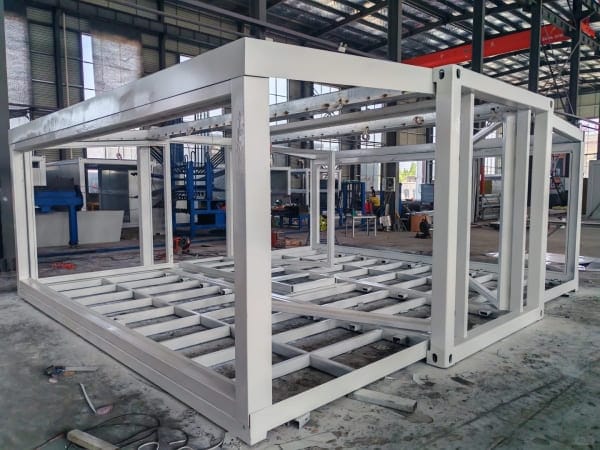
1. Steel Structure and Frame Strength
High-quality expandable container houses use structural steel rather than thin sheet metal.
Typical comparison:
Ordinary lightweight prefab steel thickness: 1.2mm–1.8mm
Industrial-grade modular building steel: 2.5mm–4mm
Thicker steel and proper load-bearing design ensure structural stability after expansion.
The strength of the primary frame directly affects:
Resistance to deformation
Long-term load capacity
Wind performance
Structural fatigue resistance
2. Anti-Corrosion Treatment: The Real Durability Factor
Many people assume steel thickness alone determines lifespan. In reality, corrosion is often the biggest long-term risk.
Without proper anti-corrosion treatment, steel structures in humid or coastal environments may show visible rust within 3–5 years.
With professional anti-corrosion systems, lifespan can extend to 15–25+ years.
Common protective systems include:
Hot-dip galvanizing
Epoxy zinc-rich primer + polyurethane topcoat
Multi-layer industrial anti-corrosion coatings
These are not cosmetic processes — they directly affect structural safety over time.
3. Expansion Mechanism and Moving Components
Unlike traditional buildings, expandable container houses include moving mechanical parts such as:
Hinges
Sliding rails
Locking systems
Load-bearing supports
In real-world use, mechanical wear often causes problems before structural steel does.
Common long-term risks:
Hinge fatigue
Rail misalignment
Bolt loosening
Load-bearing panel deformation
High-quality products address this with:
Industrial-grade hinge systems
Thickened connection plates
Anti-fatigue metal design
Precision locking systems after expansion
The reliability of moving components is critical for long-term stability.
4. Connection Nodes and Stress Concentration Areas
Expandable structures experience changing load paths when unfolding.
Stress concentration areas typically include:
Folding edges
Expansion seams
Load transfer nodes
If these points lack reinforcement, gradual deformation may occur.
Professional engineering reduces this risk through:
Reinforced stress zones
Optimized load path design
Structural simulation during development
Well-designed expandable houses approach the stability of fixed steel buildings after full deployment.
5. Waterproofing and Sealing Systems
Durability is not only about structural strength.
Long-term water leakage can be more damaging than load issues.
Moisture intrusion may cause:
Hidden corrosion
Insulation failure
Interior material aging
Structural degradation
High-quality expandable houses include:
Multi-layer sealing strips
Roof drainage systems
Seam waterproof logic
Anti-leak joint treatment
These invisible systems are essential for long-term use.
How Long Does an Expandable Container House Last?
Under proper design and normal maintenance, expandable container houses typically last:
Economic grade: 10–15 years
Standard engineering grade: 15–25 years
High-specification building grade: 25+ years
Lifespan depends on:
Engineering grade
Environmental conditions
Maintenance frequency
Maintenance Matters
Even high-quality steel structures require routine inspection.
1. Sealing System Inspection
Recommended inspection cycle:
Normal climate: every 6–12 months
Humid/coastal areas: every 3–6 months
Seal aging is a major cause of leakage. Timely replacement (every 3–5 years) can extend lifespan by 3–5 years.
2. Anti-Corrosion Maintenance
Annual visual inspection is recommended.
Repainting cycle:
Normal environment: every 5–8 years
High salt-spray areas: every 3–5 years
Timely repair prevents corrosion spread and may extend structural life beyond 20 years.
3. Expansion Mechanism Maintenance
For frequent-use scenarios (rental, temporary offices):
Bolt inspection: every 6 months
Lubrication: annually
High-frequency expansion use: every 3 months
Proper maintenance significantly reduces fatigue risks.
Does the Expandable Structure Reduce Stability?
No — if engineered correctly.
Modern expandable container houses are designed with:
Defined load path systems
Rigid locking mechanisms after expansion
Reinforced structural joints
Once deployed and locked, the structure functions similarly to a fixed steel building.
Stability issues usually arise from:
Poor welding quality
Thin steel materials
Weak hinges
Simplified locking systems
Low-grade seal materials
These are manufacturing problems — not design concept flaws.
Performance in Extreme Weather
High-quality expandable container houses can adapt to common climate conditions, including:
Strong wind
Heavy rain
Temperature fluctuations
Engineering-grade products typically include:
Reinforced roof structures
Wind-resistant anchoring systems
Secure locking mechanisms
Designed drainage channels
Performance depends heavily on structural grade and foundation installation.
Why Do Some Expandable Houses Fail Early?
Short lifespan usually results from:
Thin steel usage
Inadequate anti-corrosion treatment
Low-grade hinges
Poor sealing systems
Simplified engineering design
Price and engineering quality are often positively correlated.
Higher engineering standards mean:
Thicker steel
Better coatings
Stronger expansion components
Longer service life
How to Evaluate Durability Before Buying
Instead of focusing only on price or appearance, evaluate:
Steel thickness and grade
Anti-corrosion system type
Expansion mechanism design
Waterproofing system
Environmental adaptability
Engineering certification
A comprehensive assessment reduces long-term risks.
For example, BST Prefab provides engineering-grade expandable container houses with reinforced structures, industrial anti-corrosion systems, and professional configuration support based on climate and usage scenarios.
Are Expandable Container Houses Suitable for Long-Term Use?
Yes — when built to proper engineering standards.
Modern expandable container houses are no longer temporary solutions. With reinforced steel structures and professional anti-corrosion systems, they are widely used for:
Residential housing
Site offices
Remote worker accommodation
Tourism and hospitality projects
Durability is not about whether the house folds.
It is about engineering quality.
Conclusion
Expandable container houses can be durable, stable, and suitable for long-term use — provided they meet proper structural and manufacturing standards.
Key determinants include:
Steel structure strength
Anti-corrosion treatment
Expansion mechanism reliability
Waterproofing design
Maintenance practices
When engineered correctly, expandable container houses can deliver 15–25+ years of reliable service, making them a practical modular building solution for residential and commercial applications.