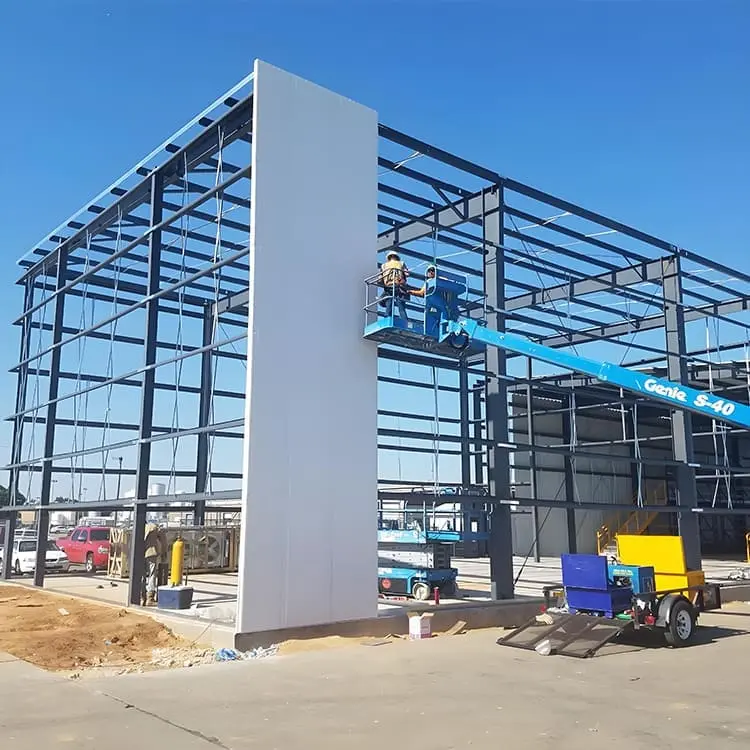
In steel buildings such as industrial plants, warehouses, and workshops, purlins play a critical role in supporting roof loads and transferring forces to the main structural frame. When purlins experience excessive deflection, instability, or increased loads, reinforcement becomes necessary to maintain structural safety and long-term performance.
Several practical methods can improve the strength, stiffness, and stability of steel purlins. These solutions include adding auxiliary supports, modifying cross-sections, optimizing node design, and applying proper construction techniques.
I. Adding Supports and Auxiliary Components
One of the most common and cost-effective ways to strengthen purlins is by installing additional supports or auxiliary components that improve lateral stability and load distribution.
1. Reinforcement with Angle Braces and Hoop Clamps
Angle braces can be installed at locations where purlins experience eccentric loading or noticeable deflection. These braces help stabilize the purlin and reduce deformation.
In some cases, hoop clamps can be installed around purlins to enhance local stability and prevent twisting or lateral movement under load.
2. Installation of Tie Rods
Tie rods are commonly used to improve the lateral stability of purlins, especially in structures with large spans.
Recommended installation practices include:
When the span exceeds 4 meters, install a tie rod at the mid-span position between purlins.
When the span exceeds 6 meters, add additional tie rods at the trisection points.
This reinforcement method effectively reduces the risk of lateral buckling and instability.
II. Changing Cross-Sections and Structural Configuration
In situations where loads increase or structural capacity is insufficient, strengthening the cross-section of purlins or modifying their structural system can significantly improve performance.
1. Cross-Section Reinforcement
Increasing the size or thickness of purlin components improves load-bearing capacity. Common methods include:
Thickening the flange or web of the purlin
Welding reinforcement plates to weak sections
Using bolt connections to strengthen load transfer paths
These methods ensure that internal forces are distributed efficiently throughout the structure.
2. Continuous Support System
Another effective approach is converting the purlin system from simply-supported to a continuous support system.
Continuous purlins distribute loads across multiple spans, which provides:
Increased structural stiffness
Reduced bending stress
Improved overall stability
This solution is particularly useful in large-span industrial roofs.
III. Optimizing Load Distribution and Node Design
Proper load distribution and strong connection nodes are essential for maintaining the performance of steel roof structures.
1. Adjusting Load Distribution
Adding intermediate supports or modifying the support configuration helps reduce the slenderness ratio of purlins and improve their dynamic performance.
This method ensures that loads are distributed more evenly across the structural system.
2. Node Strengthening
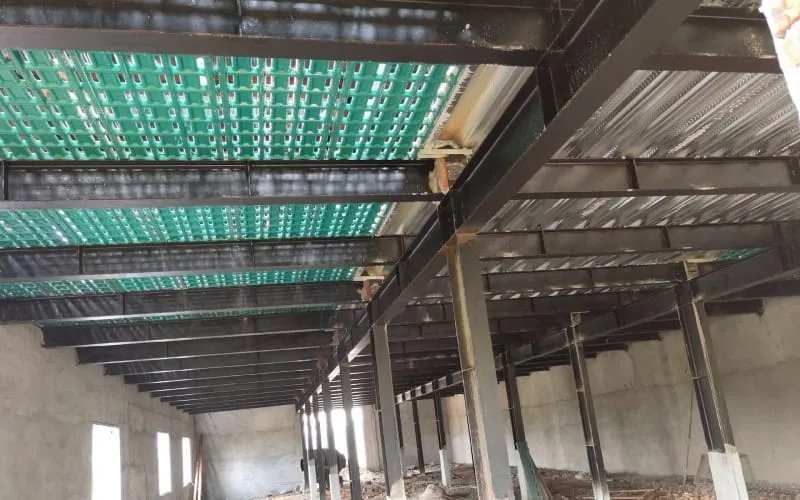
Connection nodes between purlins, beams, and columns must be carefully reinforced to ensure coordinated structural behavior.
Strengthening nodes can involve:
Increasing bolt capacity
Adding reinforcement plates
Improving weld connections
These measures help ensure the integrity of roof trusses and skylight frames.
IV. Prestressing and Construction Techniques
Advanced reinforcement strategies may involve prestressing systems and improved construction practices.
1. Prestressed Reinforcement
Applying prestressed tie rods at key structural locations increases stiffness and improves resistance to deformation.
Prestressing also helps distribute loads more efficiently throughout the roof structure.
2. Welding Process Control
When reinforcing steel structures, proper welding procedures are essential.
Best practices include:
Avoid welding while components are under load
Prioritize reinforcement of weak structural sections
Use alternative fastening methods for small steel components when welding is not suitable
Careful welding control ensures both structural safety and long-term durability.
V. Checking Calculations and Safety Control
Before implementing reinforcement measures, engineers must perform detailed structural calculations to verify safety.
1. Stability Verification
Structural analysis should evaluate the overall stability and deformation behavior of purlins based on their actual loading conditions.
Appropriate design formulas should be applied to confirm that the structure meets safety standards.
2. Allowable Deflection Control
Deflection limits must comply with structural codes and design standards. For example:
The allowable deflection of simply-supported Z-shaped purlins is typically limited to ≤ 5 mm.
Controlling deflection prevents excessive deformation that could damage roofing materials or compromise structural integrity.
Conclusion
Effective purlin reinforcement requires a comprehensive approach that combines structural analysis with practical engineering solutions. Methods such as adding supports, installing tie rods, reinforcing cross-sections, strengthening connection nodes, and applying prestressed systems can significantly enhance the stability and performance of steel roof structures.
When selecting a reinforcement strategy, engineers should consider factors such as purlin span, load type, and the characteristics of the existing structure. Most importantly, all reinforcement measures must be verified through detailed calculations to ensure compliance with safety standards and building codes.