Both capsule houses and tiny houses promise minimalism, mobility, and sustainable living.
But while they may look similar from afar, their design philosophy, functionality, and purpose are quite different.
Whether you’re planning a personal getaway or investing in modern accommodation, understanding these differences can help you choose the right model.
Structure and Build Method
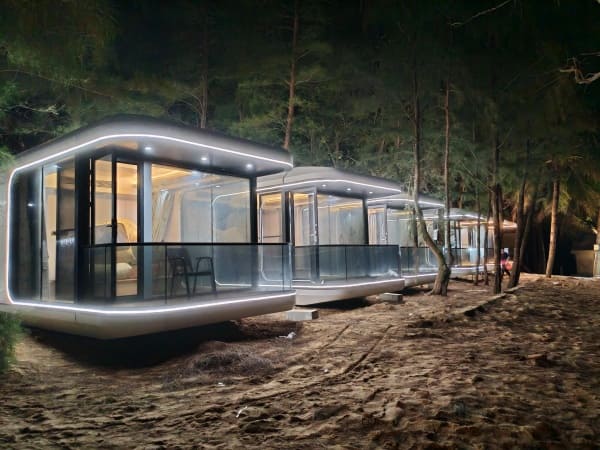
Capsule houses are prefabricated units—factory-built and delivered ready to install. They often feature steel or aluminum frames with insulated panels, providing strength, weather resistance, and a futuristic aesthetic.
In contrast, tiny houses are usually wood-framed and built manually on-site or on trailers. They have a more traditional “mini-home” look but are less durable in extreme environments.
Mobility and Installation
Capsule homes are semi-mobile. They can be relocated with cranes or trailers but are designed for stable placement. Their modular structure allows easy setup on various terrains—beaches, forests, or mountain slopes.
Tiny houses, on the other hand, are often built on wheels, focusing on mobility rather than permanence. This makes them suitable for travelers or nomads but limits insulation and size.
Space Efficiency and Design
Capsule houses are engineered for maximum interior efficiency—with built-in beds, storage, and multifunctional layouts inspired by aerospace design.
Tiny homes prioritize home-like comfort, featuring kitchens, loft bedrooms, and living spaces. However, their layout may sacrifice space optimization for a more domestic feel.
Energy Efficiency and Durability
Prefabricated capsule homes use modern materials like insulated glass, energy-efficient lighting, and climate-controlled systems, ensuring year-round comfort with minimal maintenance.
Tiny homes depend on manual insulation and natural materials, making them eco-friendly but requiring higher upkeep and occasional weatherproofing.
Purpose and Market Appeal
Capsule houses are gaining traction in commercial hospitality—especially in glamping sites, eco-resorts, and capsule hotels. Their futuristic look and compact luxury attract younger, tech-savvy travelers.
Tiny homes are more popular for personal living or DIY projects, appealing to minimalists seeking affordable ownership rather than high occupancy turnover.
Which One Should You Choose?
If you’re focused on investment returns, scalability, and modern aesthetics, capsule houses are the smarter choice.
But if your goal is personal mobility and a handcrafted home lifestyle, a tiny house might fit better.
Both represent the future of small-space living—each with its own strengths.
Final Thought: The Future Belongs to Smart Compact Living
As sustainability and experiential travel continue to define 2025, both capsule and tiny houses are here to stay.
The choice ultimately depends on your priorities: mobility or profitability, lifestyle or scalability.
Either way, small spaces now hold big potential.