Are you planning a capsule house in the desert and wondering how to stay cool under the burning sun?
A desert capsule home needs smart design and efficient cooling. From orientation and shading to insulation and air conditioning, every choice impacts comfort and energy efficiency.
Below, we’ll explore proven ways to keep your capsule house cool, sustainable, and livable in harsh desert climates.
Understand the Desert Climate
Desert climates generally fall into two main types:
| Climate Type | Example | Key Feature | Best Cooling Strategy |
|---|---|---|---|
| Hot-Dry Desert | Riyadh | Large day-night temperature swing | Use night ventilation to flush out heat |
| Hot-Humid Desert | Coastal Dubai | Hot and sticky day and night | Use AC with dehumidification |
In hot-dry areas, open your windows at night to release heat, as nighttime temperatures can drop below 22 °C.
In hot-humid regions, where humidity can reach 90%, natural cooling is less effective. Focus instead on air conditioning with moisture control.
✅ Tip: Identify your desert type first. Cool nights? Use shading + night purge. Hot and humid nights? Use sun control + AC with dehumidifier.
Smart Site Orientation
Where you place and orient your capsule house determines how much heat it absorbs.
Face long walls north-south.
This minimizes exposure to harsh east-west sunlight.Add large windows on the north/south sides.
These sides are easier to shade.Use smaller windows on east/west walls.
This limits direct morning and evening sun.
Studies show that north-facing windows use less energy. On the south side, add an overhang or awning to block high summer sun.
Shade First — Your Best Cooling Strategy
Shade is the first line of defense against desert heat.
Add fixed exterior shading on all sunny sides:
Deep roof overhangs or vertical fins for east/west windows.
Covered verandas, pergolas, or solar screens to block low sun.
Carports or vine-covered pergolas to shade walls and outdoor units.
“In the blazing sun, the power of shade can’t be overstated.”
Make sure your shade structures allow air circulation — don’t box in your home. Shading can cut indoor cooling load significantly.
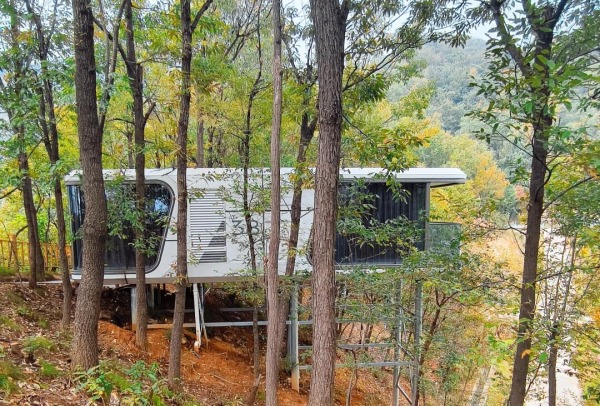
Cool Roofs & Insulated Walls
A light-colored reflective roof keeps interiors cooler.
The U.S. Department of Energy reports that a white roof stays up to 28 °C cooler than a dark one.
Best Practices:
Choose white or reflective roofing materials (metal, tiles, coatings).
Leave a ventilated air gap below the roof to remove hot air.
Use continuous insulation (e.g., 6 in mineral wool) to block heat flow.
Seal all cracks and joints to maintain airtightness.
A tightly sealed and insulated structure slows down desert heat intrusion.
Choose Windows That Don’t Overheat
Windows often cause unwanted heat gain — so select them wisely.
Use low-SHGC, Low-E glass to block infrared heat while letting in daylight.
Shade all east and west windows externally.
Add interior cellular shades or blinds to cut solar gain by up to 60%.
The goal: let in light, not heat.
Size Your Air Conditioning Right
In desert climates, the right-sized AC is essential.
Perform a Manual J cooling load calculation before choosing equipment.
Select a high-efficiency inverter-driven system (mini-split or VRF).
Aim for 20+ SEER for best performance.
In humid areas, ensure your system includes dehumidification.
Maintaining 30–40% indoor humidity keeps air comfortable and prevents mold.
✅ Tip: Oversized units waste energy; inverter systems save up to 40% on cooling costs.
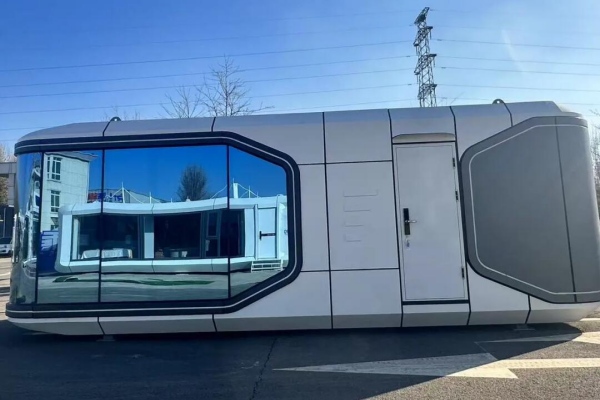
Fresh Air Without Dust
Desert air brings dust, so ventilation must be filtered.
Use:
Energy Recovery Ventilators (ERVs) or Heat Recovery Ventilators (HRVs) with high-MERV filters.
Trickle vents with built-in filters for passive airflow.
Well-sealed ducts and walls to prevent dust infiltration.
Replace filters frequently — desert dust builds up fast.
Outdoor Unit Placement
Shaded but ventilated (under pergola or awning).
Raised off the sand on a platform or gravel base.
Protected with coil guards or mesh.
Always leave room for service access and airflow.
Plumbing and Hot Water Protection
Desert heat affects plumbing too.
Shade outdoor water tanks and insulate hot and cold water lines.
Maintain clear AC condensate drains to avoid blockages or mold.
Keep condensate lines away from living areas or drain them properly.
Routine checks prevent overheating or leaks during extreme heat waves.
Summary: Build Smart, Stay Cool
A desert capsule house can stay cool, efficient, and comfortable with:
Smart orientation
Deep shading
Reflective roof and insulation
Properly sized inverter AC
Dust-free filtered ventilation
Designing with these strategies ensures year-round livability — even in the hottest deserts.