Although capsule homes offer compact and easy living, setting up water and electricity can be challenging without proper guidance. In this guide, you’ll learn how to install safe, efficient, and eco-friendly utility systems for your capsule home.
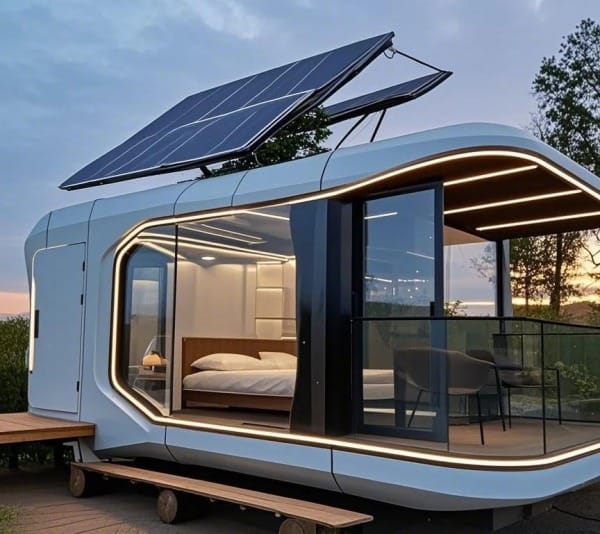
1️⃣ Understanding the Utility Requirements of Capsule Homes
Capsule homes are small yet fully functional spaces that rely on two key utilities — water and electricity — for comfortable living.
Water Supply:
A reliable water source is essential for drinking, cooking, and sanitation. If your home connects to a municipal system, standard plumbing works well. For off-grid living, consider rainwater harvesting systems, storage tanks, and filtration units to ensure clean, safe water.
Electricity Supply:
Your energy setup depends on location and usage. On-grid homes draw power from local utilities, while off-grid capsule homes often rely on solar panels, wind turbines, or battery systems. Using energy-efficient devices minimizes consumption.
Safety measures such as leak detectors, circuit breakers, and smoke alarms are essential to prevent hazards.
2️⃣ Water Connection in Capsule Homes
Choosing the Water Source
Your first step is identifying the right water source. Capsule homes can connect to:
Municipal water lines for stable supply
Wells with pumps and filters
Rainwater tanks for off-grid sustainability
Maintain water pressure between 40–60 PSI for optimal flow. A pressure regulator prevents damage from excess pressure.
Recommended materials:
PVC pipes – low cost, corrosion-resistant (cold water)
PEX pipes – flexible and easy to install
Copper pipes – durable, long-lasting for higher budgets
Connecting the Plumbing System
Once your plan is ready, connect the main water line and install a shut-off valve for emergencies. Extend pipes to the kitchen, bathroom, and other areas.
Install insulated pipes in colder regions to prevent freezing, and consider a tankless (on-demand) water heater to save energy and space.
Wastewater Management
Proper disposal is crucial. Capsule homes handle two types of wastewater:
Greywater: from sinks and showers; can be reused for irrigation or flushing.
Blackwater: from toilets; must be treated and disposed of safely.
Eco-friendly options: bio-septic systems use natural bacteria to break down waste.
3️⃣ Electricity Connection in Capsule Homes
Selecting the Energy Source
You can choose between:
On-grid power – stable but dependent on utility companies
Off-grid systems – solar panels, batteries, and inverters for independence
Estimate your total energy needs by adding the wattage of all devices. Remember, high-demand appliances (heaters, refrigerators) consume more energy than LED lights or smart devices.
Ensure all appliances match your region’s voltage standard (e.g., 110V in the US, 220V in Europe).
Installing the Electrical System
Start with a main electrical panel and circuit breakers to protect against overloads. Use properly rated wires and ground your system to prevent electric shock.
Install surge protectors, ensure moisture protection, and use insulated wiring for safety.
Adding Smart Energy Features
Integrate solar panels with battery storage to enhance self-sufficiency. Use smart meters to monitor power use.
For emergencies, install a UPS or generator for backup power.
4️⃣ Common Challenges and Practical Solutions
i) Leaks and Water Pressure Issues
Use PEX or copper pipes, add a booster pump for low pressure, and inspect regularly.
ii) Power Cuts and Overloads
Prevent overloads with balanced circuits and surge protectors. Solar generators are great for outages.
iii) Extreme Climate Conditions
Insulate pipes in cold weather and use reflective insulation during heat waves to reduce energy use.
iv) Space Constraints
Choose multi-functional furniture and wall-mounted storage to maximize space.
v) Waste Management
Install bio-septic systems and composting toilets to minimize waste impact.
🧾 Conclusion
Setting up utilities in a capsule home requires planning and attention to detail. Whether you’re connecting to a grid or going off-grid, safe water and electricity systems ensure comfort and sustainability. With proper installation and maintenance, your capsule home can be efficient, eco-friendly, and self-reliant.
FAQ
1. Can capsule homes be fully off-grid?
Yes. With solar panels, rainwater harvesting, and septic systems, capsule homes can operate independently of public utilities.
2. What’s the best water heating system for capsule houses?
A tankless water heater saves space and energy, making it ideal for compact living.
3. Are capsule home electrical systems safe?
When installed by certified electricians and equipped with circuit breakers and surge protectors, they are completely safe.
4. How can I save energy in a capsule home?
Use LED lighting, inverter appliances, and smart meters to monitor and reduce power consumption.