Skip to content
Remote hydropower, mining, oil & gas, and infrastructure projects face a common challenge: how to provide comfortable living and working environments for large workforces operating far from urban centers.
When hundreds or even thousands of workers live on-site, camp design becomes more than a logistical requirement—it directly affects productivity, safety, and employee wellbeing. Poorly planned labour camp accommodation often leads to longer walking distances, reduced efficiency, increased fatigue, and higher operational costs.
Modern modular office builders are changing this approach by delivering fully integrated engineering camps that combine accommodation, offices, public facilities, and supporting infrastructure into a single, well-planned ecosystem.
Why Labour Camp Accommodation Planning Matters
Many project owners focus primarily on worker housing. However, successful labour camp accommodation requires much more than providing sleeping quarters.
A well-designed camp should support the daily movement of workers between:
- Accommodation buildings
- Site offices
- Dining facilities
- Medical centers
- Workshops
- Recreational areas
- Transportation hubs
Every unnecessary journey across a large camp consumes time and energy. Over the lifespan of a multi-year project, these inefficiencies can significantly impact workforce performance.
This is why experienced modular office builders approach camp development from a master-planning perspective rather than treating each building as an individual structure.
Beyond Container Buildings: What Professional Labour Camp Accommodation Providers Deliver
A standard container supplier may only provide accommodation units or office containers.
A professional engineering camp provider delivers a complete solution that includes:
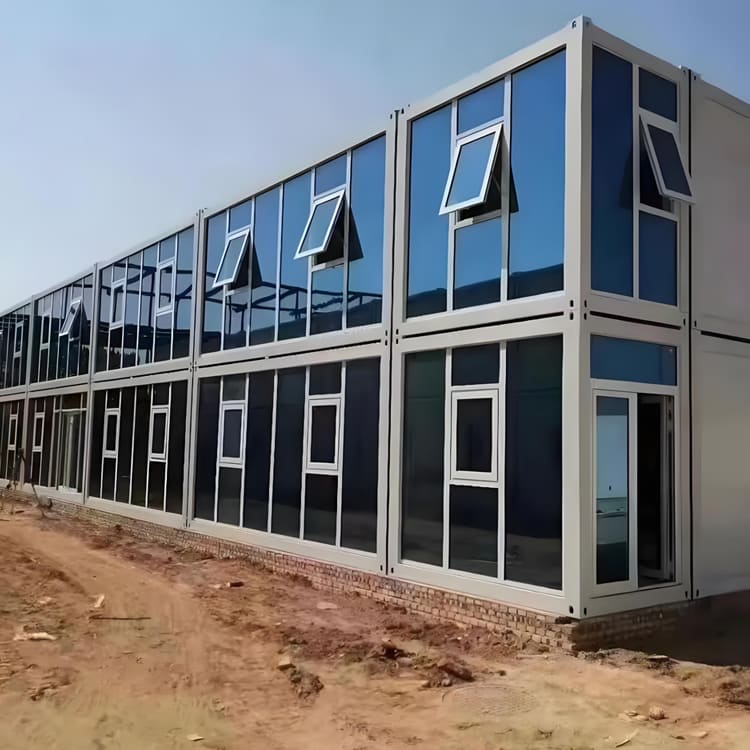
Modular Office Buildings
Dedicated workspaces for:
- Project management teams
- Engineers
- Supervisors
- Administrative staff
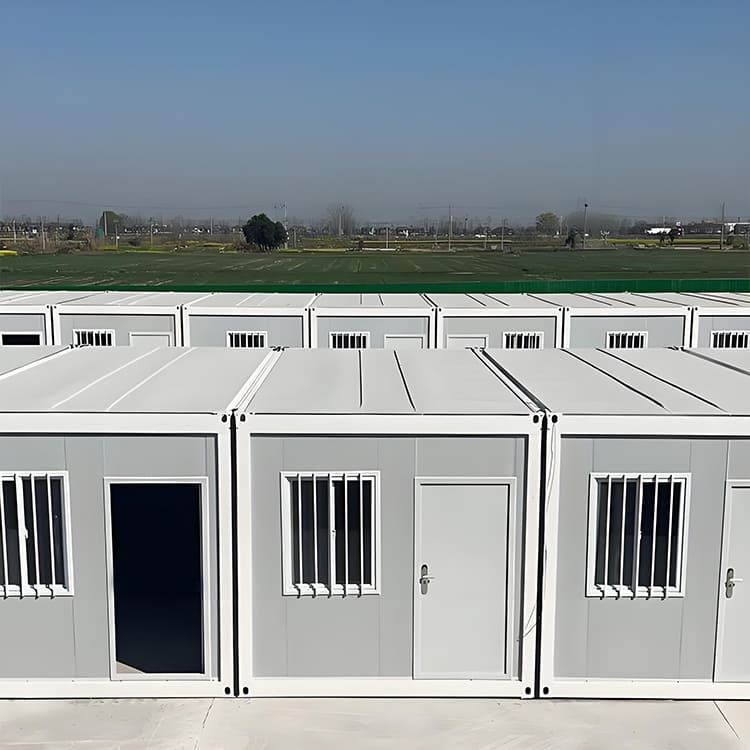
Worker Accommodation
Different room configurations can be designed to meet workforce requirements:
- Single rooms
- Double rooms
- Executive suites
- Hostel-style units
Community Facilities
To improve worker satisfaction and quality of life, camps often include:
- Dining halls
- Medical clinics
- Fitness centers
- Religious facilities
- Recreation rooms
- Public sanitation facilities
Supporting Infrastructure
A complete labour camp accommodation project also requires:
- Water supply systems
- Sewage treatment facilities
- Power generation and distribution
- Fire protection systems
- Security systems
- Internal roads and parking areas
This integrated approach allows engineering camps to operate efficiently even in isolated locations.
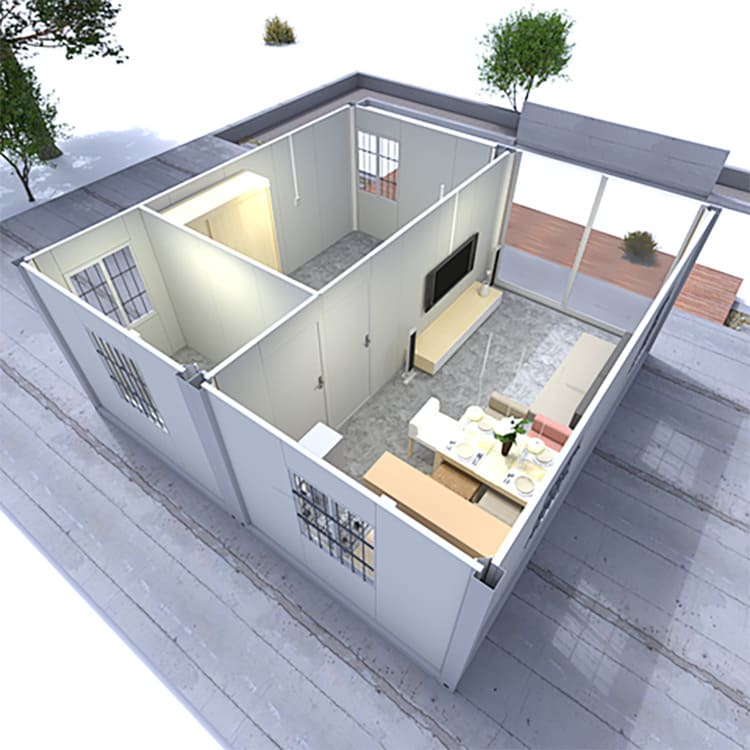
The Importance of Master Planning in Labour Camp Accommodation
Successful camps begin with detailed planning.
Before construction starts, project developers typically analyze:
- Site topography
- Workforce size
- Traffic circulation requirements
- Camp functions
- Environmental conditions
- Utility availability
For example, a large engineering camp may include:
| Facility | Quantity |
|---|---|
| Double Rooms | 232 |
| Single Rooms | 145 |
| Suites | 70 |
| Hostel Units | 52 |
| Canteen Capacity | 500 People |
| Gym Capacity | 100 People |
A typical camp may cover more than 42,000 square meters while maintaining efficient land utilization and green spaces.
By planning accommodation, offices, and communal facilities together, modular office builders can reduce travel distances and improve operational efficiency.
The Nine-System Framework for Modern Engineering Camps
One of the most effective approaches to labour camp accommodation planning is the integration of multiple infrastructure systems into a unified design strategy.
1. Building System
Includes:
- Accommodation blocks
- Offices
- Clinics
- Warehouses
- Dining facilities
- Recreation buildings
2. Water Supply and Drainage System
Provides:
- Clean water
- Water purification
- Sewage treatment
- Hot water systems
3. Power System
Supports:
- Transformers
- Generators
- Distribution cabinets
- Interior and exterior lighting
4. Communication System
Includes:
- Internet networks
- Telecommunications
- Cable television systems
5. Fire Protection System
Provides:
- Fire alarms
- Hydrants
- Sprinkler systems
- Emergency lighting
6. Security System
Includes:
- CCTV monitoring
- Perimeter fencing
- Guard towers
- Access control systems
7. Road and Transportation System
Designed for:
- Pedestrian circulation
- Vehicle movement
- Parking areas
- Emergency access
8. Environmental Facilities
Supports:
- Landscaping
- Outdoor sports facilities
- Corporate branding areas
9. Environmental Protection System
Includes:
- Waste management
- Sewage treatment
- Environmental compliance facilities
Technical Advantages of Modular Labour Camp Accommodation
Modern modular buildings provide substantial advantages over traditional site-built structures.
Faster Installation
Factory-manufactured components reduce on-site construction time and accelerate project deployment.
Improved Quality Control
Controlled production environments ensure consistency and quality throughout the construction process.
Better Energy Efficiency
Typical modular accommodation units include:
- 100 mm fiberglass wool roof insulation
- 100 mm floor insulation
- 75 mm insulated sandwich wall panels
These materials help maintain comfortable indoor temperatures while reducing energy consumption.
Durable Structural Performance
High-quality modular buildings often feature:
- Hot-dip galvanized steel structures
- Corrosion-resistant coatings
- Wind-resistant designs
- Long service life
Such characteristics make modular labour camp accommodation suitable for harsh climates and remote project environments.
Case Study: Hydropower Labour Camp Accommodation in Argentina
A practical example of integrated labour camp accommodation can be seen in the Aprovechamientos Hidroeléctricos Represas C.C. L.B. Hydropower Project in Argentina.
The project required:
- Worker housing
- Management offices
- Engineering offices
- Dining facilities
- Recreation areas
- Water treatment systems
- Security infrastructure
Because the site was located far from major urban centers, self-sufficiency became a critical requirement.
Modular office builders developed a complete camp solution where accommodation, offices, and public facilities were positioned within convenient walking distances.
This reduced daily travel time while improving worker comfort and operational efficiency throughout the project’s lifecycle.
Logistics and Construction Management: Turning Plans into Reality
Even the best labour camp accommodation design depends on effective logistics execution.
Successful camp providers focus on:
Transportation Optimization
- Reduced shipping volume
- Efficient packaging systems
- Simplified unloading procedures
International Delivery Support
- Customs clearance assistance
- Inland transportation coordination
- Port-to-site logistics management
Local Construction Coordination
Experienced project teams can:
- Guide local labor
- Ensure compliance with local regulations
- Maintain construction schedules
This approach minimizes delays and helps ensure that accommodation facilities are operational when workers arrive on site.
How Better Labour Camp Accommodation Improves Workforce Productivity
The relationship between camp design and workforce performance is often underestimated.
Well-planned labour camp accommodation can deliver measurable benefits:
Reduced Worker Fatigue
Shorter walking distances mean less physical strain and more productive working hours.
Improved Safety
Integrated road networks, security systems, and fire protection measures reduce operational risks.
Better Living Conditions
Comfortable accommodation improves morale and employee retention.
Higher Project Efficiency
Optimized layouts allow workers to move quickly between accommodations, offices, and work zones.
For large infrastructure projects, these advantages can significantly improve overall project performance.
Frequently Asked Questions (FAQ)
What is labour camp accommodation?
Labour camp accommodation refers to temporary or semi-permanent housing facilities designed for workers on remote construction, mining, energy, and infrastructure projects.
Why are modular buildings used for labour camps?
Modular buildings provide faster installation, lower construction costs, improved quality control, and greater flexibility compared to traditional construction methods.
What facilities should be included in a labour camp?
A modern labour camp should include accommodation, offices, dining facilities, medical centers, sanitation facilities, recreation areas, and supporting infrastructure.
How long does it take to install a modular labour camp?
Installation time depends on project size, but modular construction can significantly reduce timelines compared to conventional building methods.
Are modular labour camp buildings durable?
Yes. High-quality modular structures are engineered for long-term use and can withstand challenging environmental conditions.
Conclusion
Labour camp accommodation is no longer simply about providing shelter for workers. Modern engineering projects require integrated living and working environments that promote productivity, safety, and workforce wellbeing.
By combining modular office buildings, worker accommodations, infrastructure systems, and strategic camp planning, project developers can create efficient engineering camps that support long-term project success.
For hydropower, mining, oil & gas, and large-scale infrastructure developments, investing in professionally planned labour camp accommodation can reduce operational inefficiencies, improve worker satisfaction, and contribute directly to overall project performance.