Skip to content
Steel-frame homes differ greatly from concrete or timber buildings in design logic, structural behavior, and durability expectations. Because of this, choosing the right steel material directly determines safety, lifespan, maintenance cost, and construction efficiency.
Below is a clear guide explaining the key material requirements, common steel types, and how to select the best steel for your project.
Key Material Requirements for Steel House Construction
[Image Placeholder — structural steel frame house construction site]
1. Strength & Load-Bearing Capacity
Steel must provide a high strength-to-weight ratio to support walls, floors, and roofs while maintaining stability under wind, snow, and occupancy loads.
2. Corrosion Resistance & Durability
Steel houses often operate in outdoor or semi-exposed environments. Materials should resist rust through galvanization or protective coatings, especially in coastal or humid climates.
3. Flexibility & Ductility
Good ductility allows the structure to absorb external forces such as earthquakes or strong winds, improving structural safety and preventing brittle failure.
4. Easy Fabrication & Assembly
Steel used in modern housing must be easy to cut, weld, and shape. This enables prefabrication and fast modular installation while maintaining precision.

Common Steel Types Used in Steel Houses
[Image Placeholder — comparison chart of different steel materials]
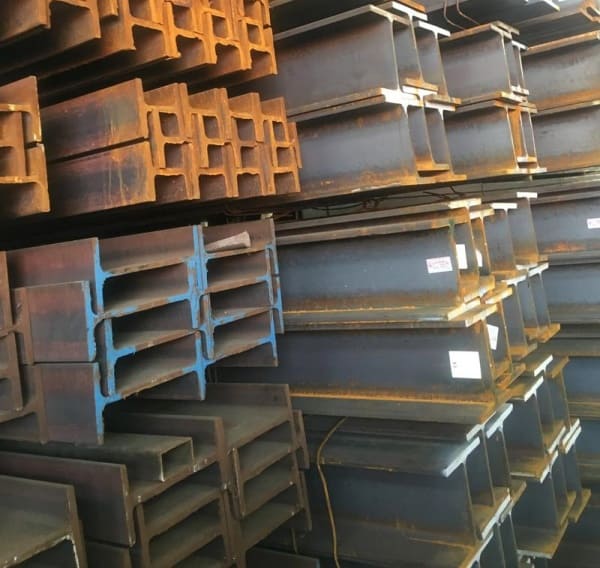
1. Structural Steel
Composition: Low-to-medium carbon steel with manganese and silicon
Benefits
-
High strength-to-weight ratio
-
Excellent weldability
-
Reliable under static and dynamic loads
Applications
Main load-bearing framework — beams, columns, trusses
Common Grades
Q235, Q345, ASTM A36, EN S355
2. Galvanized Steel
Composition: Carbon steel coated with zinc
Benefits
-
Strong rust resistance
-
Low maintenance cost
-
Ideal for outdoor exposure
Applications
Roofing panels, wall cladding, secondary supports
Common Grades
DX51D+Z, SGCC, ASTM A653
3. Mild Steel
Composition: Low carbon content (0.05–0.25%)
Benefits
-
Easy fabrication
-
Cost-effective
-
Flexible applications
Applications
Interior framing, wall supports, decorative components
Common Grades
Q195, Q235, EN S235
4. Weathering Steel
Composition: Alloyed with copper and nickel forming protective oxide layer
Benefits
-
Self-protecting rust layer
-
Unique architectural appearance
-
Minimal maintenance
Applications
Exterior walls, facades, decorative structures
Common Grades
Corten A, Corten B, Q355GNH
5. Stainless Steel
Composition: 10–20% chromium with optional nickel or molybdenum
Benefits
-
Exceptional corrosion resistance
-
Modern polished appearance
-
Long service life
Applications
Railings, window frames, visible architectural elements
Common Grades
304, 316L, 430
6. High Strength Low Alloy Steel (HSLA)
Composition: Carbon steel alloyed with vanadium, titanium, etc.
Benefits
-
Lightweight but strong
-
Excellent fatigue resistance
-
Suitable for large spans
Applications
Multistory homes and wide-span structures
Common Grades
Q460, EN S460, ASTM A572
How to Choose the Best Steel for Your Steel House
Step 1: Understand Structural Requirements
-
Single-story houses: Q235 or mild steel
-
Multistory buildings: Q345 or EN S355
-
Large spans/modular homes: HSLA steel
Step 2: Evaluate Environment
-
Coastal/humid → Galvanized or stainless steel
-
Dry inland areas → Structural steel sufficient
Step 3: Balance Budget & Lifecycle Cost
-
Lower upfront cost → Mild steel
-
Lower long-term maintenance → Stainless or galvanized steel
Step 4: Match Materials to Components
| Component | Recommended Steel |
|---|---|
| Main frame | Structural steel (Q235/Q345) |
| Roof & walls | Galvanized steel |
| Decorative parts | Stainless steel |
| Large spans | HSLA steel |
Step 5: Verify Quality
Check:
-
Surface defects
-
Thickness consistency
-
ISO/ASTM/EN certifications
Step 6: Work with Reliable Suppliers
Choose suppliers with:
-
Certified materials
-
Engineering support
-
Custom fabrication capability
One-Stop Steel House Solution
Selecting the correct steel can be complex. Professional suppliers can streamline planning, material selection, fabrication, and shipping into one coordinated workflow — reducing cost, delays, and construction risk.
Conclusion
The best steel for a steel house depends on structure, climate, budget, and lifespan expectations rather than a single material choice.
-
Structural steel provides the backbone
-
Galvanized steel protects exposed areas
-
Stainless steel enhances durability and appearance
-
HSLA steel enables large and lightweight structures
By combining the right steel types and grades, a steel house becomes safer, longer-lasting, and more cost-efficient over time.