Skip to content
The construction of a prefabricated house shifts most traditional building work from the construction site into a controlled factory environment.
For developers, contractors, and bulk buyers, this means:
-
Faster project timelines
-
Stable product quality
-
Predictable costs
-
Scalable mass production
This guide explains how a professional prefab house manufacturer delivers a complete project — from design consultation to post-installation support.

1. Project Requirement Analysis & Engineering Design
A prefabricated building project always begins with engineering planning rather than construction.
The goal is to convert customer requirements into manufacturable modules.
Demand Collection (Project Definition)
The manufacturer first determines the application scenario:
-
Worker accommodation
-
Residential housing
-
Commercial buildings
-
Site offices
-
Temporary facilities
Key technical parameters:
-
Floor area
-
Occupancy capacity
-
Climate conditions
-
Local regulations
-
Installation location
This stage ensures the prefab solution fits the project instead of forcing the project to fit the product.
Customized Structural Design
Professional manufacturers provide multiple structural solutions:
| Configuration | Typical Application |
|---|---|
| Single-story prefab | offices / small housing |
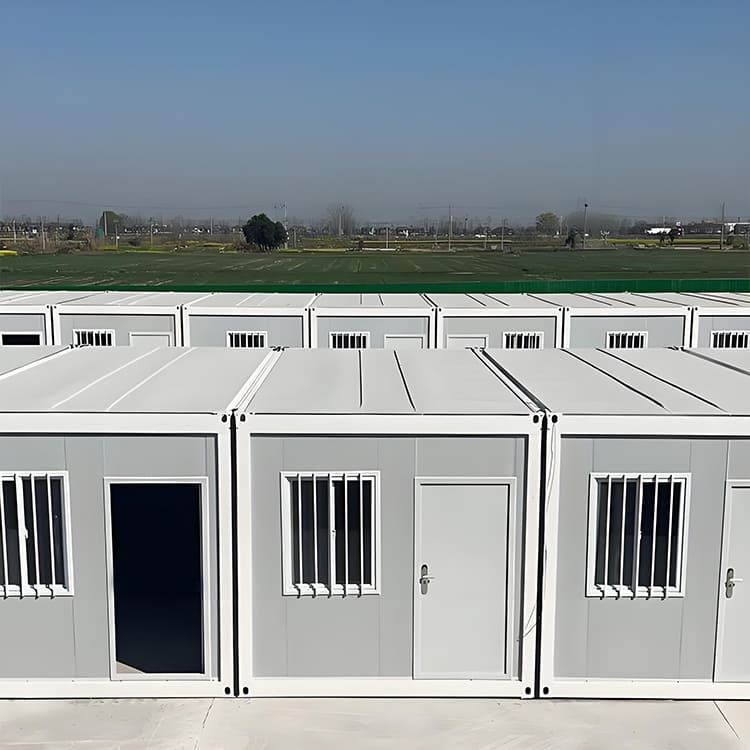
| Multi-story modular | apartments / dormitories |
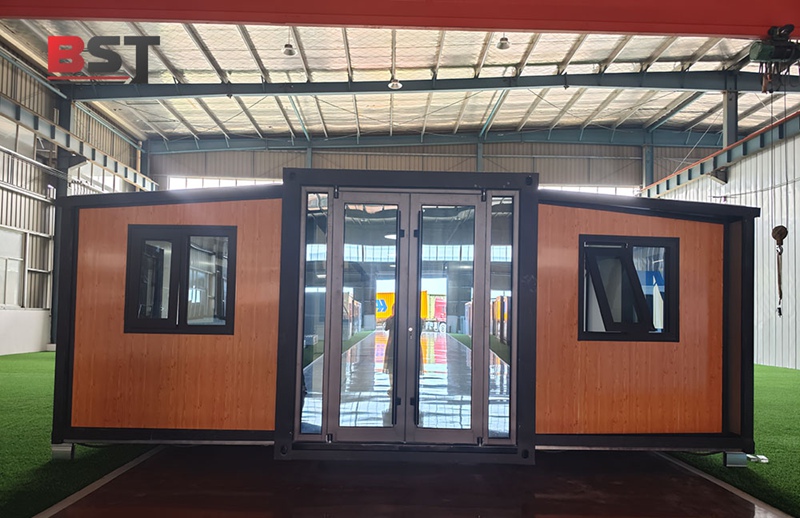
| Folding container house | fast deployment projects |
| Steel platform structure | uneven terrain / flood areas |
| High-cube structure | harsh weather regions |
The building can be configured for 1–10+ occupants with flexible room layouts.
Digital Engineering (CAD + BIM)
Advanced manufacturers use CAD and BIM modeling to:
-
Simulate structural load
-
Detect clashes before production
-
Produce accurate installation drawings
-
Ensure code compliance
This greatly reduces on-site modification and installation errors.
2. Factory Manufacturing & Modular Production
Unlike traditional construction, prefabricated houses are industrial products.
All main building components are produced inside a factory:
-
Wall panels
-
Floors
-
Roof systems
-
Steel frames
-
Doors & windows
Precision Manufacturing
High-standard material selection:
-
Galvanized steel structure
-
Insulated sandwich panels
-
Fire-resistant boards
-
Waterproof roofing materials
Factory equipment ensures consistent dimensional accuracy — critical for modular assembly.
Quality Control in Production
Each module passes inspection before shipment:
-
Structural integrity test
-
Dimension tolerance verification
-
Surface finishing inspection
-
Hardware installation check
Factory quality control ensures predictable installation time on site.
Modular Production Advantage
Compared with traditional buildings:
| Traditional Construction | Prefabricated Manufacturing |
|---|---|
| Weather dependent | Indoor production |
| Long construction time | Rapid assembly |
| Labor intensive | Industrial manufacturing |
| Variable quality | Standardized quality |
3. Inspection & Certification
Quality assurance is essential for international projects.
Internal Inspection
All materials are verified for:
-
Strength
-
Durability
-
Seismic performance
-
Structural stability
Third-Party Certification
To support global export and engineering projects, manufacturers work with certification agencies to meet:
-
Local building codes
-
Safety standards
-
Engineering approval requirements
This increases trust for contractors and developers.
4. Transportation & On-Site Assembly
After production, the project shifts from manufacturing to logistics and installation.
Logistics Planning
Professional delivery includes:
-
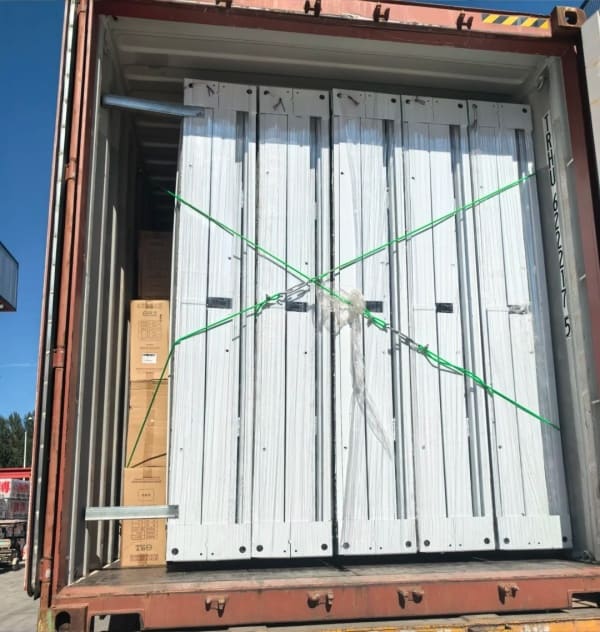
Container loading optimization
-
Route planning
-
Weather risk avoidance
-
Damage prevention packaging
The goal is predictable delivery scheduling.
Remote Installation Guidance
Manufacturers typically provide:
-
Installation manuals
-
Video guidance
-
Real-time technical support
On-site work mainly involves connecting modules rather than building from raw materials.
Benefits:
-
Reduced labor requirements
-
Faster project completion
-
Lower installation risk
5. After-Sales Service & Lifecycle Support
Prefab buildings are long-term assets, not temporary products.
Maintenance Support
Services may include:
-
Structural inspection
-
Electrical system maintenance
-
Panel replacement
-
Waterproofing check
Expansion & Modification
One major advantage of modular buildings is scalability:
-
Add rooms
-
Expand floors
-
Convert usage
-
Upgrade layout
No demolition required — modules integrate with existing structures.
Prefabricated House Supplier Advantage
As construction markets demand faster and more economical building methods, prefab housing is becoming a mainstream solution.
A professional prefab manufacturer provides:
-
Industrial production capability
-
Engineering design support
-
Stable product quality
-
International compliance
-
Long-term technical service
From residential to commercial and temporary projects, modular buildings enable efficient project delivery with controlled investment risk.
Conclusion
The prefabricated house process is not simply “faster construction.”
It is a complete transformation from traditional building to industrialized manufacturing.
By combining:
-
Engineering design
-
Factory production
-
Standardized inspection
-
Efficient logistics
-
Guided installation
-
Lifecycle service
manufacturers can deliver reliable buildings with predictable quality and timelines.
For developers and bulk buyers, choosing an experienced prefab house manufacturer means choosing certainty in cost, schedule, and performance.