Skip to content
Container houses are reshaping the future of housing in 2026. With modern designs, fast installation, and eco-friendly construction, container homes offer smart solutions to today’s space, budget, and deployment challenges.
From emergency shelters to luxury eco-resorts, container-based housing has evolved into a flexible, modular, and scalable building system.
In this article, we explore six official types of container houses, explaining how they work, their key features, and the best use cases for each model—helping developers, contractors, and buyers choose the right solution.
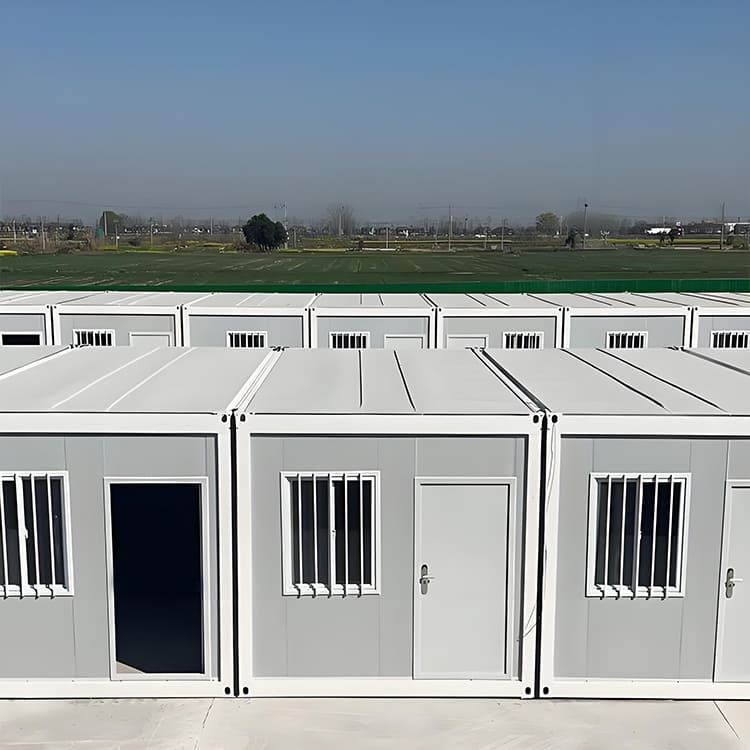
1. Flat-Pack Container House
Flat-pack container houses are designed with separate wall panels, floors, and roofs, which are stacked and shipped without pre-assembly. Once delivered, the components are assembled on site.
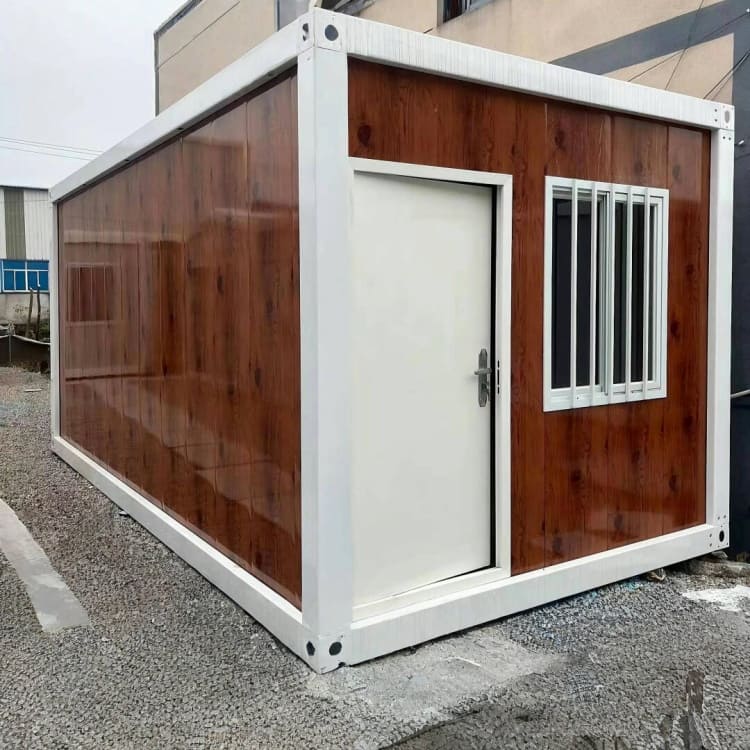
Key Features
-
Cost-Efficient Transportation:
Thanks to the flat design, 6–8 units can fit into one 40HQ container, significantly reducing shipping costs. -
Fast On-Site Installation:
A team of four workers can assemble one unit in 1–2 hours. -
Flexible Layout Options:
Multiple units can be connected into L-shaped, T-shaped, or linear layouts.
Best Use Cases
-
Construction camps
-
Temporary exhibitions
-
Disaster relief housing
-
Remote worksite accommodation
2. Folding Container House
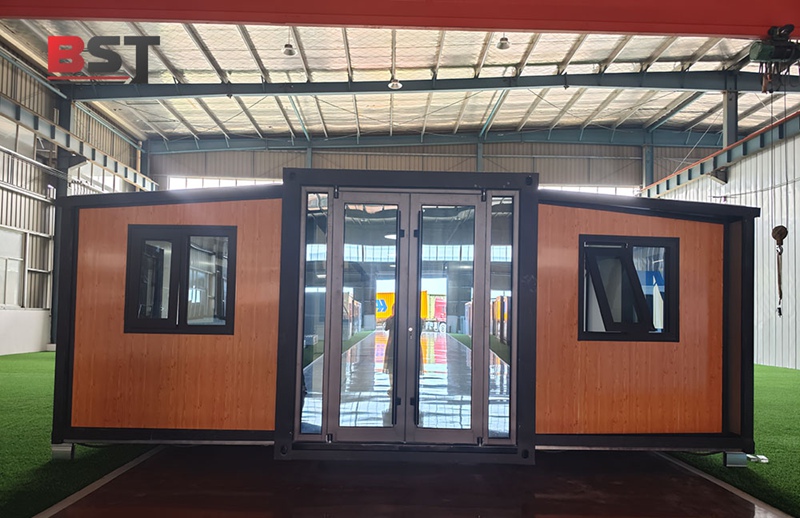
A folding container house is a fully prefabricated modular unit with collapsible walls and roof panels that fold flat during transport and unfold on site.

How It Works
The structure uses hinged steel frames that allow the walls and roof to fold onto the floor. Once delivered:
-
Side walls are lifted and locked
-
The roof is raised using manual or hydraulic supports
-
Doors, windows, wiring, and insulation are already integrated
The unit becomes operational in 30 minutes to 2 hours.
Key Features
-
Ultra-Fast Assembly:
Setup in as little as 10–30 minutes with 2–4 workers. -
High Transport Efficiency:
6–12 units per 40HQ container, lowering logistics costs. -
Factory-Finished & Ready to Use:
Electrical wiring and insulation are pre-installed. -
Reusable & Durable:
Can be folded, moved, and reused multiple times.
Best Use Cases
-
Emergency disaster shelters
-
Temporary site offices
-
Security rooms and guard houses
-
Mobile clinics and classrooms
3. Expandable Container House
Expandable container houses feature a central core that slides or unfolds outward, increasing interior space after delivery.

Expandable vs Folding: What’s the Difference?
-
Expandable houses focus on living comfort and space, expanding after placement (setup: 1–2 hours).
-
Folding houses focus on mobility and speed, folding flat for transport and unfolding quickly.
Key Features
-
Rapid Deployment:
Fully installed within 1–2 hours. -
1:3 Space Expansion Ratio:
Interior area can triple without increasing transport size. -
Fully Equipped Interior:
Pre-installed plumbing and electrical systems.
Best Use Cases
-
Glamping resorts
-
Mobile offices
-
Temporary clinics and emergency medical units
4. Detachable Container House
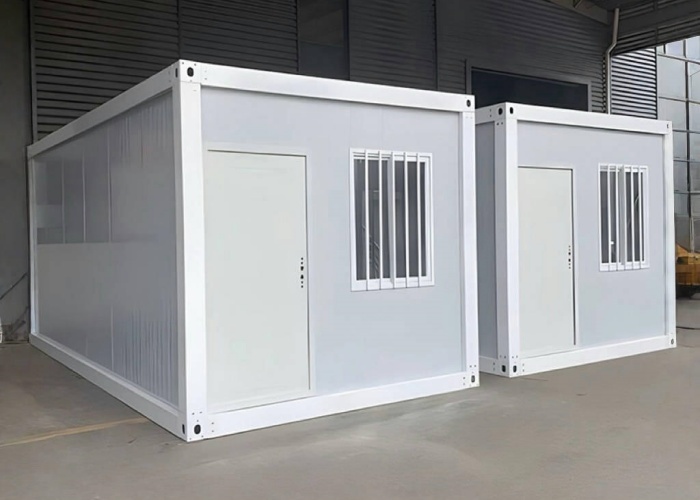
Detachable container houses are built by bolting together modular container units, which can later be disassembled, relocated, or expanded.
Key Features
-
Maximum Shipping Efficiency:
Up to 17 units in one 40HQ container. -
Highly Modular Design:
Easy to expand, stack, or relocate. -
Bolt-Based Assembly:
Installation takes 6–8 hours per unit, no welding required.
Best Use Cases
-
Mining and oilfield camps
-
Remote workforce housing
-
Temporary resorts and eco-lodges
5. Stackable Multi-Storey Container House
Stackable container houses are vertical modular buildings, typically reaching 3–5 stories, supported by reinforced steel columns and joints.
Key Features
-
Vertical Space Optimization:
Ideal for high-density urban environments. -
High Structural Strength:
Engineered to resist wind, vibration, and seismic forces. -
Fast Construction Speed:
Each floor can be completed in just a few days.
Best Use Cases
-
Student dormitories
-
Co-living housing projects
-
Urban apartment developments
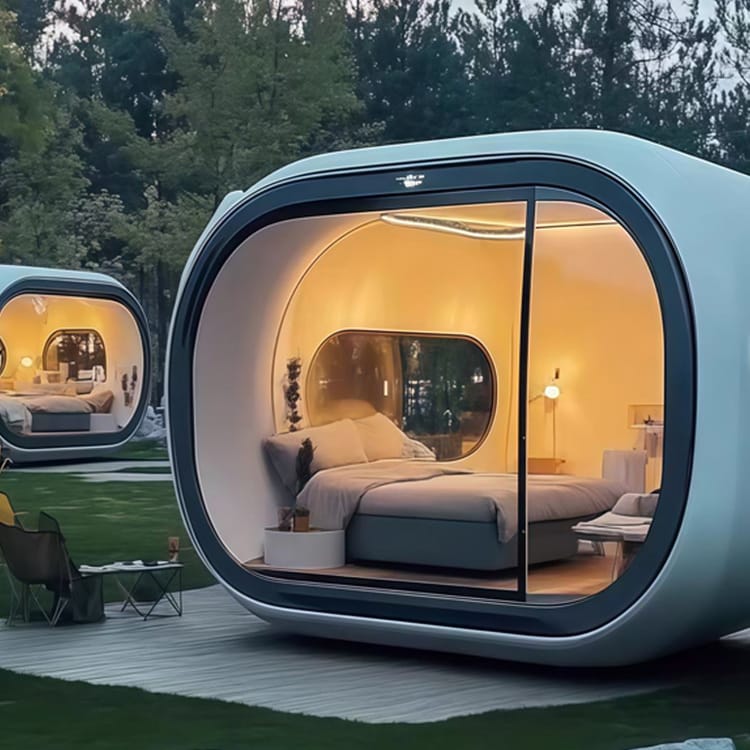
6. Dome Container House
Dome container houses combine ISO container corner fittings with curved steel ribs, creating a distinctive dome-shaped structure.
Key Features
-
Excellent Weather Resistance:
Withstands wind speeds up to 120 km/h and heavy snow. -
360° Natural Lighting:
Skylights and curved windows create bright interiors. -
Iconic Architectural Design:
A futuristic look that attracts attention.
Best Use Cases
-
Luxury eco-resorts
-
Scenic cafés and retreat spaces
-
High-end Airbnb and tourism rentals
Conclusion
Container houses are no longer just temporary shelters. In 2026, they represent a versatile, efficient, and sustainable building solution for housing, hospitality, emergency response, and commercial use.
By understanding the differences between flat-pack, folding, expandable, detachable, stackable, and dome container houses, you can choose a solution that matches your budget, timeline, location, and functional needs.
With the right design and manufacturing support, container homes can deliver long-term value, fast deployment, and modern living standards.