Skip to content

Redefining Shelter, Mobility, and Architectural Design
As the world rethinks how we live, move, and build, folding houses are emerging as a groundbreaking solution that reshapes our perception of shelter. Blending engineering precision, architectural elegance, and sustainable design, folding houses represent a new era of adaptive, mobile, and efficient living spaces.
More than a construction trend, folding architecture reflects a fundamental shift toward flexible housing systems designed for a rapidly changing world.
1. The Concept and Origins of the Folding House
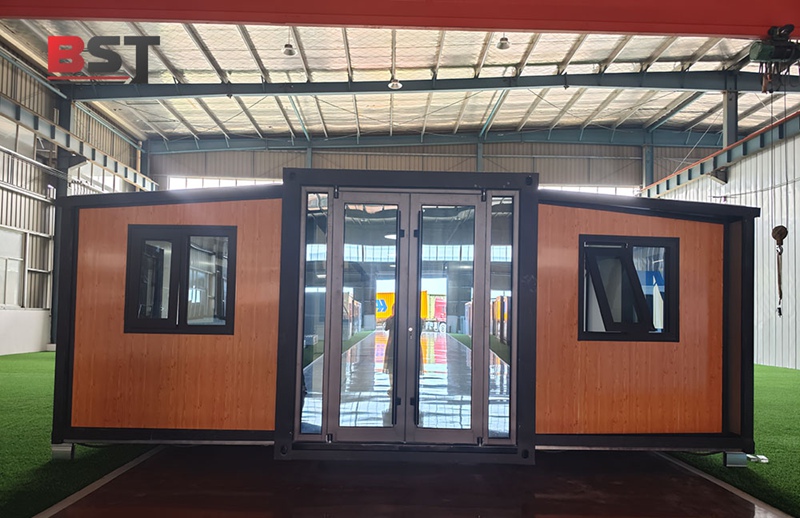
The concept of folding housing emerged at the intersection of global urbanization pressures, housing shortages, and the need for rapid emergency shelter solutions. Folding houses combine advanced engineering with refined architectural aesthetics, offering structures that are both practical and visually compelling.
These homes are prefabricated in factories, then transported to installation sites where they can be unfolded—often within hours—into fully functional living spaces equipped with plumbing, electrical wiring, and insulation.
Early innovators in this field, such as Fold Engineering (UK) and MAD Architects, demonstrated that foldable homes could deploy in under 10 minutes using mechanical or hydraulic systems, proving the feasibility of rapid-deployment architecture.
2. Design Principles: Where Engineering Meets Elegance
At the core of the folding house lies a careful balance between structural integrity and portability.
Key Design Principles
-
Modular Geometry
Units fold into compact, transportable forms—often rectangular prisms—and expand into multi-room layouts. -
Integrated Infrastructure
Electrical, water, heating, and insulation systems are embedded within the foldable framework. -
Lightweight High-Strength Materials
Steel, aluminum alloys, and advanced composites reduce weight without compromising durability. -
Energy Efficiency
Many folding houses incorporate solar panels, rainwater harvesting, and passive ventilation.
The result is a home that is both functional and adaptable, suitable for urban rooftops, mountain retreats, remote sites, or disaster recovery zones.
3. The Construction Process: From Factory to Foundation
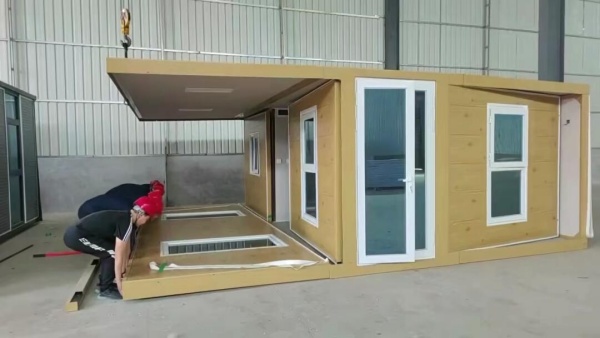
Unlike traditional buildings, folding houses follow a streamlined, highly efficient construction process:
Step 1: Factory Fabrication
Structural frames, wall panels, and interior modules are prefabricated under controlled conditions, ensuring precision, reduced waste, and faster assembly.
Step 2: Transportation
The folded unit—often occupying only one-fifth of its expanded volume—is transported by truck or container.
Step 3: Deployment
Using hydraulic or mechanical unfolding systems, the structure expands within minutes into a finished, and sometimes fully furnished, home.
This process significantly reduces on-site labor, weather delays, and environmental disruption.
4. Sustainability: Beyond Green—Toward Circular Design
Folding houses exemplify sustainable architecture through multiple dimensions:
-
Reduced Carbon Footprint
Factory-based production minimizes waste and emissions. -
Reusability and Mobility
Structures can be relocated instead of demolished, aligning with circular economy principles. -
Renewable Energy Integration
Solar panels and battery systems support off-grid living. -
Minimal Land Impact
Installation often requires no deep foundation, preserving natural landscapes.
These advantages make folding houses ideal for eco-tourism resorts, research stations, and temporary urban infill projects.
5. Applications: From Emergency Shelters to Luxury Living
Thanks to their adaptability, folding houses serve a wide range of uses:
-
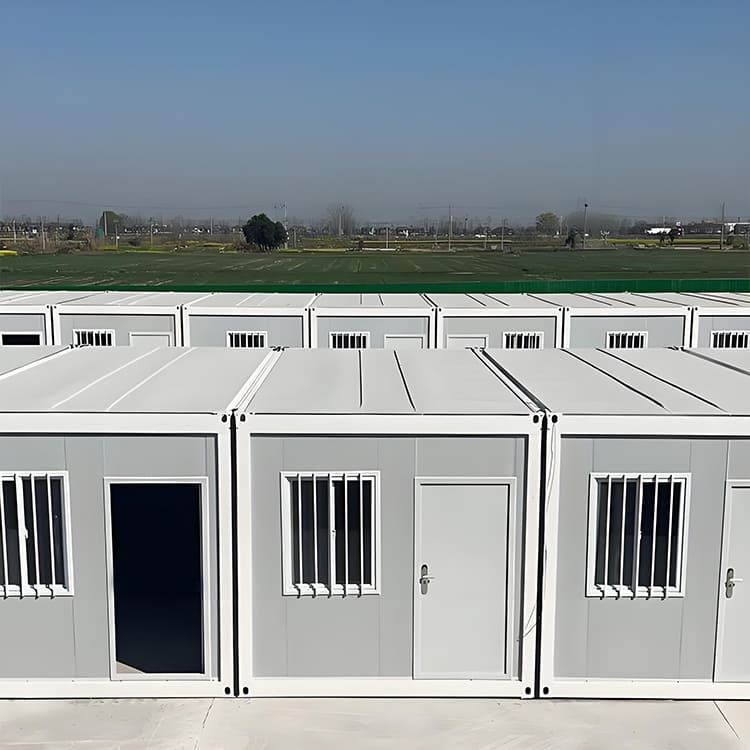
Disaster relief housing for earthquakes, floods, and conflicts
-
Affordable urban residences in high-density cities
-
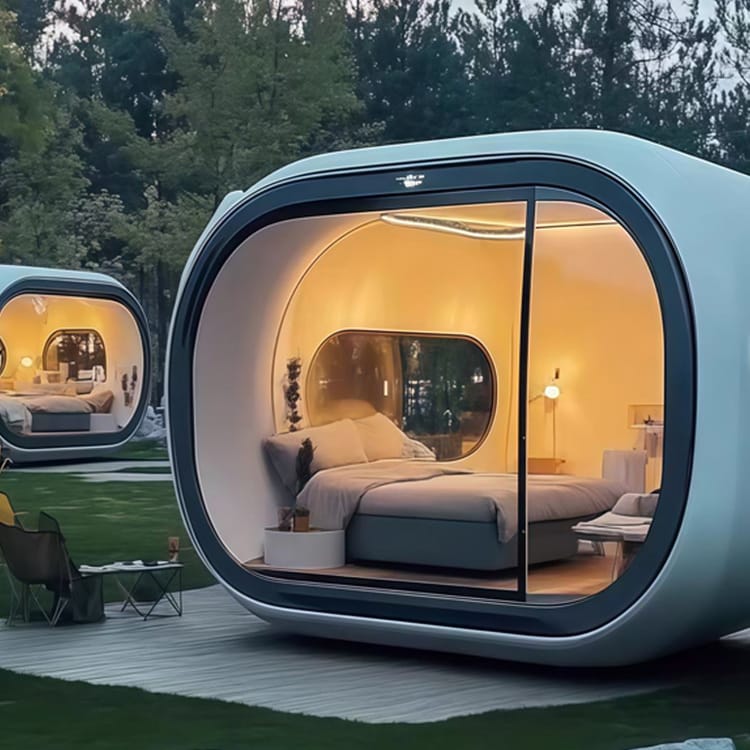
Tourism and hospitality units, including glamping lodges
-
Remote workspaces for digital nomads
-
Military and field shelters for medical or tactical operations
This versatility reflects the core philosophy of folding architecture:
a home is not a fixed place, but a responsive system.
6. Economic and Social Impact
Economically, folding houses can reduce construction costs by 30–50%, primarily through factory efficiency and shortened project timelines. For developing regions, they offer scalable solutions to urgent housing shortages.
Socially, folding houses democratize access to safe, comfortable living spaces, empowering people to live flexibly without being constrained by traditional real estate models.
7. Challenges and Limitations
Despite their promise, folding houses face several challenges:
-
Regulatory Barriers – Building codes often lag behind modular innovation
-
Durability Concerns – Repeated folding may impact long-term structural integrity
-
Utility Integration – Connecting to local infrastructure can be complex
-
Public Perception – Prefabricated housing still carries a “temporary” stigma
As materials improve and regulations evolve, many of these challenges are being systematically addressed.
8. The Future of Folding Architecture
The next decade is likely to see mainstream adoption of folding and prefabricated housing. Integration with AI-driven smart systems, robotic assembly, and biophilic materials will further enhance comfort, efficiency, and sustainability.
In a world shaped by climate migration and global housing shortages, folding houses may become not just an alternative—but the standard model for adaptive living.
Redefining What “Home” Means
Folding houses challenge long-held assumptions about permanence, ownership, and space. They prove that a home can be portable yet personal, efficient yet beautiful, temporary yet enduring.
As technology, design, and human aspiration converge, folding architecture stands as a testament to a new era—one where shelter moves with us, adapts to us, and sustains the world around us.