Skip to content
You may already have a piece of land—or maybe just an idea—and you’ve heard that self storage is one of the most stable, high-yield real estate investments available today. But once the excitement fades, real concerns quickly surface.
What if the local market is already saturated?
What if construction takes too long and drains your cash flow?
What if you build the facility, but no one rents a unit?
These are not small worries. They are the kinds of questions that can determine whether your project succeeds—or never gets off the ground.
This article takes a step back from floor plans and construction details to focus on the big-picture question: Is building a self storage facility actually feasible for you? Drawing on real-world experience with prefab and container-based self storage systems, we’ll walk through market demand, land constraints, financial risk, and scalable strategies that help investors move forward with confidence.
Market Potential and Self Storage Demand Analysis
Every feasibility study starts with demand. Even the most efficient facility will fail if units remain empty.
Look Beyond the Hype
The growth of self storage is real—but it’s not evenly distributed.
High-density urban areas, fast-growing suburbs, and regions with strong small-business activity often show continued demand for storage space. In contrast, smaller or stagnant markets may already be fully supplied. What works in one city can underperform badly in another.
Context matters more than headlines.
How to Spot Real Demand Signals
You don’t need expensive market research to identify opportunity. Practical indicators include:
-
New apartment or condominium developments nearby
-
A growing population of freelancers, mobile workers, or gig-economy users
-
Few secure self storage facilities within a short driving radius
-
Strong local small-business activity with limited warehouse space
-
High numbers of short-term residents, digital nomads, or international workers
These groups frequently need temporary storage between leases or during travel.
Pro tip: A simple Google Maps search for “self storage near me” quickly reveals competition density and location gaps.
Think Like a Tenant, Not Just an Investor
Before committing to construction, ask a simple question: Would you store your own belongings here?
Access, security, visibility, and convenience all influence occupancy. That’s why many investors choose portable shipping container storage as a low-risk testing model.
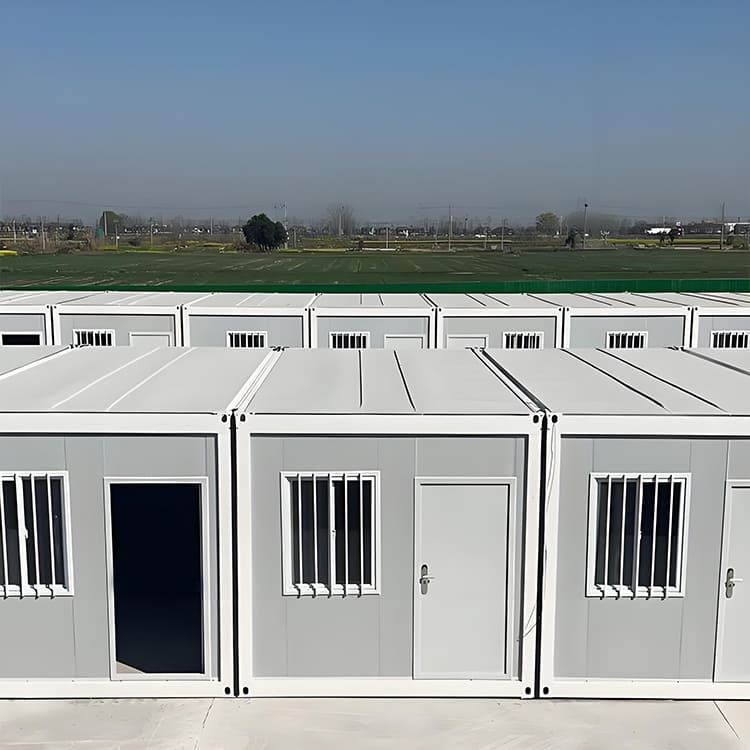
Instead of building a full facility, they start with a small deployment—often 10 to 20 container units—on leased or owned land. These units function as secure, rentable self storage spaces, allowing owners to measure real demand, track occupancy, and gather user feedback.
If demand proves strong, expansion is straightforward: add more units. If not, the downside risk remains limited.
Land Use, Zoning, and Site Constraints
Even strong market demand won’t matter if your land can’t support a self storage project.
Zoning Is Not Optional
Local zoning regulations vary widely, and not all commercially zoned land allows self storage. Common restrictions may involve:
-
Height or fencing limitations
-
Traffic flow and loading requirements
-
Noise or operating hour restrictions
-
Setback rules near residential zones
-
Limits on impermeable surface coverage
-
Exterior design or aesthetic controls
-
Restrictions on temporary or modular structures, including containers
Working with an experienced modular or container storage builder early in the process can help ensure compliance before costly design decisions are made.
What Makes a Site Suitable?
Sites that perform best for self storage typically share several characteristics:
-
Easy vehicle access for loading and unloading
-
Visibility from main roads, improving trust and walk-in traffic
-
Flat, well-drained terrain that minimizes site preparation costs
-
Access to utilities for lighting, security systems, and automated gates
-
Proximity to residential neighborhoods or business hubs
Challenging sites—such as narrow lots, uneven terrain, or land with temporary-use restrictions—may still be viable with container-based storage layouts, which require less permanent construction and a smaller footprint.
Financial Feasibility and Startup Cost Considerations
Understanding cost structure and payback timeline is essential before moving forward.
Why Lower Initial Risk Matters
Traditional concrete self storage facilities require large upfront capital and long construction timelines. In contrast, prefab steel and shipping container storage systems significantly reduce time to market.
Container-based setups can often begin generating rental income within 30 to 60 days, especially when paired with basic automation such as keypad access or online booking.
You don’t need hundreds of units to start. Even a compact setup of 20–30 rentable containers can generate steady monthly revenue while keeping debt and financial exposure manageable.
Focus on Payback, Not Just Cost
Fast deployment means earlier cash flow. Earlier cash flow reduces risk.
A phased expansion strategy allows investors to reinvest revenue into additional units, scaling capacity only when demand is proven. This approach creates momentum without locking capital into oversized facilities too early.
Speed to Market as a Competitive Advantage
In self storage, timing can define success.
Launching early in an underserved area allows operators to establish pricing power and customer loyalty. Delayed entry often forces new facilities to compete on price alone.
Prefab and container-based solutions shorten construction timelines by reducing weather delays, simplifying permitting, and lowering labor requirements—often allowing projects to move from approval to first tenants in under 90 days.
Operational Feasibility: Running the Facility
Construction is only half the equation. Day-to-day operations must also be manageable.
Simplified Management Models
Smaller or modular self storage sites often operate efficiently with remote management systems, including:
-
Automated gate access
-
Online payments and bookings
-
Camera-based surveillance
Container units simplify maintenance, as each unit is independent and easy to repair without disrupting the entire facility.
Many operators also integrate solar-powered lighting and motion sensors, reducing energy costs and long-term maintenance.
When Container-Based Self Storage Makes the Most Sense
Container-based models are particularly effective when:
-
You’re entering a developing area with limited competition
-
You want to start small and expand gradually
-
Permanent construction faces zoning or permitting delays
-
Market demand is uncertain and needs testing
They may be less suitable for high-end, climate-controlled indoor facilities or locations where aesthetic restrictions outweigh cost efficiency.
Conclusion
Building a self storage facility is not just about construction—it’s about timing, demand, land usability, and risk management. Container-based and prefab storage solutions offer a flexible, scalable way to test markets, reduce upfront investment, and reach revenue faster. For many investors, feasibility isn’t about finding the perfect site—it’s about choosing a model that adapts as the market reveals itself.