Skip to content
Australia’s housing crisis continues to intensify, driven by rising demand, long construction timelines, and limited supply. In response, the Commonwealth Bank of Australia (CBA) has announced a significant strategy to support prefabricated construction, positioning it as a key solution to accelerate housing delivery.
As the first Australian bank to join the Australian Prefabricated Building Association (prefabAUS), CBA is not only providing financial backing to the sector but also introducing policy reforms aimed at simplifying how prefabricated homes are purchased and financed. This initiative marks a major step toward expanding access to high-quality, sustainable housing across Australia.
Prefabricated Construction: A Scalable Answer to Housing Shortages
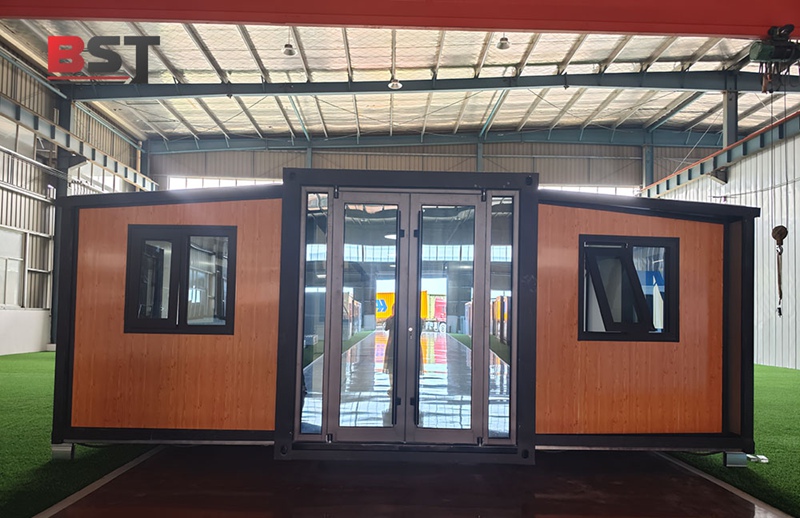
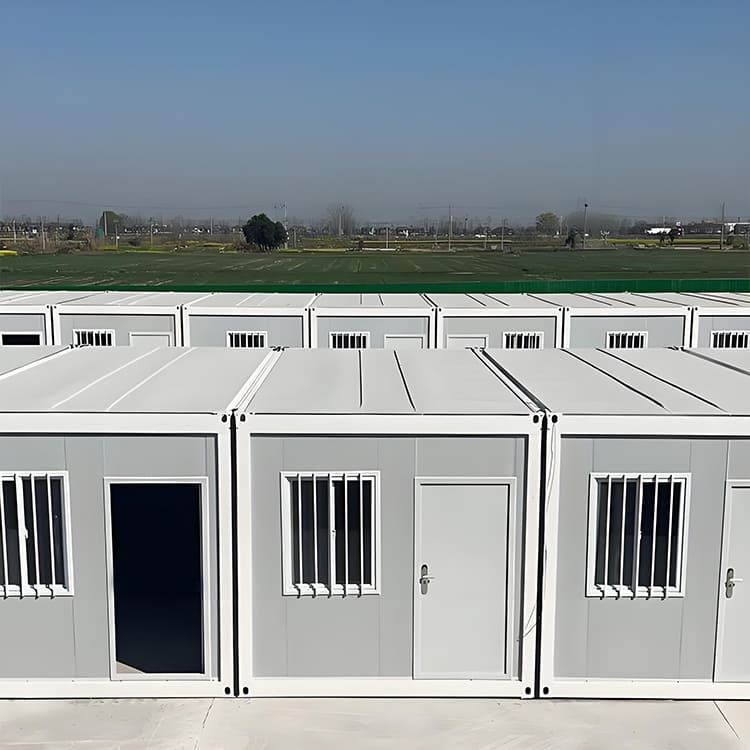
Prefabricated construction involves manufacturing building modules in a controlled factory environment and assembling them on-site. Compared with traditional construction methods, this approach delivers clear advantages:
-
Shorter build times
-
Higher efficiency and consistency
-
Reduced material waste
-
Improved quality control
In many cases, a prefabricated home can be completed in 10–12 weeks, whereas traditional on-site construction often takes 18 months or longer. This speed advantage alone makes prefabrication a compelling solution for addressing urgent housing shortages.
However, despite its technical maturity, prefabricated construction has faced slow adoption in Australia—largely due to financing challenges.
Financing Barriers and CBA’s Role in Industry Standardization
One of the main obstacles limiting the growth of prefabricated housing has been the lack of standardized contracts and lending frameworks. Without clear standards, both buyers and manufacturers have struggled to secure bank financing.
By joining prefabAUS, CBA aims to support the development of standardized contracts for Modern Methods of Construction (MMC). These standards are expected to reduce risk for lenders, improve transparency, and unlock broader access to financing—injecting new momentum into the prefabricated housing sector.
CBA’s New Policy: Making Prefabricated Homes More Accessible
CBA plans to introduce a new policy designed specifically to lower the financial threshold for prefabricated homebuyers.
Under this policy:
-
Buyers may receive up to 60% of the contract value upfront, before on-site installation begins
-
For CBA-approved prefabricated manufacturers, upfront funding could increase to 80%
This approach significantly eases cash-flow pressure for buyers and manufacturers alike. By simplifying the financing process, CBA is encouraging more Australians to consider prefabricated housing as a practical and affordable option.
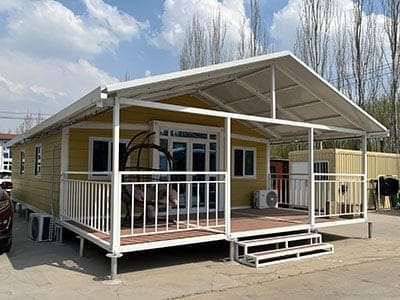
Key Advantages of Prefabricated Buildings
Beyond faster construction, prefabricated buildings offer long-term benefits in cost efficiency and sustainability.
Higher Efficiency and Quality Control
Factory-based production allows precise material usage and consistent quality checks, reducing errors commonly found in on-site construction.
Lower Costs and Reduced Waste
Standardized processes minimize material waste and shorten labor timelines, helping control overall project costs.
Environmental Sustainability
Prefabricated construction produces fewer emissions, generates less waste, and supports more energy-efficient building practices—aligning closely with global sustainability goals.
While Australia’s prefabricated housing market is still emerging, international examples highlight its potential. In Sweden, approximately 80% of homes are built using prefabricated methods. By comparison, Australia’s adoption rate remains low, suggesting significant room for growth.
Industry Collaboration Driving Innovation and Scale
The partnership between CBA and prefabAUS represents more than financial support—it reflects a broader push toward modernization within Australia’s construction industry.
Prefabricated housing companies such as Modscape are already expanding capacity. Its new production facility at Essendon Fields, Melbourne, can produce up to eight housing modules per day, supporting large-scale residential developments.
This scalable model is particularly valuable for delivering affordable housing in areas facing social and economic pressure, where rapid construction is essential.
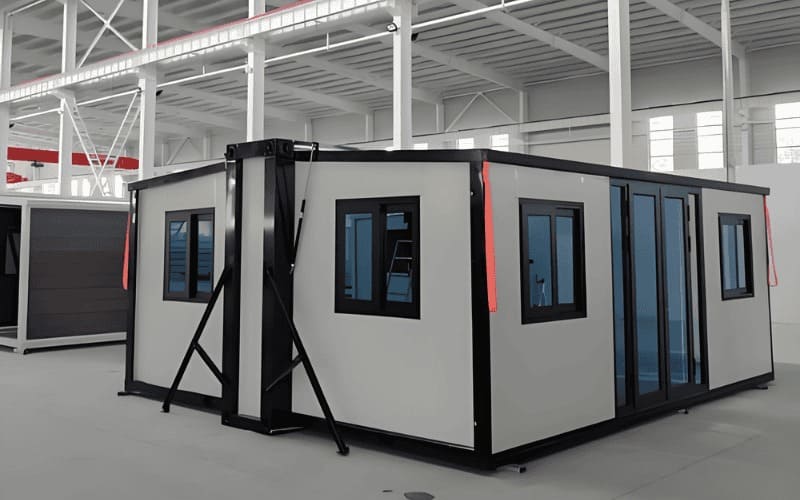
Prefabricated Construction Moving Toward the Mainstream
CBA’s involvement is expected to accelerate the mainstream adoption of prefabricated housing in Australia. As financing becomes more accessible and industry standards improve, prefabricated construction is likely to shift from a niche solution to a dominant building method.
This trend also creates new opportunities for the steel structure industry. Steel’s strength, flexibility, and sustainability make it a core component of prefabricated buildings. Companies that align early with this transition will be well-positioned to meet future housing demand and participate in the next phase of construction innovation.
Conclusion
CBA’s strategic support for prefabricated construction marks a turning point in Australia’s response to its housing crisis. By lowering financing barriers, supporting industry standards, and encouraging innovation, prefabricated housing is poised to become a faster, more sustainable, and more accessible solution for future residential development.