Skip to content
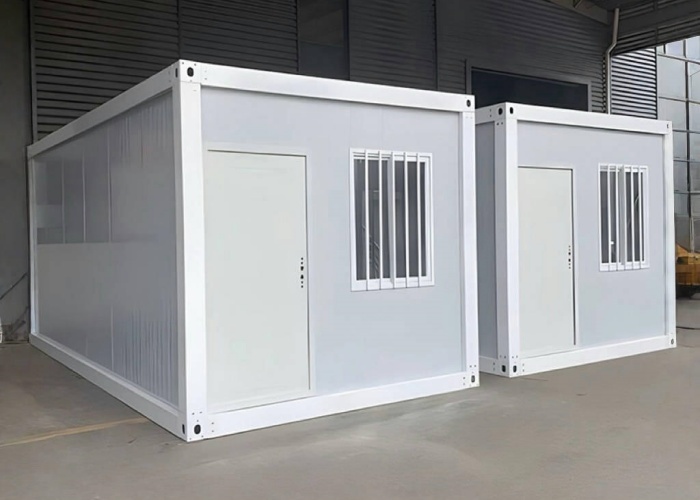
As modular and portable buildings gain global attention, the safety of foldable container houses has become one of the most frequently asked—and unavoidable—questions.
Whether used for construction site accommodation, camp housing, commercial spaces, or emergency shelters, safety is always a top priority before making any decision. This concern is completely reasonable. Terms like foldable, expandable, and quick installation often sound efficiency-focused, leading many people to wonder whether stability and durability are compromised.
So, can a foldable container house truly be as reliable as traditional buildings?
Are there risks related to wind, rain, long-term use, or frequent relocation?
To answer these questions, we must look beyond appearances or marketing claims and examine safety from multiple professional dimensions—including structural logic, material selection, real-world usage conditions, and manufacturing capability.
Why Many People Doubt the Safety of Foldable Container Houses
Before understanding how these structures actually work, many users instinctively feel hesitant.
On one hand, the word “foldable” is often associated with temporary structures, lightweight construction, or instability. On the other hand, compared with concrete buildings or fully welded container units, foldable designs naturally include more joints and connection points—raising concerns about structural strength.
Adding to this skepticism is the uneven quality of products on the market. Some low-cost foldable houses reduce expenses by cutting corners in materials, structure, or workmanship, reinforcing misconceptions about the entire category.
However, mature foldable container house systems do not sacrifice safety for convenience. Instead, they balance efficiency and stability through engineering design.
Folding Does Not Mean Instability
A key concept often misunderstood is the difference between transportation state and usage state.
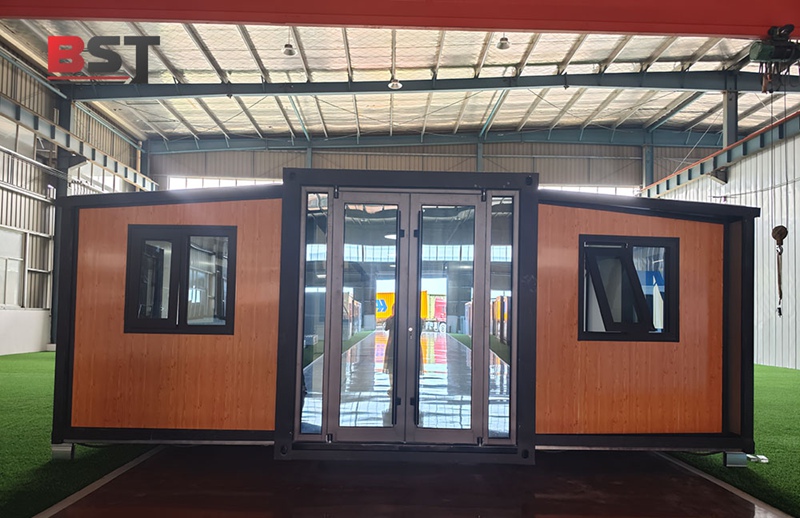
During transportation, the house is folded to reduce volume and logistics costs. Once installed, it is fully unfolded and locked into place, forming a complete load-bearing structure.
In its deployed state:
-
Roof loads, wind forces, and self-weight are distributed through columns and beams
-
Structural loads are transferred to the ground evenly
-
Folding joints function as fixed structural connections, not moving parts
As long as the locking mechanism and joint design meet engineering standards, the folding feature does not weaken safety.
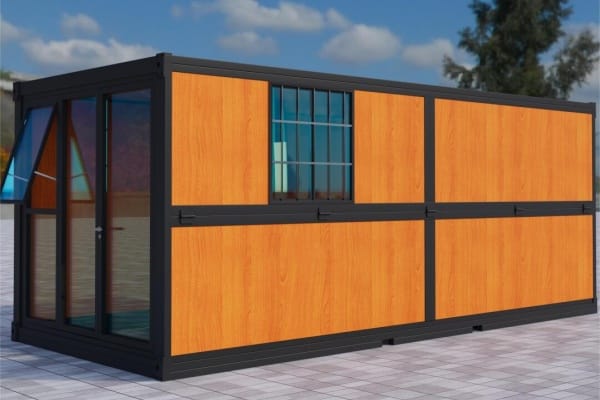
Steel Structure and Materials Define the Safety Baseline
If structural design defines how safety works, materials define the minimum safety threshold.
High-quality foldable container houses typically use high-strength structural steel, such as:
-
Q235B steel
-
Q345 steel
These materials are widely used in the construction industry due to their stable and predictable performance.
For example, Q235B steel offers:
-
Yield strength around 235 MPa
-
Good ductility, reducing brittle fracture risk
-
Suitability for repeated stress and transportation cycles
Wall and roof systems usually adopt sandwich panel structures, where the goal is not extreme lightness, but a controlled balance of strength, insulation, and fire resistance.
Common core materials include:
-
Rock wool, achieving A-grade non-combustible fire ratings
-
PU panels, offering excellent thermal insulation with conductivity as low as 0.022–0.024 W/(m·K)
These material choices are made to ensure long-term structural safety, not visual appeal.

Wind, Rain, and Environmental Resistance in Real Use
A common question is whether foldable container houses are only suitable for mild, short-term conditions.
In reality, performance depends on design standards and installation quality.
Wind Resistance
When properly anchored using anchor bolts or embedded foundations, foldable container houses typically achieve:
-
Wind resistance equivalent to Level 8–10 winds
-
Structural stability under gusts of approximately 20–25 m/s
Wind loads are distributed through the structural frame, not concentrated at folding points.
Rain and Waterproofing
Well-designed units focus on:
-
Roof drainage slopes
-
Wall joint detailing
-
Sealing systems at folding connections
With overlapping structures and multiple sealing strips, waterproof performance can meet standard building envelope requirements, even under continuous heavy rainfall.
Environmental Adaptability
Steel structures are inherently resistant to temperature fluctuations. With appropriate corrosion protection—such as hot-dip galvanizing or anti-rust coatings—foldable container houses can operate reliably in:
-
High-humidity regions
-
Strong sunlight environments
-
Areas with large temperature differences
This adaptability explains their widespread use in construction camps, field operations, and emergency housing.
Fire and Electrical Safety in Daily Use
In practice, many safety concerns come not from weather, but from daily occupancy.
Modern foldable container houses have advantages here:
-
Electrical systems are typically pre-wired in the factory
-
Standardized layouts reduce on-site wiring risks
-
Quality control is easier under factory conditions
Regarding fire safety, as long as compliant materials are used and basic usage rules are followed—such as avoiding electrical overload—the safety level is comparable to other lightweight building systems.
Safety Ultimately Depends on the Manufacturer
At this point, one conclusion becomes clear:
The safety of a foldable container house does not depend on folding itself—it depends on who manufactures it.
Poor steel quality, simplified locking systems, or non-standard welding can introduce serious risks. Conversely, professional manufacturers integrate folding structures into the overall load-bearing system from the design stage.
Rather than asking “Is this type of house safe?”, a better question is:
“Does the manufacturer truly understand structure, materials, and application scenarios?”
Why More Projects Choose BST Foldable Container Houses
In real-world applications, safety and stability must be considered from the very beginning, not added later.
This is why many projects evaluate BST foldable container solutions early in the planning phase.
From design onward, BST:
-
Integrates folding nodes into the complete structural system
-
Reinforces key connections and locking mechanisms
-
Ensures stability even after repeated transport and long-term use
Material selection prioritizes proven structural steel and enclosure systems, maintaining sufficient safety margins instead of pursuing extreme cost reduction.
Before leaving the factory, structures, enclosure systems, and functional modules are standardized and tested—significantly reducing on-site uncertainty. For users, this results in:
-
Clearer installation processes
-
Lower construction risk
-
Performance based on repeatable manufacturing, not field adjustments
This systematic approach—from design and materials to production and testing—ensures consistent long-term safety and reliability.
Conclusion
Foldable container houses are not inherently unsafe. When properly designed, manufactured, and installed, they provide reliable structural performance comparable to other lightweight building systems. Safety depends on engineering logic, material quality, and—most importantly—the expertise of the manufacturer. Choosing a professional, system-oriented supplier is the key to long-term stability and confidence.