Skip to content
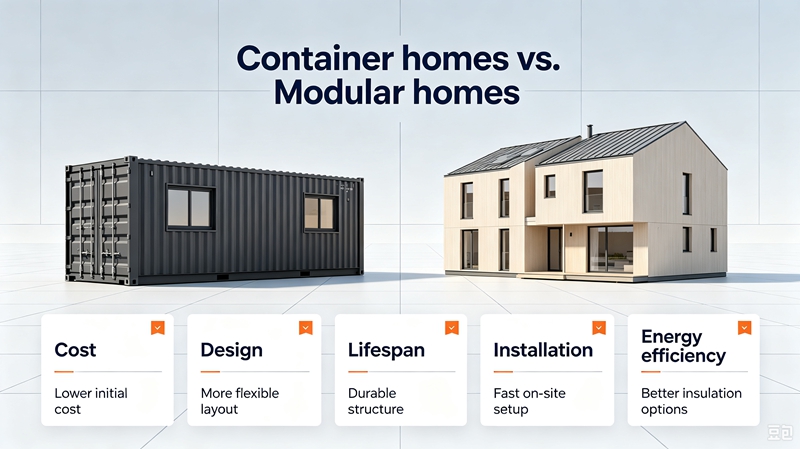
As alternative housing solutions gain popularity, many buyers find themselves choosing between container homes and modular homes. Both offer faster construction and lower costs than traditional housing—but they are designed for very different needs.
This article compares container homes and modular homes across cost, durability, flexibility, permits, and long-term value, helping you decide which option fits your project best.
What Is a Container Home?
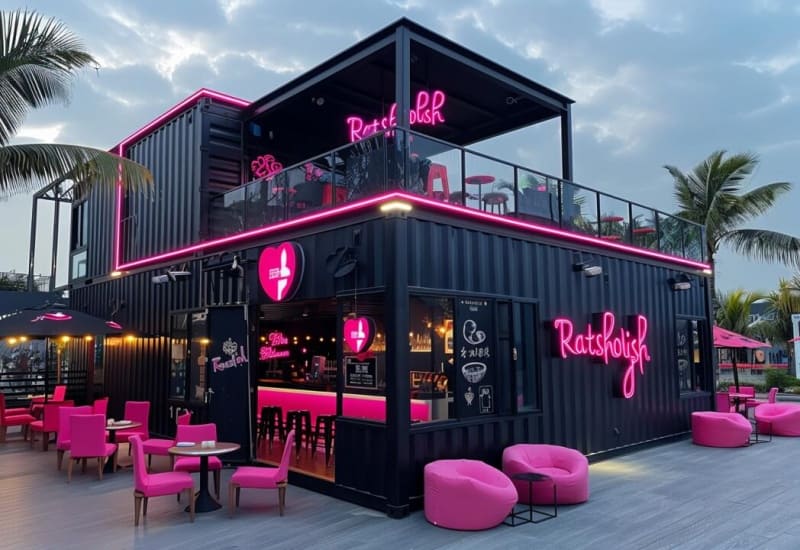
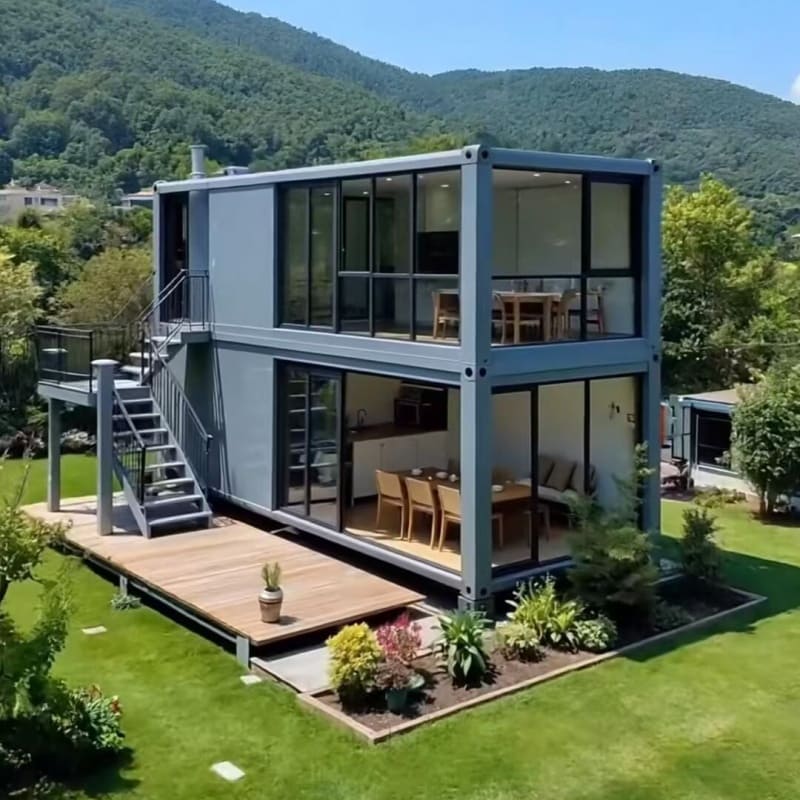
A container home is built using steel shipping containers that are professionally modified into livable or commercial spaces. These homes are known for their:
-
Strong steel structure
-
Modular stacking capability
-
Industrial-modern appearance
Container homes are widely used for residential units, cafés, retail shops, offices, and mobile buildings.
What Is a Modular Home?

A modular home is constructed from factory-built modules, usually made from steel frames or wood framing, and assembled on-site. These homes are designed to look similar to traditional houses and often comply easily with residential building codes.
Modular homes are commonly used for permanent residential housing, schools, hospitals, and workforce housing.
Cost Comparison: Container Homes vs. Modular Homes
Container Homes
-
Average cost: $25,000–$90,000
-
Lower material cost
-
Faster production time
Modular Homes
-
Average cost: $60,000–$150,000+
-
Higher finish options
-
Higher transportation costs
➡️ Container homes are generally more affordable, especially for small to mid-size projects.
Design Flexibility and Customization
Container Homes
-
Best for compact and modular layouts
-
Can be stacked and combined
-
Structural limitations due to fixed dimensions
Modular Homes
-
Greater freedom in floor plans
-
Larger room sizes
-
Easier multi-bedroom layouts
➡️ Modular homes offer more interior design freedom, while container homes excel in modular expansion.
Durability and Lifespan
-
Container homes use weathering steel and can last 35–50 years with proper maintenance.
-
Modular homes typically last 50–70 years, similar to traditional houses.
➡️ Modular homes generally have a longer lifespan, but container homes perform well in harsh environments.
Permits and Building Code Approval
Container Homes
-
Permit approval depends heavily on local zoning laws
-
May require engineering certification
-
Some areas restrict container aesthetics
Modular Homes
-
Often easier to approve
-
Built to recognized residential standards
-
More accepted in suburban developments
➡️ Modular homes usually face fewer regulatory obstacles.
Construction Speed and Installation
-
Container homes: 2–6 weeks production + quick installation
-
Modular homes: 6–12 weeks production + longer on-site assembly
➡️ Container homes are ideal for fast deployment projects.
Energy Efficiency and Sustainability
Both housing types can be highly energy-efficient when designed correctly.
-
Container homes promote recycling and reuse
-
Modular homes allow for thicker insulation systems
➡️ Sustainability depends more on design quality than structure type.
Which One Should You Choose?
Choose a container home if you value:
-
Lower upfront cost
-
Fast installation
-
Modern or industrial design
-
Commercial or rental use
Choose a modular home if you need:
-
Traditional home appearance
-
Larger family living space
-
Easier permitting
-
Long-term residential use
| Your Need | Pain Point | Recommended Choice | Best For |
|---|---|---|---|
| 💰 Lower upfront cost | Traditional construction is expensive | Container Home | Rental units, guest houses |
| ⚡ Fast installation | Long construction time | Container Home | Holiday homes, glamping |
| 🌴 Modern design | Want a stylish second home | Container Home | Resorts, countryside retreats |
| 📐 More space | Need a larger living area | Modular Home | Family homes |
| 🏡 Traditional appearance | Want a conventional house style | Modular Home | Permanent residences |
| 👨👩👧 Long-term living | Need more rooms and customization | Modular Home | Family living |
Whether container homes or modular homes, they both allow for some customize depend on your preference and budget. It cannot be denied that these designs both solve the problems of the housing issue and achieve convenient living in modern life.
Conclusion
Container homes and modular homes both offer compelling alternatives to traditional construction. Container homes shine in affordability, speed, and modular scalability, while modular homes excel in design freedom, lifespan, and residential acceptance.
If you both love the two, and trouble how to choose between them, welcome to contact us for clear recommendations.
The best choice depends on your budget, location, and long-term goals.