Skip to content
Meta Description: Learn how floating homes manage waste safely with shore sewers, holding tanks, MSDs, and eco-friendly systems while staying compliant with laws.
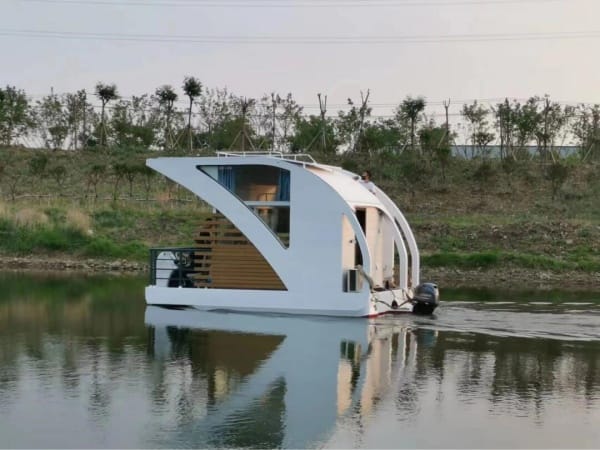
How Do Floating Homes Manage Sewage?
Cities like Amsterdam, famous for its canals and thousands of floating homes, raise an important question: where does toilet waste go? Living on water is fun, but managing sewage is serious.
This guide explains how floating homes handle waste, covering fixed vs. mobile homes, holding tanks, pump-outs, sanitation devices, eco-friendly options, and legal rules.
Floating Homes vs. Houseboats: Sewage Differences
-
Floating homes: Fixed houses on water, connected to docks and utilities.
-
Houseboats: Mobile vessels carrying their own water and waste systems.
Key point: Plumbing must never leak. Raw sewage cannot be dumped into lakes or canals. Environmental laws require all waste to be collected, treated, or pumped ashore.
Types of Floating Homes and Sewage Solutions
Fixed Floating Homes
-
Connect directly to shore plumbing.
-
Dock provides water via hose; sewer hose carries toilet waste to the marina system.
-
Works like a land home; pipes run under the dock.
-
Benefits: Easy setup, low maintenance, no odors, fully legal.
Mobile Houseboats
-
Carry freshwater tanks and holding tanks.
-
Blackwater tanks: Toilet waste
-
Graywater tanks: Sinks and showers
-
Toilets may use electric or manual marine heads.
-
Waste stays onboard until pump-out or proper disposal.
Shore Sewer Connections
-
Sealed pipe runs from the floating home to the city sewer.
-
Connection via Y-valve or deck fitting.
-
Dock pump system transfers waste to municipal treatment, just like a land home.
-
Advantages: No holding tanks, no pump-outs, fully reliable and legal.
Holding Tanks and Pump-Out Systems
Tank types:
-
Blackwater: Toilet waste
-
Graywater: Dishwashing, bathing, laundry
Pump-out options:
-
Dockside stations: Hose connects to marina system.
-
Mobile services: Service boats empty tanks at mooring.
-
Built-in dock pumps: Hand or electric pumps transfer waste to shore.
Pros & Cons:
-
Flexibility vs. maintenance needs
-
Risk of overflow if neglected
-
Must follow local waste rules
Marine Sanitation Devices (MSDs)
Types:
-
Type I: Chemical/macerating toilet, partially treats waste, may discharge small boats’ waste.
-
Type II: Biological treatment, aerates and disinfects, can discharge if allowed.
-
Type III: Holding tank, stores all waste until shore disposal.
Usage:
-
Any vessel with a toilet must have an approved MSD.
-
Most houseboats use Type III to avoid discharging in No-Discharge Zones.
-
Advanced options: electric macerators, incinerating or composting toilets.
Legal and Environmental Rules
-
No-Discharge Zones (NDZs): Sewage must remain onboard; valves may be locked.
-
Compliance: Marinas and authorities enforce rules; violations can bring fines.
-
Reason: Sewage pollutes water, spreads disease, harms aquatic life.
Eco-Friendly Sewage Solutions
-
Composting Toilets: Minimal water use, converts waste into compost, requires proper handling.
-
Graywater Treatment/Reuse: Filters water for reuse in toilets or irrigation.
-
Advanced Filtration Units: Biological reactors or membranes treat wastewater for reuse, ideal for self-sufficient homes.
Modern Floating-Home Community Design
-
Fully Serviced Neighborhoods: Docks integrate sewer and water lines, like land neighborhoods.
-
Off-Grid / Hybrid Systems: Composting toilets, rainwater, solar power, communal treatment tanks, or reed beds.
-
Choice depends on: Infrastructure, maintenance capacity, environmental goals.
Choosing the Right Sewage System
Factors to consider:
-
Mobility: Fixed vs. mobile
-
Maintenance: Shore hookup (low), tanks/MSDs (moderate), compost (high)
-
Regulations: NDZs, local/federal rules
Cost & Practicality:
| System | Cost | Maintenance | Notes |
|---|---|---|---|
| Shore Sewer Hookup | High | Minimal | Feels like land home |
| Holding Tanks & Pump-Out | Low | Moderate | Flexible, requires scheduled pump-outs |
| MSD Type I/II | Moderate | Needs power | Treats waste offshore |
| Composting Toilet | High | Requires handling | Water-saving, eco-friendly |
Conclusion
Floating homes can manage waste safely using shore sewer hookups, holding tanks, MSDs, or eco-friendly systems. The choice depends on mobility, maintenance capacity, legal requirements, budget, and environmental goals. Modern floating-home communities increasingly combine convenience with sustainability, making life on water as comfortable and safe as life on land.