Skip to content
From choosing sustainable materials to furnishing your first guest unit — this guide brings together everything resort owners, glamping operators, and eco-investors need to build a profitable, nature-forward accommodation experience.
Sustainable Design for Eco-Friendly Glamping
Design with Nature as Your Blueprint
Eco glamping is built on harmony — between comfort and the environment, between modern amenities and natural materials. Every design decision, from the orientation of your units to the textiles inside, either supports or undermines that harmony. The good news: getting it right also reduces operating costs and makes your property more marketable to the fast-growing segment of environmentally conscious travelers.
Choose materials that earn their place
Start with the structure itself. Bamboo, reclaimed wood, cork, and recycled metal are excellent material choices — renewable or repurposed, durable, and locally sourceable in many regions, which reduces transportation emissions. These natural materials also add genuine warmth and authenticity to your site’s aesthetic, creating a stronger sensory connection with the outdoors that guests remember and share.
Passive design: efficiency before technology
Smart orientation and insulation reduce energy demand before any technology is even switched on. Position your units to maximize natural light and airflow for the local climate. Double-glazed windows, cross-ventilation layouts, and overhanging roof structures all reduce the need for mechanical heating and cooling — cutting operating costs while keeping interiors genuinely comfortable across seasons.
Solar & Wind Power
Harness solar panels, micro wind turbines, and battery storage systems to enable true off-grid operation — while strengthening your sustainability brand.
Water Conservation
Incorporate low-flow fixtures, rainwater harvesting, and greywater recycling systems — essential for remote locations with limited water resources.
Waste Reduction
Adopt composting toilets and eco-friendly cleaning solutions to reduce waste volume, lower maintenance costs, and improve operational efficiency.
Native Landscaping
Use earth-tone palettes, green roofs, and native plant species to create a natural, immersive environment that enhances guest well-being.
Design Insight
Sustainability isn’t just a feature — it’s a competitive advantage that reduces costs, improves resilience, and elevates your brand image.
Why Modern Resorts Choose Capsule Houses
The Shift Away from Traditional Construction
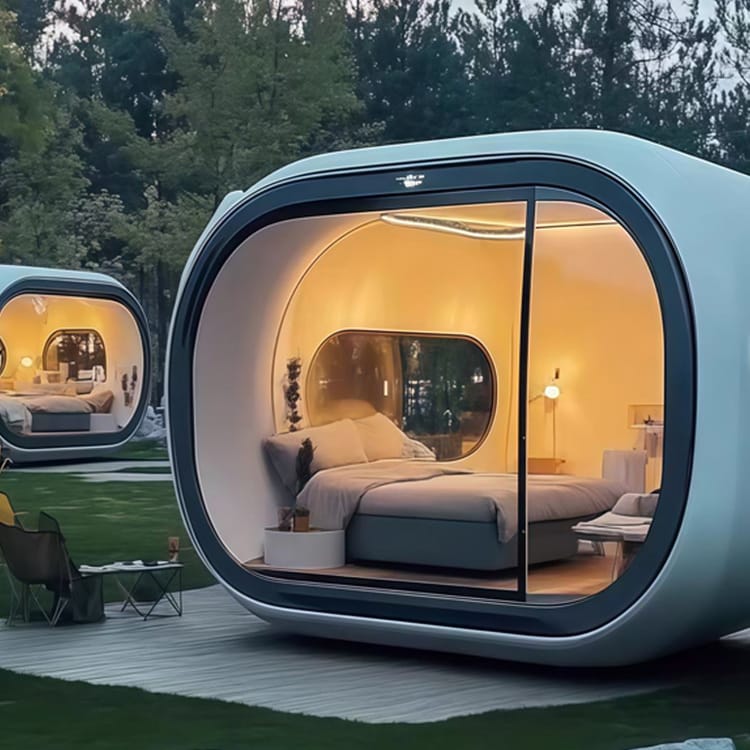
Resorts and eco-tourism destinations around the world are moving away from concrete construction toward flexible, fast-deployed prefab units — with capsule houses leading the transition. As travelers increasingly seek unique, design-forward, and Instagram-worthy stays, capsule houses offer a rare combination: high aesthetic appeal, operational efficiency, and environmental responsibility in a single prefabricated package.
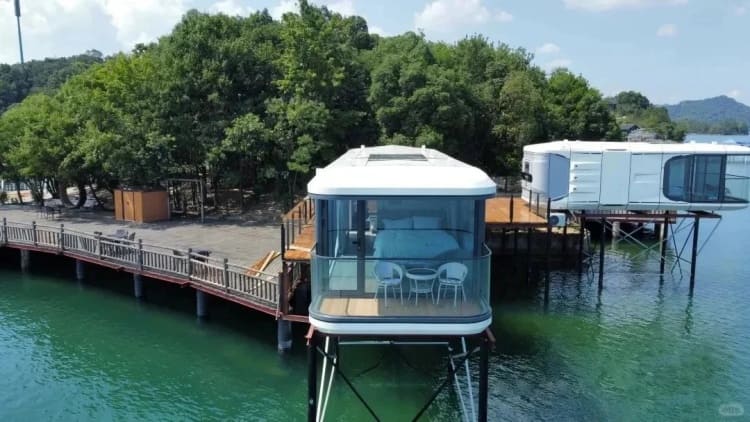
01 — Fast deployment — open weeks earlier
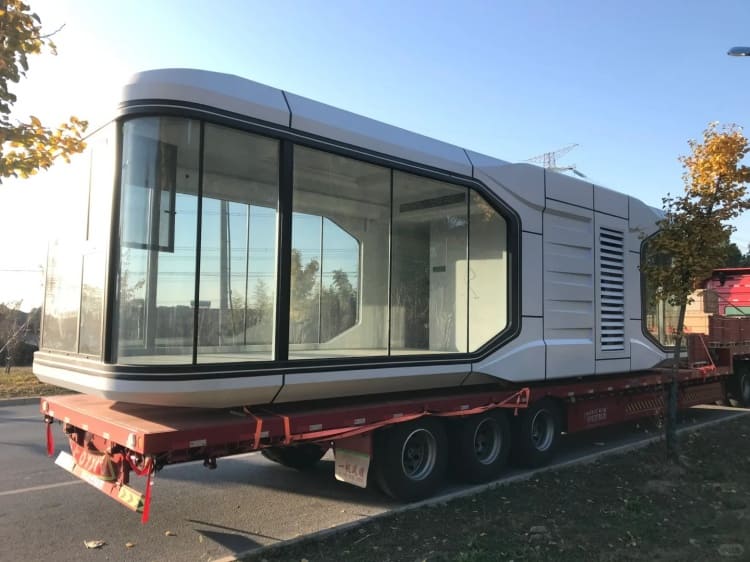
Capsule houses arrive 90% pre-assembled.
Install, connect utilities, and welcome guests in a fraction of the time required for conventional builds — shortening investment return cycles significantly.
02 — Unique architecture that drives social media
Futuristic curves, panoramic windows, and immersive layouts become the visual centerpiece of any resort.
Glamping parks consistently report higher occupancy and social reach after installing capsule units.
03 — Compact footprint, full comfort
Hotel-grade insulation, smart home features, energy-efficient HVAC, and premium interior layouts deliver the “capsule luxury” experience without sacrificing guest comfort.
04 — Built for harsh outdoor conditions
Anti-rust steel frames, weather-resistant shells, high thermal efficiency, and strong sealing for wind, snow, and humidity — reliable performance from beachfront to mountain terrain.
05 — Modular and scalable
Expand your site quickly, adjust layouts, or reconfigure without heavy construction.
Suitable for holiday resorts, glamping villages, coastal cabins, eco-camps, and boutique hotel extensions.
06 — Lower environmental footprint
Minimal land disturbance, recyclable materials, low-energy insulation, and reduced construction emissions make capsule houses a natural fit for eco-resort branding.
Application flexibility: where capsule houses work
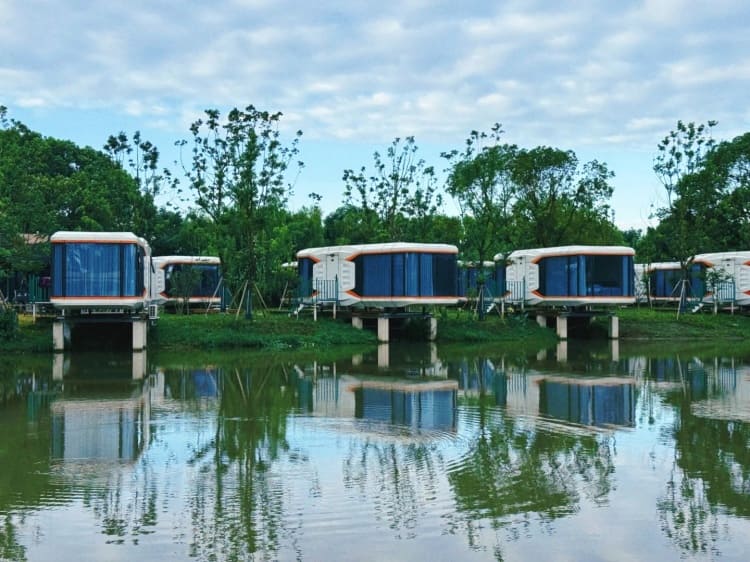
Capsule houses are not limited to a single type of deployment. Resorts, scenic areas, campsites, and commercial projects all benefit from their modular nature. Common applications include holiday resorts and glamping villages, homestay communities and coastal cabin clusters, mountain-view pod accommodations, eco-camps and adventure parks, and boutique hotel room expansions — each leveraging the structural flexibility that prefab construction uniquely enables.
Furnishing Tips for Resort & Glamping Units
Furnishing for Guests Is Different from Furnishing for Yourself
When you’re furnishing tiny houses or capsule units for a resort or glamping site, the design priorities shift significantly. This isn’t about personal taste — it’s about durability, ease of maintenance, and creating an experience that guests immediately understand and appreciate. Every furnishing choice should answer three questions: Can it withstand repeated guest use? Can it be cleaned quickly between stays? Does it make the space feel welcoming on arrival?
Plan effective zones first
Tiny spaces require intentional zone planning before a single piece of furniture is selected. Design clear, defined areas for sleeping, relaxing, eating, and storage — with open pathways between each. Vertical storage (wall shelves, high cabinets, under-bed drawers) reclaims floor area that would otherwise be lost. Built-in benches with hidden storage and wall-mounted fold-down tables maximize functionality without eating into circulation space.
Choose furniture built for hospitality use
Hospitality furniture requirements differ fundamentally from residential ones. Look for multifunctional pieces — convertible benches, fold-down tables, beds with integrated drawers — that earn their footprint by serving multiple purposes. Surfaces must be easy to wipe clean. Weight matters: lighter furniture is easier to move for deep cleaning and layout adjustments between bookings. Standardizing furniture across all your units also simplifies procurement, maintenance, and replacement.
Furniture selection criteria
- Multifunctional pieces
- Easy-clean surfaces
- Durable for repeat use
- Lightweight & movable
- Integrated storage
- Properly scaled to space
Interior design principles
- Light or neutral color palette
- Warm, soft lighting
- Natural textures (wood, cotton)
- Strategic mirror placement
- Minimal but meaningful decor
- Plants or small personal touches
Maintenance planning
- Standardize across all units
- Plan easy replacement cycles
- Bulk purchase for uniformity
- Select durable long-life pieces
- Budget delivery & installation
Design for perceived spaciousness
Light or neutral color palettes make compact interiors feel brighter and larger than they are. Warm, soft lighting combined with natural materials like exposed wood and cotton textiles creates a cozy atmosphere without visual clutter. Strategic mirror placement enhances both brightness and space perception. Floor-to-ceiling windows, where the structure allows, are the most powerful single intervention — connecting the interior visually to the landscape outside and dramatically reducing any sense of confinement.
Budget smart: total cost, not just unit price
Procurement planning for hospitality furnishing goes beyond the price tag on each piece. Factor in delivery costs, installation time, replacement frequency, and the ease of sourcing spares. Standardizing furniture across all your units — same beds, same storage, same fabrics — reduces the complexity of restocking and makes staff training for changeovers faster and simpler. Long-lasting pieces have a higher upfront cost but consistently outperform cheap alternatives over a three-to-five year horizon.
Frequently Asked Questions
Can capsule houses be used year-round in cold climates?
Yes. Quality capsule houses with double-glazed windows, high-density insulation, and efficient HVAC systems maintain comfortable interior temperatures in conditions from -20°C to 45°C. Always verify the thermal performance specifications with your supplier before purchasing for extreme climates.
How quickly can a capsule house glamping site be operational?
Most prefab capsule houses arrive 90% pre-assembled. With site preparation already complete, installation and utility connection can be finished in days to weeks — compared to months for conventional construction. This speed advantage is one of the primary reasons resorts choose prefab over traditional builds.
What renewable energy options work best for off-grid glamping sites?
Solar panels with battery storage are the most common and cost-effective solution for off-grid glamping. Micro wind turbines work well in coastal or elevated locations with consistent wind. Many capsule house manufacturers offer solar-ready mounting points as a factory option, simplifying integration significantly.
How many square feet does a guest need to feel comfortable in a glamping unit?
Well-designed capsule glamping units of 96–160 sq ft are sufficient for couples when the interior layout is planned intentionally — with built-in storage, multifunctional furniture, and a strong visual connection to outdoor space through panoramic windows. Outdoor decks of even 40–60 sq ft meaningfully expand the perceived living space.
Is it better to standardize furnishings across all units or customize each one?
For most resort operators, standardization is the better operational choice — it simplifies procurement, staff training, maintenance, and replacement. Differentiation can be achieved through soft furnishings (cushion colors, artwork, bedding patterns) without creating the operational complexity that comes with entirely different furniture configurations per unit.
What certifications should I require from a capsule house supplier?
At minimum, look for CE marking (EU safety compliance), ISO 9001 (quality management), and confirmation that all materials meet food-contact and occupancy regulations in your target market. For eco-resort branding, ask for documentation on recyclable material content and energy performance ratings.