Skip to content
Expandable container houses are admired for their fast installation and flexible space solutions. But behind their smooth unfolding lies a clever expansion system — either manual or hydraulic. Understanding how these systems work helps you select the right model for your project, whether it’s a mobile home, office, or temporary accommodation.
In this article, we’ll explain the two main expansion systems, their advantages, and how to maintain them for long-lasting performance.
Manual Expansion Systems
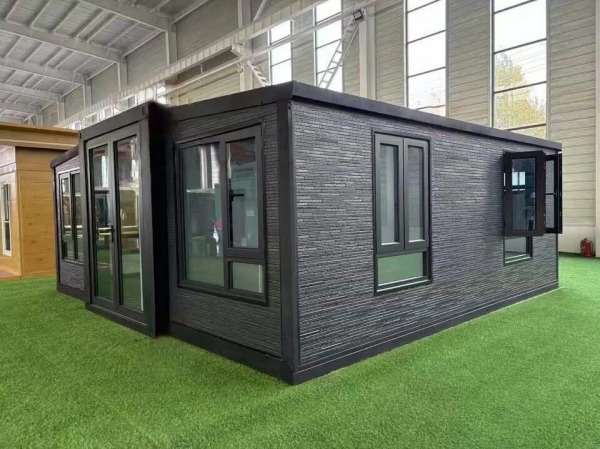
Manual expansion is the simplest and most cost-effective method. In this setup, the walls and roof panels are unfolded or slid out by hand. The mechanism uses hinges, pivot joints, and mechanical locks to secure each part in place once expanded.
Each wall panel can be extended by one or two workers using handles or guiding rails. Once fully opened, the locking pins click into place, ensuring structural stability.
Advantages of manual systems:
-
No need for electrical or hydraulic power.
-
Easier maintenance and low failure rate.
-
Lower production cost and lighter total weight.
Best for: small housing units, single-side expansions, or locations without access to power tools.
🔗 Explore how single and double-side expansion methods work in our Expandable Container House Guide.
Hydraulic Expansion Systems
Hydraulic systems use hydraulic cylinders or rams to extend and lift sections automatically. Operators control the expansion using a pump lever or electric switch, which drives the fluid through the cylinders to push panels outward or raise the roof.
These systems are typically found in double-side or roof-lift models where manual lifting would be difficult due to weight.
Advantages of hydraulic systems:
-
Faster and smoother deployment.
-
Safer for large, heavy panels.
-
Suitable for frequent setup and relocation.
Typical setup:
-
Connect the power or manual pump.
-
Activate the lift — the walls or roof rise evenly.
-
Lock sections automatically with built-in latches.
When installed properly, hydraulic expansion can cut deployment time to under 10 minutes.
🔗 See how roof-lift models expand vertically in our Expandable Container House Structure Guide.
Comparison: Manual vs. Hydraulic Systems
| Feature | Manual | Hydraulic |
|---|---|---|
| Power Source | Human | Hydraulic/Electric |
| Setup Speed | Moderate | Very Fast |
| Cost | Lower | Higher |
| Maintenance | Simple | Requires oil checks |
| Best For | Small units | Large/multi-side models |
Both systems fold down to standard container dimensions for easy shipping. The choice depends on your budget, deployment frequency, and crew capability.
Maintenance and Safety Tips
To ensure safe operation:
-
Regularly lubricate hinges, bolts, and sliders.
-
For hydraulic models, inspect oil levels and hoses every six months.
-
Check locking pins and seal gaskets after each transport.
-
Follow manufacturer’s pressure ratings and avoid overloading.
Small maintenance efforts prevent leaks, uneven lifting, or mechanical wear — extending the lifespan of your expandable container house.
Conclusion
Both hydraulic and manual systems play key roles in the convenience and mobility of expandable container homes. Manual setups are ideal for simplicity and cost savings, while hydraulic systems deliver speed and automation for larger units.
Knowing the difference helps you choose a home that matches your site conditions, usage frequency, and setup preferences.