Skip to content
As global travel shifts toward nature, sustainability, and remote escapes, 2025 has seen an explosion in demand for outdoor accommodations. Among these, capsule homestays—compact, prefabricated pods installed at campsites—are emerging as the most profitable model.
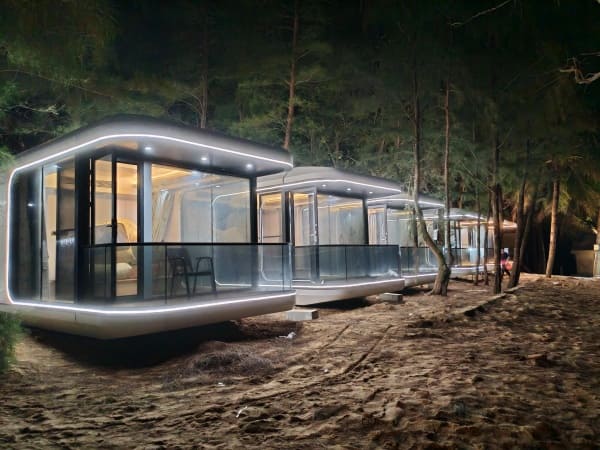
But what makes a small pod in the woods outperform a luxury apartment or beachfront villa? Let’s explore the factors behind this booming trend.
Lower Land and Setup Costs
One of the biggest profit drivers is low land acquisition cost. Rural and semi-rural plots near national parks, forests, or lakes are far more affordable than urban properties.
When combined with prefabricated capsule houses or glamping pods, setup costs drop dramatically. With average unit prices between $20,000–$30,000, investors enjoy faster ROI—especially as nightly rates for off-grid luxury stays continue to rise.
Growing Demand for Unique Stays
According to Airbnb and Booking.com data, travelers increasingly seek unique, experience-driven accommodations—cabins in the woods, dome tents under the stars, or capsule-style pods blending nature and comfort.
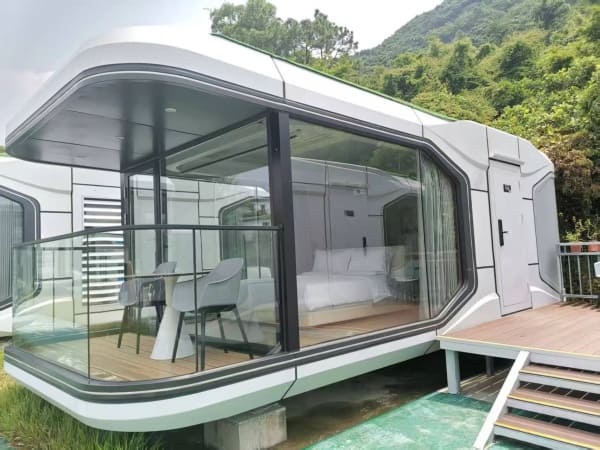
Guests want to disconnect and recharge, not stay in conventional hotels or suburban rentals. A private capsule near a lake or mountain offers that ideal “digital detox” escape.
Durability and Low Maintenance
Unlike traditional buildings, prefabricated capsule houses are engineered for longevity.
They arrive pre-assembled or modular, using galvanized steel frames, aluminum shell cladding, and double low-e glass for insulation.
With minimal upkeep and a lifespan of up to 60 years, these pods offer consistent returns over decades.
Location Flexibility and All-Season Use
Capsule homes can be installed almost anywhere—forests, hillsides, beaches, or plains—with basic leveling and minimal foundation work.
Their 5–9 ton structure ensures excellent resistance to wind and rain, making them suitable for unpredictable climates.
This mobility allows investors to position units in high-demand scenic areas without complex construction permits.
Off-Grid Utility Management
Modern capsules easily integrate with solar panels, rainwater harvesting, and portable sewage tanks—reducing utility costs and enabling eco-friendly, off-grid living.
Guests appreciate the blend of sustainability and independence, while hosts save on infrastructure expenses.
Marketing Advantage: Visual Storytelling Power
Capsule homestays thrive on social media.
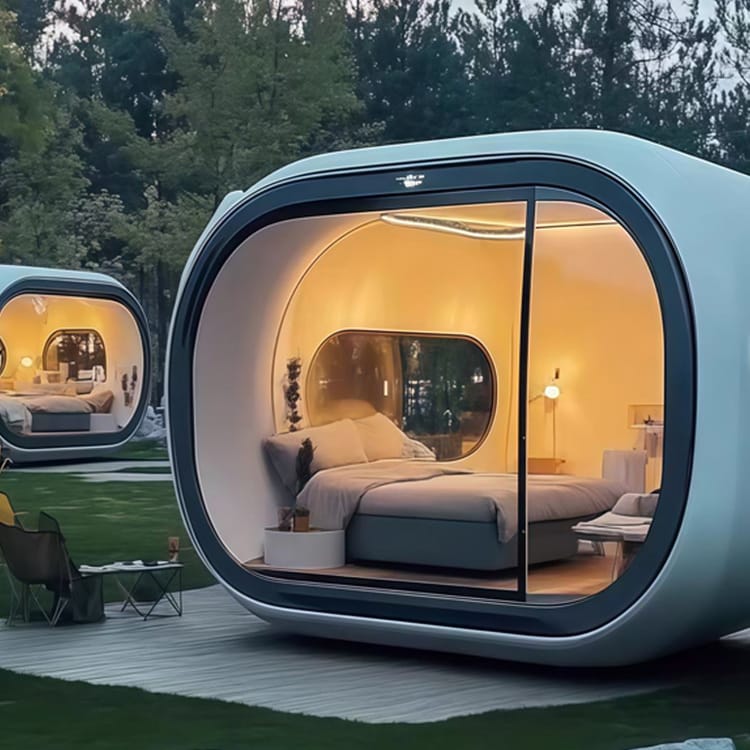
Their sleek, photogenic designs make them perfect for Instagram and TikTok, attracting organic exposure.
A picturesque pod in a forest or by a lake quickly becomes an “Instagrammable stay”, driving free marketing and higher occupancy rates.
Scalable and Sustainable Business Model
Capsule setups offer flexibility. Start with 2–3 units, monitor demand, and scale gradually.
Each pod occupies minimal land and creates minimal environmental disruption—aligning perfectly with eco-conscious tourism trends.
This makes capsule homestays an ideal entry point for small investors, startups, or boutique hospitality brands.
Capsule Houses vs. Tiny Houses: Key Differences
While both emphasize small living, capsule homes are more modular, durable, and weather-resistant, designed for quick installation and relocation.
Tiny houses often require more custom construction and maintenance.
For investors, capsule units offer greater scalability and ROI potential in the outdoor accommodation market.
Final Thought: Smart Investment, Sustainable Future
Outdoor capsule homestays represent the future of hospitality—affordable to build, easy to scale, and loved by travelers seeking unique, sustainable stays.
With the right location and marketing, even small operators can achieve high returns and long-term success in 2025 and beyond.
Summary
Outdoor capsule homestays combine low setup costs, flexible locations, and strong guest appeal, making them one of 2025’s smartest investment opportunities.
With durable prefab design and social media-friendly aesthetics, they promise quick ROI and long-term sustainability.