Skip to content
When budgets shrink and timelines compress, one question often arises: is modular construction actually cheaper?
If you’re a developer or contractor managing rising costs, labor shortages, or rapid scaling needs, understanding the real economics behind modular building could unlock a lasting competitive edge.
But here’s the truth most teams miss: modular isn’t always cheaper upfront—but when it is, it’s because the project was designed around it from day one.
This guide explores where modular construction saves money, where it doesn’t, and how to tell if it’s right for your project.
What “Cheaper” Really Means in Construction
When people ask if modular is cheaper, the first question should be: cheaper in what sense?
Are we referring to upfront costs per square meter, total project expenses, or long-term lifecycle value?
In construction, “cheap” can be misleading. A low starting cost may hide future expenses from delays, rework, or inefficiencies.
For most developers, the real measure of value is total project efficiency—how predictably and quickly the job gets done, and when the building can start generating returns.
So, when evaluating modular construction, consider the full picture:
-
Timeline — How fast can it be delivered?
-
Labor — How much workforce is needed on-site?
-
Material efficiency — How much waste is reduced?
-
Cash flow — How soon can revenue start?
“Cheaper” in modular construction often means a better financial outcome overall, not just a smaller invoice at the start.
Where Modular Construction Saves You Money
Comparing modular to traditional methods isn’t just about cost per square meter. The real savings come from how the project is executed.
1. Faster Construction Timeline
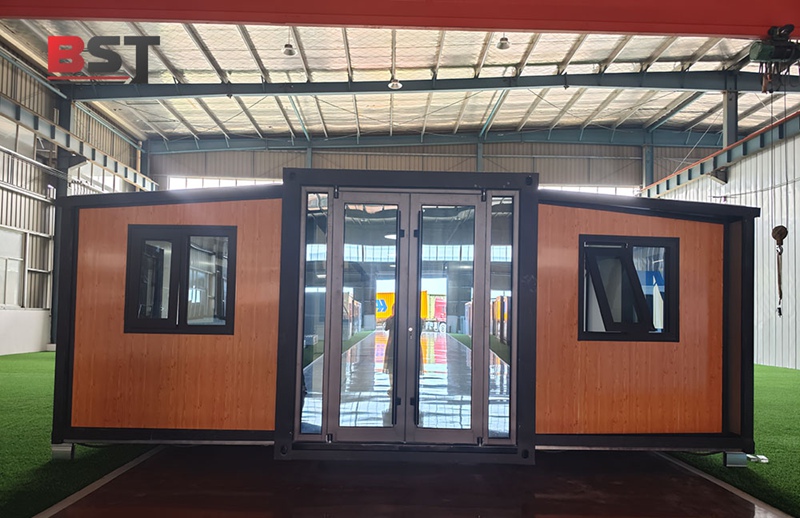
Most of the work happens in the factory while site prep continues simultaneously. This overlap cuts weeks or even months off delivery—leading to faster occupancy and earlier revenue.
2. Lower On-Site Labor Costs
Factory-based builds require fewer on-site workers, minimizing expenses for daily operations, travel, and accommodation—a major advantage in areas with labor shortages.
3. Reduced Waste and Better Material Control
Modular construction uses precision manufacturing to reduce material waste, over-ordering, and rework, saving money and improving sustainability.
4. Fewer Delays and Weather Disruptions
Factory environments are weather-proof, avoiding rain or snow delays and keeping budgets predictable.
[Image suggestion: indoor modular production facility]
When these factors combine, modular delivers a leaner, more predictable construction process from start to finish.
Does Modular Always Cost Less?
Not always—and that’s the honest answer.
Modular isn’t automatically cheaper in every case. Costs depend on project type, scale, location, and design repetition.
For small or highly customized builds, expenses like transportation, crane installation, or factory coordination may outweigh savings.
However, for the right kinds of projects—especially those with repeatable units, tight deadlines, or remote sites—the financial benefits are clear.
Modular construction works best when:
-
Designs are repeatable (e.g., hotels, student housing)
-
Speed is critical (e.g., clinics, workforce housing)
-
Labor costs are high (e.g., remote or urban builds)
Bottom line: modular pays off when the project is designed to leverage its strengths.
Hidden Costs to Watch For
Every building method has trade-offs, and modular is no exception. Being aware of potential hidden costs helps avoid surprises later.
1. Transportation & Crane Installation
Moving large modules from the factory to the site—especially over long distances—can be expensive. Proper logistics planning is essential.
2. Site Preparation
Foundations, utilities, and access roads still follow traditional construction processes. These must be factored into the schedule and budget.
3. Customization
Highly tailored designs increase engineering complexity and cost. Sticking close to standardized modules keeps pricing predictable.
4. Local Code Compliance
Different jurisdictions have unique building codes. Non-alignment can lead to delays or redesigns, particularly for multi-region developers.
Understanding these factors early allows you to plan more accurately and avoid financial friction later.
When Modular Construction Makes the Most Sense
Modular construction shines in time-sensitive, repetitive, or labor-limited projects.
-
Speed — Projects needing immediate occupancy, like clinics or schools, gain from rapid build times.
-
Repetition — Repeated unit layouts (hotel rooms, dorms, apartments) lower design and production costs.
-
Remote sites — In hard-to-access areas, factory-built modules simplify logistics and reduce expenses.
If your project checks one or more of these boxes, modular likely offers a strong financial advantage.
Real-World Example: Modular vs. Traditional
Imagine a 60-unit workforce housing project, each 25 m².
Traditional construction:
-
9–10 months to complete
-
$1,200–$1,400 per m²
-
Heavy reliance on on-site labor
-
Prone to weather delays
Modular construction:
-
Factory work and site prep run in parallel
-
5–6 months total delivery time
-
$1,000–$1,250 per m²
-
Reduced labor and smoother coordination
Even if the initial costs are similar, modular provides faster ROI through earlier occupancy and fewer budget overruns.
Additional Financial Benefits
Beyond materials and labor, modular adds indirect financial value:
-
Faster occupancy = improved cash flow
-
Lower financing costs through reduced construction periods
-
Less disruption in urban areas
-
Sustainability incentives like tax breaks or green certifications
These hidden advantages can make modular more profitable even when upfront savings are modest.
Final Verdict: Is Modular Worth It?
Modular construction isn’t a universal cost-cutter—but in the right context, it delivers speed, consistency, and smarter cost control.
When designed strategically, modular projects provide better financial outcomes through shorter timelines, leaner operations, and earlier revenue generation.
For developers and contractors, the winning strategy is to plan modular from the start, not retrofit it later. In doing so, you turn modular from an alternative building method into a competitive advantage.
Summary
Modular construction isn’t always cheaper upfront—but when aligned with the right project type and conditions, it can deliver faster builds, lower long-term costs, and stronger ROI. Understanding both savings and hidden costs is key to using modular strategically.