Skip to content
Folding houses are becoming a fast and practical solution for modern living. They save time, reduce costs, and make transportation simple. Among them, the X and Z folding houses stand out for their unique engineering and convenience.
This guide explains their key differences—folding style, setup, roof design, layout, and lifespan—so you can choose the right model for your project.
1. How the X and Z Houses Fold
The folding method determines how each model opens, functions, and maintains its strength. Both use distinct systems that influence setup time and structure.
→ Z Folding House

The Z folding house uses a roller-hinge sliding system, launched in 2022 with a modern, user-friendly design. Each section unfolds step by step, forming a smooth setup process.
Its “Z” configuration stacks the base, middle, and roof neatly, resulting in a lower transport height and straighter corners—ideal for compact transport and storage.
→ X Folding House
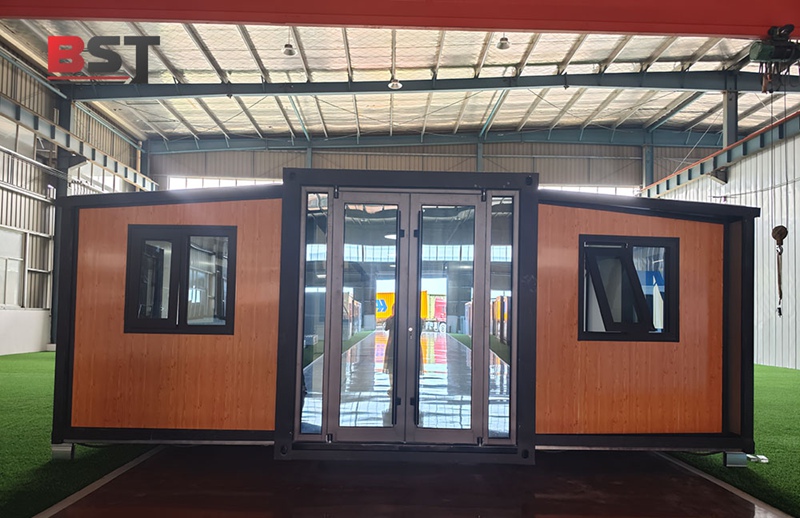
In contrast, the X folding house uses wall folding. Two wall leaves fold and meet at the center, forming an “X”-like pattern.
While this design enables a quick open-and-close motion, it creates more roof-to-wall seams, requiring slightly more attention to sealing and maintenance.
2. Setup and Transport
Both X and Z folding houses ship as closed containers for easy handling. They can be unloaded using a small crane or forklift, avoiding heavy machinery.
They are truck and container compatible, offering flexibility for long-distance delivery.
→ Z Folding House
[Image: Z folding house transport]
Lightweight and highly portable, the Z model unfolds gradually, section by section. This step-by-step motion provides safer control during setup—ideal for tight or narrow sites.
Its design supports frequent folding and unfolding, making it perfect for mobile projects like construction camps, events, or temporary housing.
→ X Folding House

The X model uses fewer unfolding steps, enabling faster setup. However, each section is heavier and requires a stronger crane and wider open space.
Best suited for open fields or rural sites, it’s a good choice for semi-permanent use where frequent relocation isn’t needed.
3. Roof Strength and Waterproofing
A folding house’s roof design affects its durability and weather resistance.
→ Z Folding House
The Z house features reinforced roof members for excellent load-bearing capacity. With gaskets and a drainage system, rainwater flows safely away, preventing pooling.
It performs well under heavy rain or light snow, offering long-term weather protection and minimal maintenance.
→ X Folding House
The X house uses roof panels formed by folding walls. It lacks additional reinforcement, so waterproofing relies mainly on sealants.
Regular checks are necessary to maintain performance, especially after heavy rain. Suitable for mild climates, it offers reliable shelter but less durability in extreme weather.
4. Space and Layout
Layout influences comfort and usability.
→ Z Folding House
The Z model offers clean room divisions, making it great for two-bedroom or staff housing. It ensures privacy and suits long-term stays or rental units.
→ X Folding House
The X model unfolds into open-plan interiors without partitions, ideal for pop-up offices, short stays, or event spaces. It prioritizes simplicity and quick setup over room separation.
5. Which Model Fits Your Project
Choosing between X and Z depends on your usage frequency, budget, and mobility needs.
→ Z Folding House
The Z model supports 100+ fold cycles and lasts about 15 years. It’s durable, weather-resistant, and designed for frequent relocation—ideal for ongoing projects or long-term mobile housing.
→ X Folding House
The X model is simpler, faster to deploy, and best for short-term use (5–8 years lifespan). It’s ideal for events, pop-up offices, or short projects that require cost efficiency and quick setup.
🧾 Conclusion
Both X and Z folding houses bring flexibility and innovation to portable living.
-
Z Folding House: Stronger, long-lasting, and perfect for frequent moves.
-
X Folding House: Simpler, budget-friendly, and great for short-term setups.
Your final choice depends on how often you’ll move it—and how permanent your project needs to be.
❓ FAQ
1. What is the main difference between X and Z folding houses?
The Z model folds with a roller-hinge system for smooth, gradual setup, while the X model folds its walls at the center for quick assembly.
2. Which folding house is more durable?
The Z folding house offers better roof strength and longer lifespan—up to 15 years—compared to the X model’s 5–8 years.
3. Can both models be transported easily?
Yes. Both are designed for container or truck transport, but the Z model’s lighter structure makes it easier to handle.
4. Which folding house is better for frequent relocation?
The Z model is specifically built for frequent folding and unfolding, making it ideal for mobile housing or event projects.