Skip to content
Ever wondered how large a capsule home can really get? The capsule house size you choose affects comfort, transport, and local permits. Don’t worry—this guide breaks it down simply.
Typical Capsule House Size Dimensions
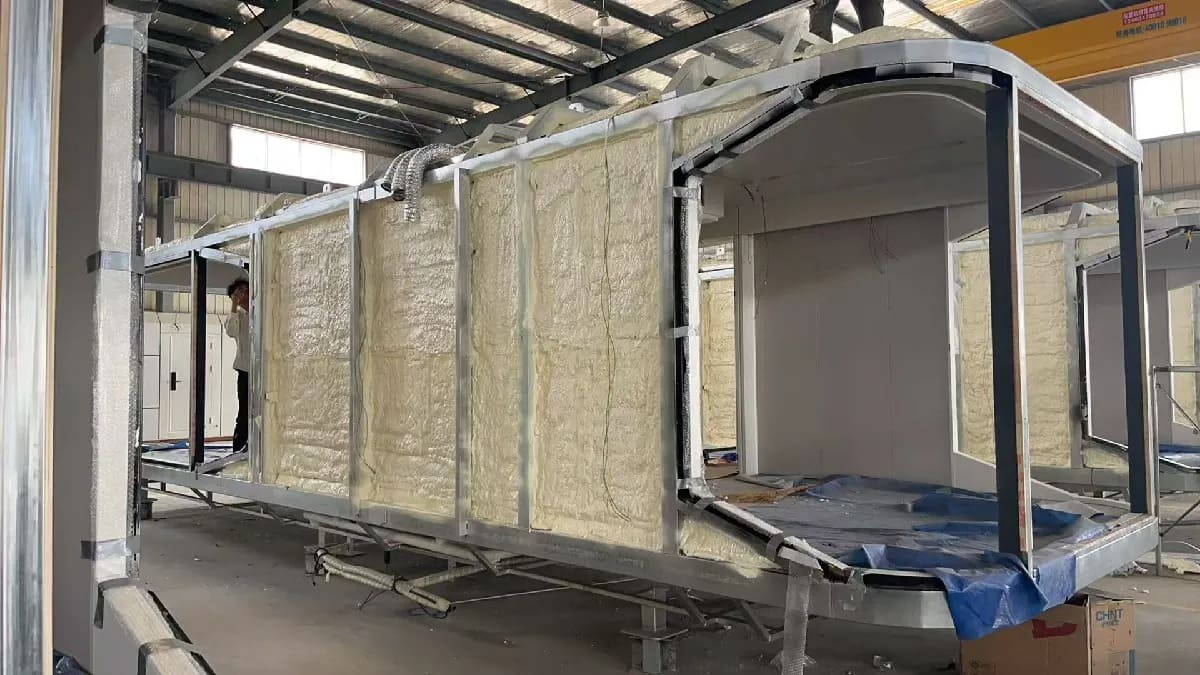
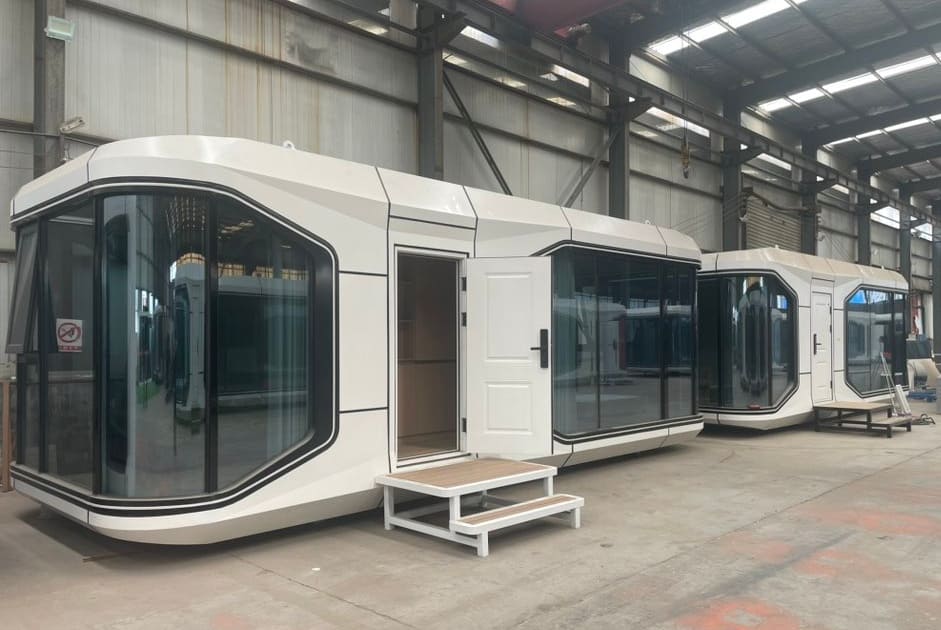
Most single-module capsule houses measure 9–12 meters long, 3.2–3.4 meters wide, and 3.2–3.4 meters high.
However, in the EU and Australia, the legal width without a permit is ≤2.55 m, and in the United States, about 2.59 m.
For easier transport, choose ≤2.55–2.59 m.
For better interior comfort, go for 3.2–3.4 m wide.
| Measurement | Standard Range | Permit-Free Width |
|---|---|---|
| Length | 9–12 m (30–39 ft) | — |
| Width | 3.2–3.4 m (10.5–11 ft) | ≤2.55–2.59 m |
| Height | 3.2–3.4 m (10.5–11 ft) | ≤4.3 m (varies) |
Why Capsule House Size Matters
The capsule house’s width affects road transport and comfort.
Height matters for bridge clearance and crane lifting.
Length affects turning space and setup on-site.
Choosing the right dimensions early helps you stay compliant and avoid costly rework.
Weight of a Capsule House
A capsule house typically weighs 10–20 tons, depending on materials and finishes.
| Factor | Impact on Weight |
|---|---|
| Frame Material | Steel, Aluminum, or Composite Panels |
| Windows | Size and glass type |
| HVAC Systems | Adds several hundred kg |
| Interior Finishes | Flooring, insulation, ceiling |
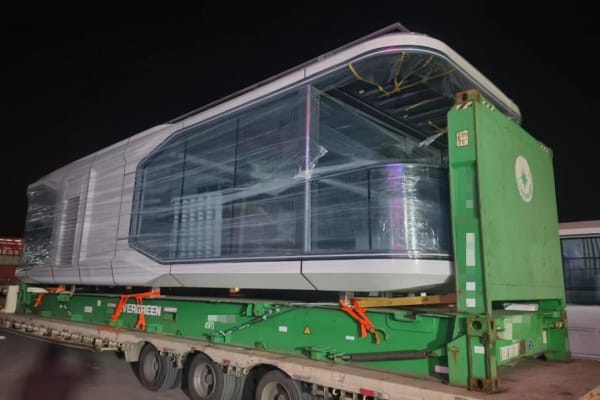
Heavier units may need larger cranes, reinforced pads, and special transport permits. Always confirm the total weight before installation.
Regional Transport Regulations
-
Max width without permit: 8.5 ft (2.59 m)
-
Wider loads need oversize permits and escorts
European Union
-
Max width: 2.55 m
-
Permits required beyond that
Australia
-
Max width: 2.50 m, height ≤ 4.3 m
-
Oversized loads need route plans and permits
If your capsule house is 3.2–3.4 m wide, plan for oversize permits and escort vehicles.
Height and Length Basics of Capsule House Size
Keep total height ≤4.3 m to avoid hitting bridges and cables.
The ideal length is 11–11.5 meters—long enough for comfort, short enough for transport.
Always check turning radius and road clearance before delivery.
Comfort vs. Transport
Narrow capsule houses (≤2.55 m) are easier to move but have tighter interiors.
Wider units (3.2–3.4 m) require oversize permits but offer:
-
Larger bathrooms
-
Real sofas and desks
-
Separate bedrooms
Transport Planning Checklist
-
Check route limits – bridges, tunnels, height, and width.
-
Book permits and escort vehicles early.
-
Plan for weather delays and keep backup days.
-
Prepare the site – crane pads, access, and foundation alignment.
-
Verify utilities and anchors before arrival.
Site Access and Installation
Ensure the site is flat, stable, and obstacle-free.
Confirm crane radius, sling angles, and foundation level before lifting.
Matching anchor points correctly ensures a safe and efficient installation.
How Can You Select the Capsule House Size?
First: Decide how many people
15-20㎡ suits one person, 30-38㎡ suits 2-4 people, while 38 m² or a multi-module design suits 4+ people.
Second: Determine the basic room you need
Third: Check Transport before finalizing the design.
If you need easier transport, consider the width around 2.5-2.6m, while 3.2-3.4m wide model can offer a more interior space.
Fourth: Set your budget
Capsule House Size vs. Cost
| Capsule House Size | Approx. Area | Typical Use | Indicative Factory Cost |
|---|---|---|---|
| Small | 15–20 m² | Studio / Glamping | $15K–$25K |
| Medium | 20–30 m² | Couple / Airbnb | $25K–$45K |
| Large | 30–38 m² | Family / Premium Resort | $45K–$80K |
| Custom | 38+ m² | Luxury / Multi-unit | $80K+ |
Depending on your needs, select the right capsule house size and select the reliable capsule house manufacturer, such as Best Steel Structure Co., LTD, who is the China capsule house supplier that integrates industry and trade.
Summary
Capsule house size directly impacts comfort, transport ease, and permits. Standard models measure about 9–12 m long, 3.2–3.4 m wide, and 3.2–3.4 m high.
Narrower options simplify delivery but reduce interior space. Knowing your local width and height limits helps you balance design comfort with legal transport requirements.
FAQ
1. What is the average size of a capsule house?
Most capsule homes range from 9–12 meters long and 3.2–3.4 meters wide, offering good balance between comfort and mobility.
2. Can I move a 3.4-meter-wide capsule house without a permit?
No. In most regions, anything wider than 2.55–2.59 meters needs an oversize permit.
3. How much does a capsule house weigh?
Typically between 10 and 20 tons, depending on materials and design.
4. What is the best size for easy transport?
Choose a width of ≤2.55–2.59 m and a length of 8–10 m for smooth, permit-free transport.
5. How do I prepare my site for installation?
Ensure level ground, crane access, proper turning space, and pre-installed utility connections.