Skip to content
Do you want your capsule home to stay safe from factory to final setup? Of course, yes! But understanding insurance for shipping, transport, and installation can feel confusing. Don’t worry — this guide explains each stage, showing you how to protect your modules and choose the right insurance plan step by step.
1. Before You Order — Set the Basics
When buying a capsule house from abroad, it’s important to set clear rules before signing any contract. This step protects you if something goes wrong during shipping or handling.
Why You Need Incoterms
Incoterms are international trade rules that define who pays for each stage of shipping — and who is responsible for transport, customs, and insurance. Writing these terms clearly in your contract avoids confusion later.
What the Risk Transfer Point Means
Define the risk transfer point, which specifies when the responsibility for loss or damage passes from the seller to you — for example, when goods are loaded onto a ship or handed to a truck.
CIF vs. CIP Explained
| Term | Full Form | Who Pays | Insurance Level |
|---|---|---|---|
| CIF | Cost, Insurance, and Freight | Seller | Basic, limited coverage |
| CIP | Carriage and Insurance Paid To | Seller | Stronger (usually ICC A) |
CIP provides better protection, but in both cases, confirm the insurance level in writing.
Why You Must Name the Insurance Level
Always specify your desired coverage — for example, “ICC A” — in the contract. This ensures your capsule house is protected against most transport risks.
2. Marine Cargo Insurance for the Ocean Trip
Shipping a modular unit across the ocean involves multiple transfers — trucks, ports, ships, and storage yards — and each stage brings risk.
Why You Need Cargo Insurance
Marine cargo insurance protects your capsule house from start to finish:
Factory → Export Port → Ship → Import Port → Truck → Final Site
Without it, you may only be covered for the sea portion, not for loading, unloading, or inland damage.
Three Coverage Levels
| Coverage Type | Description | Protection Level |
|---|---|---|
| ICC A | Covers almost every risk (theft, mishandling, accident) | ★★★★★ |
| ICC B | Mid-level, excludes theft or minor damage | ★★★☆☆ |
| ICC C | Minimal, covers only major incidents | ★★☆☆☆ |
Choose ICC A if your capsule home is valuable — it costs more but offers full protection.
Don’t Depend on the Ocean Carrier’s Limit
Shipping companies legally compensate only up to $500 per package, which is far below the actual value of a capsule unit. Always carry your own marine cargo insurance.
3. How Modules Travel at Sea
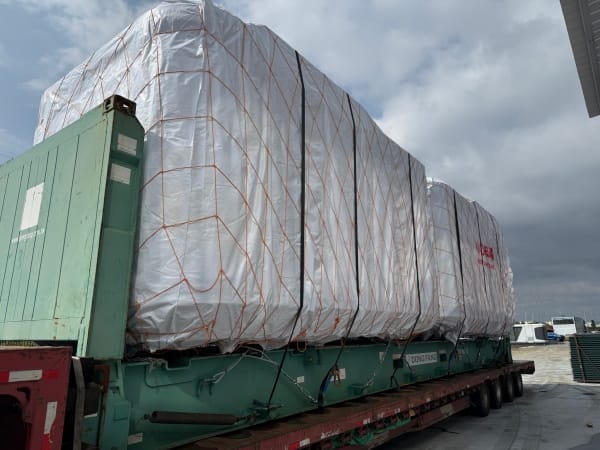
Most capsule homes are too large for standard containers. Instead, they are shipped on flat-rack containers or as break-bulk cargo.
Key Steps for Safe Transport:
-
Check unit weight and lifting points before loading.
-
Use blocking and cribbing underneath for support.
-
Apply cross-lashing with ropes or chains to secure the module.
-
Request a securement plan or third-party survey for extra safety.
4. Port Handoff and Inland Leg
Once the modules arrive at the port, they are transported by truck to your site. Ensure your policy includes a warehouse-to-warehouse clause — this covers the journey from the factory to your final destination.
If not included, add an inland rider for the truck transport. Without it, insurance may end at the port, leaving your inland trip unprotected.
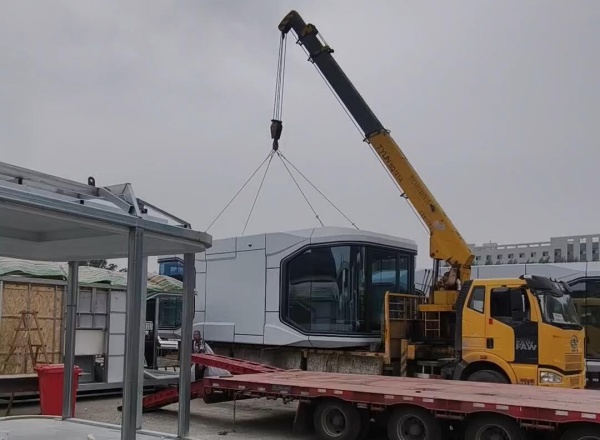
5. Crane Lift and On-Site Placement
Lifting the module with a crane is a high-risk step. During this phase, the module is suspended and vulnerable to damage.
Ensure your contractor carries crane or rigger’s liability insurance and provides:
-
A lift plan explaining safe lifting methods.
-
An insurance certificate showing coverage equal to your module’s full value.
6. Installation and Hookups During Site Work
After placement, your capsule home goes through installation, including foundations, electricity, water, and drainage connections.
-
Builders Risk Insurance: Covers both the module and construction work until completion.
-
Installation Floater: If no central policy exists, contractors can use this to insure materials and equipment until acceptance.
7. After Handover — When Guests Start Staying
Once installed, your capsule house becomes a property requiring standard insurance protection.
-
Property Insurance: Protects the building and its contents.
-
General Liability Insurance: Covers injuries to guests or visitors.
-
Business Interruption Insurance: Covers income loss if an insured event forces a temporary shutdown.
Special Note:
If you rent your capsule for short-term stays or glamping, ensure your policy covers commercial or guest use, as standard homeowner policies often don’t.

Conclusion
Securing your capsule home from factory to final stay requires planning and awareness of each insurance stage — from Incoterms to marine cargo[^1], crane lifts, and guest liability[^2]. By understanding each step, you can confidently protect your investment and avoid costly surprises.
[^1]: Explore this link to understand marine cargo insurance, crucial for protecting your investment during transport.
[^2]: Learn about guest liability insurance to ensure you’re covered for any incidents involving guests in your capsule home.
FAQ
1. What is the best insurance for shipping a capsule home overseas?
Choose marine cargo insurance with ICC A coverage for maximum protection during international shipping.
2. Should I rely on the seller’s insurance?
No. Always specify your preferred insurance level in the contract to avoid weak or incomplete coverage.
3. What happens if my capsule is damaged during lifting?
Ensure your contractor has rigger’s or crane insurance with coverage equal to your capsule’s full value.
4. Is inland transport included in marine cargo insurance?
Only if the policy includes a warehouse-to-warehouse clause. Otherwise, you need an inland rider.
5. What insurance do I need after installation?
You’ll need property, liability, and business interruption insurance, especially for rentals or glamping.