Skip to content
As modern construction evolves, more homeowners and developers are comparing container homes and traditional concrete houses to see which offers the best value, durability, and comfort.
This guide provides a clear, data-driven comparison between the two, covering cost, performance, flexibility, comfort, environmental impact, and market value—helping you make an informed decision based on engineering reality, not trends.
🧱 What Is a Container Home?
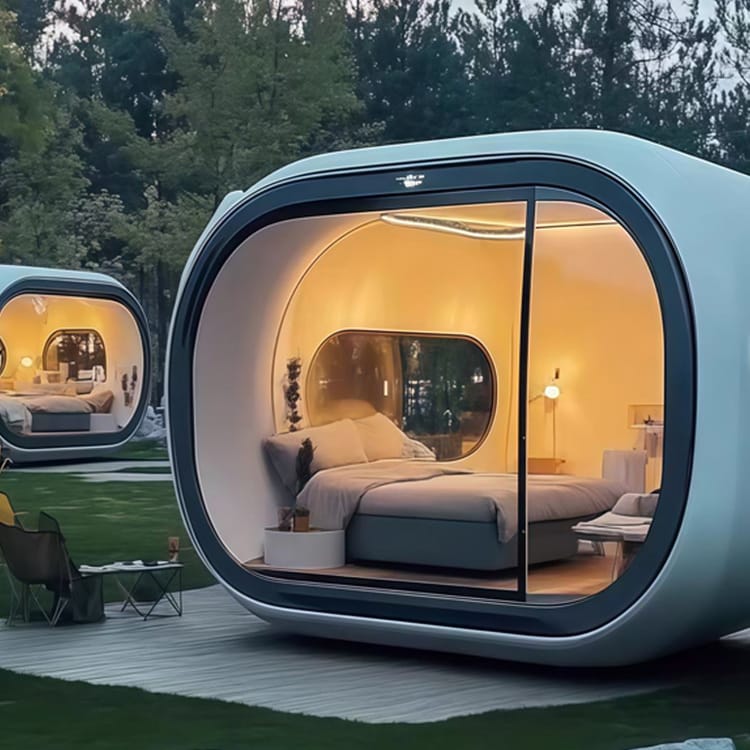
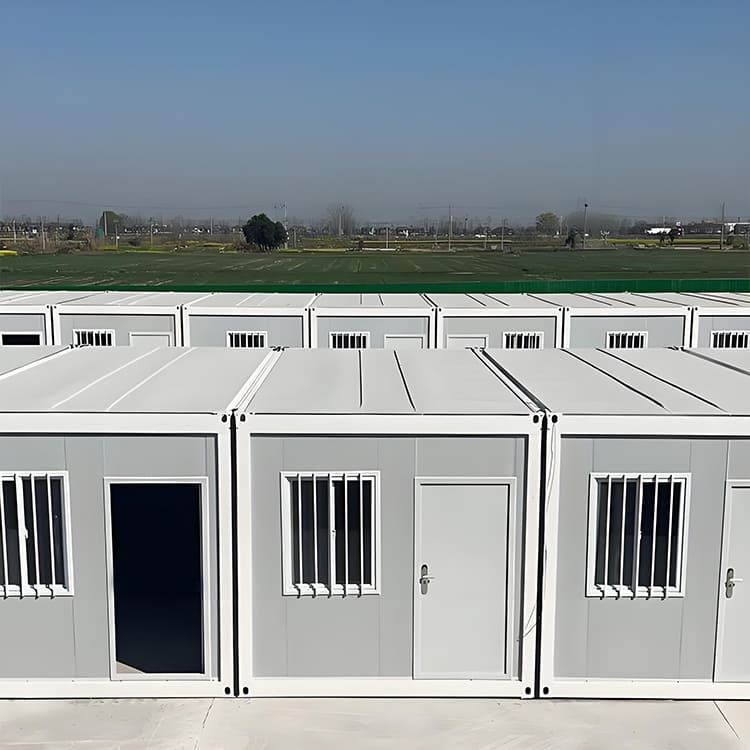
A container house transforms a shipping container into a livable home using its durable steel frame as the main structure. These steel containers, originally built for global transport, are naturally strong, pressure-resistant, and durable.
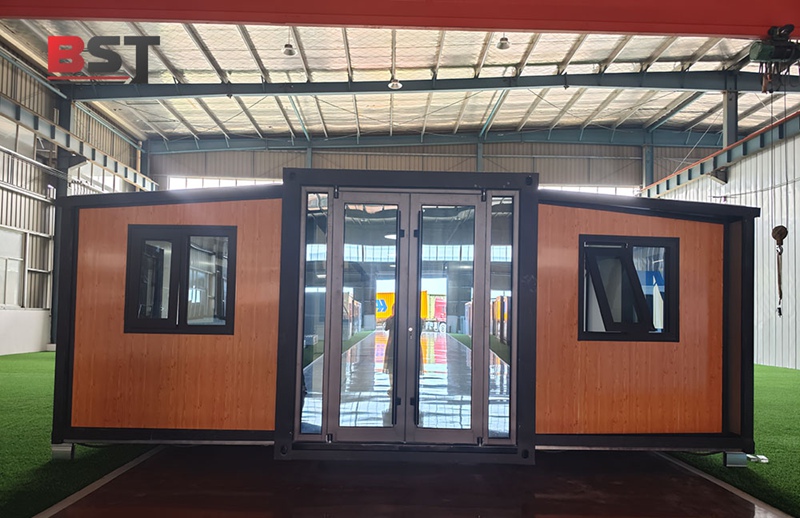
Some container house manufacturers design more types of container homes. For instance, BST, as one reliable Chinese container house manufacturer, draws on over 10 years of manufacturing and design experience. Best Steel Structure, a certified PEB and modular steel structure supplier, explains how factory-built container homes deliver precision, speed, and long-term reliability through advanced engineering and quality-controlled production.
After modification, container homes provide:
- Fast construction
- Design flexibility
- Lower costs
- Sustainable material use
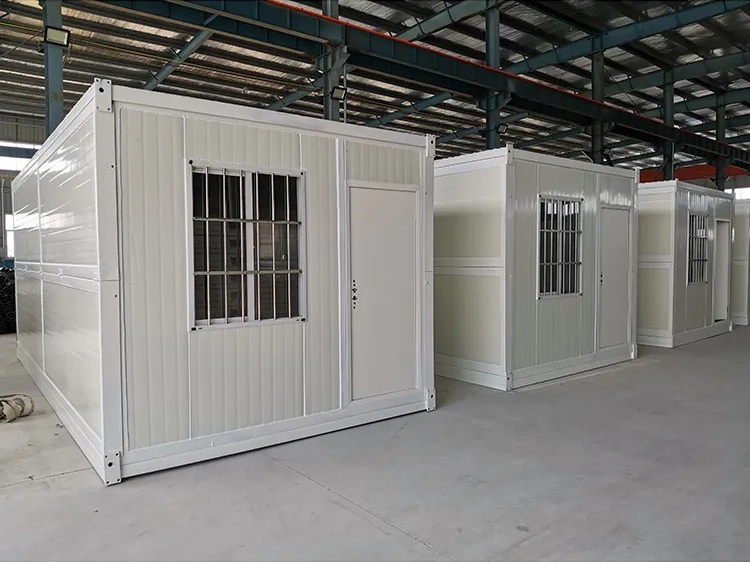
Best Steel Structure reinforces every container house with high-quality galvanized steel, ensuring anti-corrosion, earthquake, and wind resistance that meets ISO and CE standards. This makes container homes suitable for various climates and long-term residential or commercial use.
🏠 What Is a Traditional Home?
Traditional homes are built from masonry, concrete, or wood, often requiring complex engineering, longer construction times, and higher labor costs.
While they offer stability and longevity, their environmental footprint and construction cost are typically higher. It is common to see that the house takes a long time to finish, especially when you add the cost of labor, time, and materials.
Traditional homes also depend heavily on foundations and local codes, making design changes and expansions more challenging.
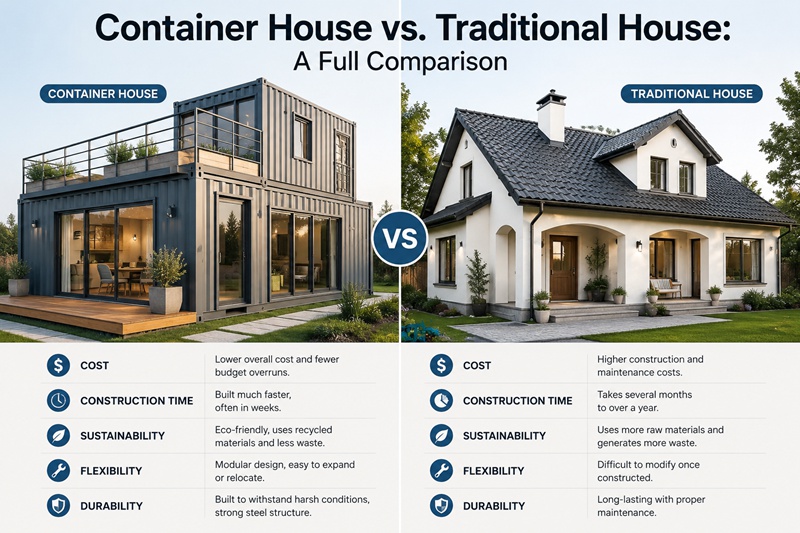
The Comparison of Container Houses and Traditional Homes
1. 💰 Cost Comparison
| Factor | Container House | Traditional House |
|---|---|---|
| Average Cost | 20–30% lower | Higher (materials + labor) |
| Construction Time | 50% faster | Longer due to curing |
| Labor Cost | Minimal (prefab) | High (on-site work) |
| Maintenance | Low (anti-corrosion) | High (foundation, roofing) |
Container homes save both time and money through prefabrication and minimal site disturbance.
Even with high-end finishes, container construction remains more affordable than conventional concrete housing.
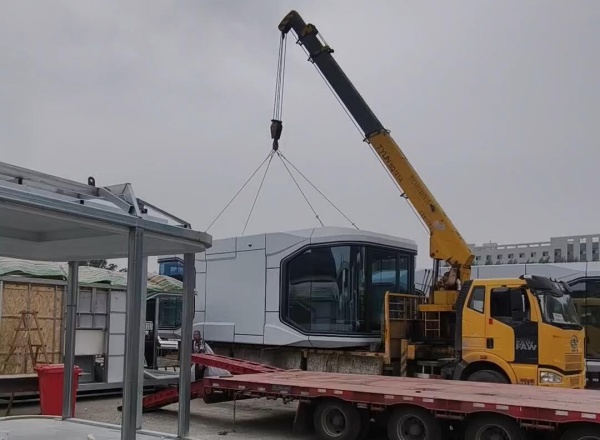
Best Steel Structure’s precision-built modules reduce installation time and guarantee quality consistency — key to lower project costs and faster delivery.
2. ⚙️ Performance and Durability
Lifespan
- Traditional homes: 50+ years (depending on maintenance and materials)
- Container homes: 25–30+ years with anti-corrosion treatment
With galvanized steel frames and protective coatings, container homes can easily maintain structural integrity for decades, even in coastal or humid environments.
Structural Strength
Container homes excel in earthquake and wind resistance due to their flexible steel structure.
Traditional concrete homes, while sturdy, are more rigid and prone to cracking during seismic activity.
Best Steel Structure ensures each unit meets international quality standards (ISO, CE) for weather resistance, safety, and load-bearing performance.
3. 🔩 Material and Sustainability
Traditional construction relies on cement and masonry, which consume high energy and natural resources.
Container homes, on the other hand, use recycled steel containers, promoting eco-friendly construction and reduced carbon emissions.
Best Steel Structure follows ISO environmental standards and employs low-emission fabrication processes, ensuring each project minimizes waste and maximizes material reuse.
| Feature | Container House | Traditional House |
|---|---|---|
| Material Source | Recycled steel | New cement, bricks |
| Resource Use | Minimal | High |
| Carbon Emission | Low | High |
| Recyclability | Excellent | Limited |
4. 🏗️ Design Flexibility and Scalability
Container homes offer modular flexibility — they can be stacked, expanded, or reconfigured with ease.
Traditional houses require extensive structural changes for expansion, making remodeling more expensive.
Best Steel Structure’s modular fabrication system allows clients to create custom layouts, from compact studios to multi-unit housing complexes, all within reduced timelines.
5. 🏡 Comfort and Living Quality
Space
Traditional homes typically offer larger living spaces.
Container houses, while smaller, can maximize every square meter through efficient layouts — ideal for singles, couples, or small families.
Insulation and Acoustics
Container homes originally have thinner walls, but with rock wool or polyurethane panels, they achieve thermal and acoustic performance comparable to concrete homes.
Modern insulation also improves energy efficiency, reducing cooling and heating costs.
6. 🌱 Environmental Impact
Container homes contribute to a circular economy by reusing shipping containers and minimizing waste.
Compared with traditional buildings, they reduce:
- Construction waste
- Energy consumption
- CO₂ emissions
Traditional concrete construction produces significantly more carbon output and material waste.
Best Steel Structure’s green manufacturing process ensures all steel components meet eco-building certifications, aligning with global sustainability goals.
7. 📈 Market Value and Regulations
Resale Value
While traditional homes still dominate the property market, container homes are rapidly gaining recognition.
Resale value depends on:
- Material quality
- Finishing level
- Regulatory acceptance
As more regions adopt prefab housing standards, certified container homes are appreciating faster in value — particularly when built by trusted manufacturers like Best Steel Structure.
Permits and Compliance
Modern modular housing is now accepted under the same building permit categories as steel-structure construction in many regions.
Best Steel Structure helps clients ensure full compliance with local and international standards (ISO, CE, AISC), reducing regulatory risk and ensuring safety.
How Can You Choose Between Container Houses and Traditional Homes?
Compared to traditional homes, container houses offer an option that is more convenient, eco-friendly, energy-efficient, flexible in design, and cost-effective. Surveys indicate that approximately one in seven of 1001 Australians would consider converting shipping containers into homes; given the currently high cost of home construction, container homes are increasingly becoming a preferred choice among the younger generation.
For Business:
Traditional homes offer: Property appreciation and long-term rental income
More suitable: Family living → Long-term rental → Capital appreciation → Mainstream resale
Container houses offer: Short-term rental income + low initial capital + experience premium
More suitable: Airbnb → Eco-retreat → Farm stay → Holiday accommodation → Backyard guest house → Regional tourism
Container homes are unlikely to replace traditional Australian houses—but they can provide a lower-entry-cost alternative for specific residential and tourism applications. If you are interested in container houses, consider that choosing the right and reliable manufacturer is essential.
🧰 Choosing the Right Manufacturer
Based on the differences between container houses and traditional homes, partnering with a certified container house manufacturer is essential for safety, efficiency, and long-term value.
Best Steel Structure provides:
- Factory-direct production
- ISO and CE certification
- Precision fabrication
- Fast installation
- Global delivery
Whether for residential, commercial, or institutional projects, we ensure every modular unit meets your needs for strength, comfort, and sustainability.
✅ Summary
| Category | Winner |
|---|---|
| Cost Efficiency | Container House |
| Durability | Traditional House |
| Construction Speed | Container House |
| Design Flexibility | Container House |
| Comfort (Insulation) | Traditional House |
| Eco-Friendliness | Container House |
| Long-Term Value | Depends on location & regulation |
In summary, container houses excel in affordability, flexibility, and sustainability, while traditional houses still lead in comfort and long-term perception.
For most modern developers, container homes offer a balanced, future-ready solution that merges speed, strength, and eco-conscious design.
❓ FAQ
1. Are container houses safe to live in?
Yes. When built with certified steel and proper insulation, container homes are as safe and durable as traditional buildings.
2. How long does a container house last?
With high-quality coatings and regular maintenance, they can last 30 years or more.
3. Can container houses handle extreme weather?
Yes. Reinforced steel structures provide excellent wind and earthquake resistance.
4. Are container houses cheaper than traditional homes?
On average, container homes cost 20–30% less, with faster completion times.
5. Can container homes be customized?
Absolutely. Modular design allows easy expansion and personalized layouts.