Skip to content
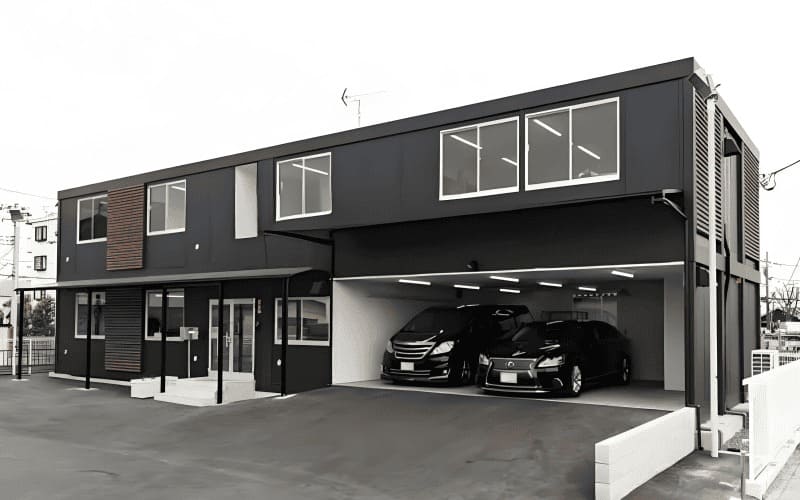
Short answer: yes. Most steel garages require footings to distribute the structure’s weight into the ground, prevent settling, and meet local building codes — especially in poor soil, cold climates, or seismic zones. Skipping them, even on a “small” garage, is one of the most common causes of uneven doors, cracked slabs, and structural failure down the line.
This guide covers what footings actually do, how soil and climate change your design, which footing type fits your project, and the specifications your build needs to meet before you pour concrete.
Footings vs. Foundation: What’s the Difference
The two terms get used interchangeably, but they describe different parts of the structure:
| Function | |
|---|---|
| Footing | The base layer in direct contact with soil — spreads the building’s load into the ground and sits below the frost line |
| Foundation | The structure built above the footing (walls, slab) that transfers the building’s overall weight down to the footings |
Steel garages transmit weight through point loads at their support columns, rather than spreading it evenly along a continuous wall the way a wood-framed structure does. Without a properly sized footing under each column, that concentrated load compresses the soil unevenly, and cracking or tilting follows.
Do You Actually Need Footings? When They’re Non-Negotiable
Footings become essential — not optional — in these situations:
- Larger or heavier garages, especially ones storing vehicles or heavy equipment, where the load needs to be distributed to avoid ground settlement
- Soft, loose, or moist soil, which has low bearing capacity and will shift or sink under a structure without a stable base
- Local building codes, which frequently mandate permanent footings for enclosed steel structures in frost-prone or seismic regions
Common misconception: small garages don’t need footings. In practice, a smaller structure is just as vulnerable to uneven settling — it’s the soil and load conditions that determine the requirement, not the garage’s footprint alone.
How Soil and Climate Change Your Footing Design
Soil type and climate are the two variables that most affect footing depth, width, and reinforcement.
Unstable or Soft Soil
Soft, sandy, or loose soil has lower bearing capacity, which increases the risk of tilting or uneven settlement. Standard adjustments:
- Increase footing depth to 18–24 inches to reach more stable soil layers
- Widen the base — strip or slab footings distribute load over a larger area than a narrow footing can
- Stabilize the ground beforehand through compaction, or use deep/pile footings where the unstable layer is too thick to dig through economically
Frost Heave in Cold Climates
In freezing climates, soil expands as it freezes, which can push a shallow footing upward — known as frost heave — and crack or shift the structure above it. Standard mitigation:
- Bury footings below the local frost line, typically at least 36 inches in cold regions (check your local frost-depth requirement — it varies by jurisdiction)
- Add reinforcement (rebar or mesh) to resist the tensile stress frost movement creates
- Install drainage to keep water from pooling and saturating the soil around the footing, which worsens both heave and long-term erosion
Footing Types for Steel Garages
| Type | Description | Best For |
|---|---|---|
| Strip footing | Continuous concrete run beneath load-bearing walls | Standard garages with even, linear loads |
| Isolated footing | Individual footing under each column | Larger garages with multiple structural columns |
| Slab-on-grade | A single concrete slab serving as both floor and footing | Stable, level sites without soil concerns |
| Deep footing | Extends well below grade to reach a stable soil layer | Soft or unstable soil where surface layers won’t bear the load |
Matching type to project: seismic zones generally call for reinforced isolated footings rather than a simple slab; flat, stable sites can often use slab-on-grade without extra engineering. The deciding factors are always load and soil condition together — treating them separately is what leads to under-designed footings.
Steel Garage Footing Requirements
| Requirement | Specification | Purpose |
|---|---|---|
| Depth | Minimum 12 inches; 18–24+ inches for larger garages or cold climates | Reach stable bearing soil, resist heave |
| Reinforcement | Steel rebar or mesh | Prevents cracking under tensile stress |
| Concrete strength | 2,500 psi minimum; 4,000 psi for heavier structures | Adequate load-bearing capacity |
| Freeze protection | Below the local frost line | Prevents frost-heave damage |
| Drainage | Grade sloped away from the structure | Prevents water pooling and long-term erosion |
Important clarification: a concrete slab alone is not a substitute for footings. A slab provides a floor surface, but it isn’t engineered to bear structural column loads the way a properly sized footing is — this is one of the most common (and costly) planning mistakes on prefab steel garage projects.
How to Plan Your Footings, Step by Step
- Consult a structural engineer or qualified contractor — they’ll evaluate your soil and design footings that meet local code, rather than relying on generic depth rules
- Get a soil test — this determines bearing capacity and directly dictates footing depth and type; skipping this step is the single most common cause of later instability
- Calculate your garage’s load — heavier structures and larger spans need deeper, more reinforced footings
- Check local building codes — frost depth, seismic requirements, and permitting rules vary significantly by jurisdiction
- Budget for excavation and cure time — footing installation typically takes 3–7 days including excavation, pouring, and curing, and this timeline needs to be built into your overall project schedule, not treated as an afterthought
FAQ
Can a concrete slab replace footings? No. A slab provides a floor but isn’t engineered to carry structural loads the way a footing is. Steel garages still need separate footings beneath load-bearing points even when a slab is also poured.
How deep should footings be? At least 12 inches for small garages; 18–24 inches or more for larger structures or cold climates where frost depth requirements apply.
What happens if I skip footings? You risk uneven settling, cracked concrete, misaligned doors, and in serious cases, structural failure — problems that are far more expensive to fix after the fact than to prevent at the planning stage.
Do I need a soil test before building? Yes. A professional soil test is what determines the correct footing depth and type for your specific site — without it, you’re essentially guessing at a load-bearing calculation.
How long does footing installation take? Usually 3–7 days total, covering excavation, concrete pouring, and curing time before construction can continue.
Can prefab steel garages use standard footings? Yes — most prefab garage designs specify standard concrete footing requirements based on the unit’s size and the site’s soil conditions, which your supplier or contractor can confirm during planning.
Planning a steel garage and need footing specifications for your unit size and region? Contact us for a project-specific recommendation.