Skip to content
Steel crane beams are a core component in many industrial buildings. They not only support the crane system but also affect the efficiency and safety of daily operations.
In this guide, we’ll explain what crane beams are, their functions, key design considerations, beam types, and how to choose the right one for your project.
📌 What is a Steel Structure Crane Beam?
A steel crane beam is a structural beam made of steel, designed to support and guide the movement of overhead cranes in industrial facilities such as warehouses, workshops, and manufacturing plants.
By carrying heavy loads and reducing manual labor risks, crane beams directly impact production efficiency and workplace safety.
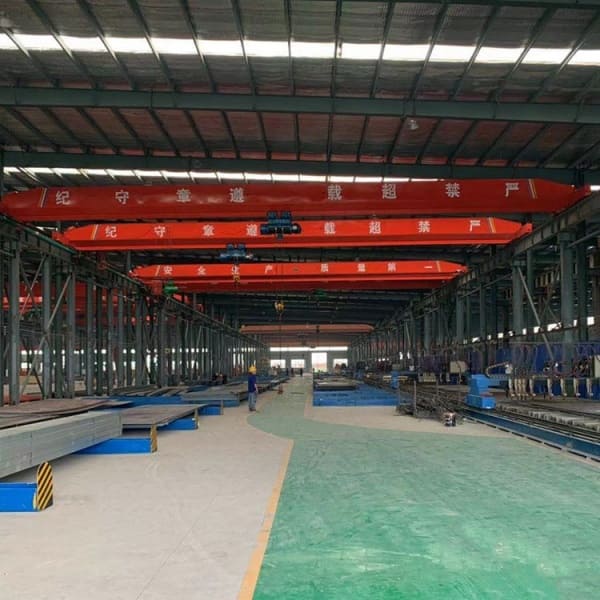
⚙️ Functions of Crane Beams
The main role of crane beams is to:
-
Support the operation of cranes.
-
Transfer loads safely from hooks to beams.
-
Maintain stability under heavy weights.
-
Prevent deformation or tilting.
Most crane beams use a simple support design, which ensures stability, lowers costs, and simplifies installation and maintenance.
✅ Benefits of Steel Structure Crane Beams
🔎 Types of Steel Structure Crane Beams
Choosing the right beam type ensures safe, stable, and efficient crane operations. Here are the main options:
-
Hot-Rolled H-Beams
-
Simple structure, quick to construct.
-
Best for light loads and short spans.
-
-
Welded H-Beams
-
Built from welded steel plates.
-
Customizable, higher load capacity.
-
Suitable for medium spans and heavier loads.
-
-
Box Girder Beams
-
Hollow box-like structure.
-
Excellent bending and torsional resistance.
-
Ideal for large spans and heavy-duty use.
-
-
Crane Trusses
-
Made of interconnected triangular elements.
-
Lightweight yet strong.
-
Efficient for large-scale crane systems.
-
📊 Advantages and Disadvantages of Crane Beams
| Beam Type | Advantages | Disadvantages |
|---|---|---|
| Hot-Rolled H-Beams | Simple structure, quick build, low cost. | Not suitable for large spans or heavy loads. |
| Welded H-Beams | Customizable, strong load capacity. | Higher fabrication and installation costs. |
| Box Girder Beams | High strength, excellent resistance to bending/torsion. | Expensive, complex to fabricate and transport. |
🏗️ How to Choose the Right Crane Beam
When selecting a crane beam, consider:
-
Production Needs: Heavy environments require welded H-beams or box girders, while lighter tasks can use hot-rolled H-beams.
-
Environmental Conditions: For high humidity or corrosive environments, choose corrosion-resistant steel or apply protective coatings.
-
Steel Grades:
-
Q235 → light loads
-
Q345 → medium loads
-
S355 → heavy-duty with strong impact resistance
-
ASTM A572 Gr.50 → strength + weldability
-
42CrMo alloy steel → extra-tough for high-stress use
-
📏 Tolerance Standards for Crane Beams
Typical tolerances include:
-
Length: ±3 mm – ±10 mm
-
Width/Height: ±2 mm – ±5 mm
-
Flatness: 2–5 mm per meter
-
Squareness: 1–2 mm along length
-
Thickness: ±0.5 – ±1.5 mm
Our crane beams meet or exceed these standards to ensure safe and long-lasting performance.
🔨 Installation & Maintenance
Installation Steps
-
Prepare foundation and site.
-
Position beams with lifting equipment.
-
Secure with bolts or welding.
-
Check alignment carefully.
-
Follow strict safety protocols.
Maintenance Tips
-
Perform routine inspections.
-
Apply protective coatings.
-
Retighten bolts when necessary.
-
Conduct fatigue and load tests regularly.
Regular upkeep extends service life and keeps crane systems safe.
🏭 Steel Structure Buildings with Crane Beams
We design and supply steel crane buildings for industries such as:
-
Fabrication shops
-
Warehouses
-
Processing & manufacturing plants
-
Power plants
-
Automotive factories
-
Large-span industrial buildings
Whether you need higher lifting capacity or more efficient operations, our solutions are tailored to your business.