Skip to content
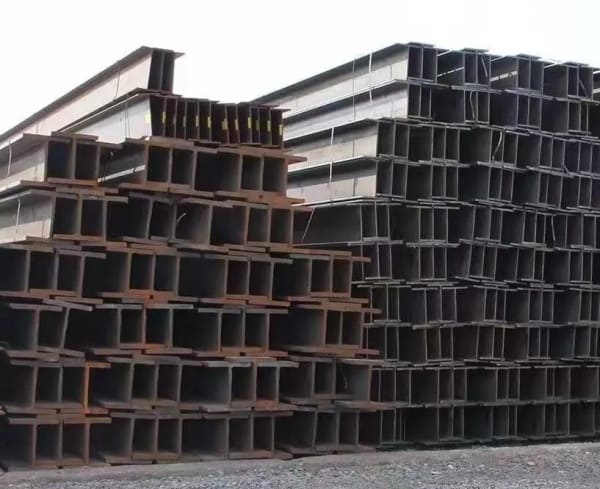
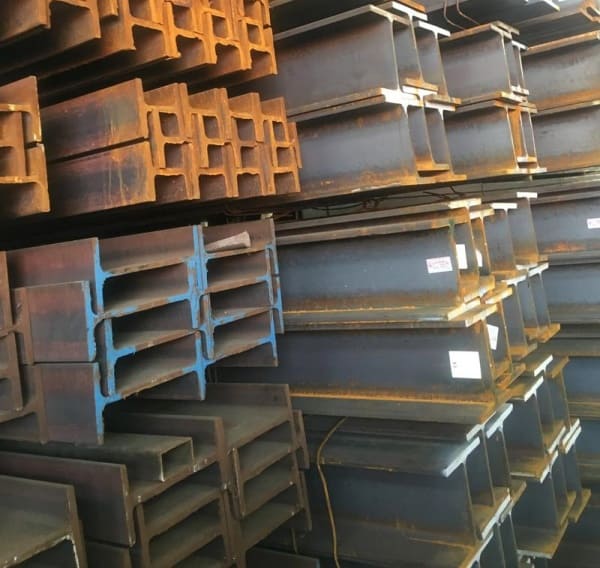
H Beam Steel is one of the most widely used structural components in modern construction and PEB (Pre-Engineered Buildings). With its distinctive H-shaped profile, it provides high strength, stability, and cost efficiency. From warehouses and industrial plants to bridges and high-rise buildings, H Beams ensure durability and performance.
In this guide, you’ll learn:
-
What an H Beam is and how it differs from I Beams.
-
Applications of H Beams in primary and secondary support.
-
Key advantages like load-bearing capacity and buckling resistance.
-
Standard sizes from 100×100 mm to 300×300 mm.
-
When to choose H Beams vs I Beams.
-
How to select the right structural beam for your project.
Best Steel Structure, a certified steel structures manufacturer, provides factory-direct H Beams with ISO and CE certifications. With 1,000+ global projects, we deliver both technical expertise and cost-effective solutions.
What is an H Beam?
In structural engineering, a beam is a horizontal load-bearing member that transfers weight across spans. An H Beam, also known as a wide flange beam, has a cross-section shaped like the letter H.
Key Features of H Beams:
-
Wide horizontal flanges – better load distribution.
-
Thick vertical web – stronger shear resistance.
-
Stable design – resists bending and buckling.

Manufacturing: H Beams are produced by rolling or welding, ensuring precision and durability, making them ideal for industrial and heavy-duty projects.
Applications of H Beams in Steel Structures
Thanks to their strength and stability, H Beams are used in both primary and secondary structural support.
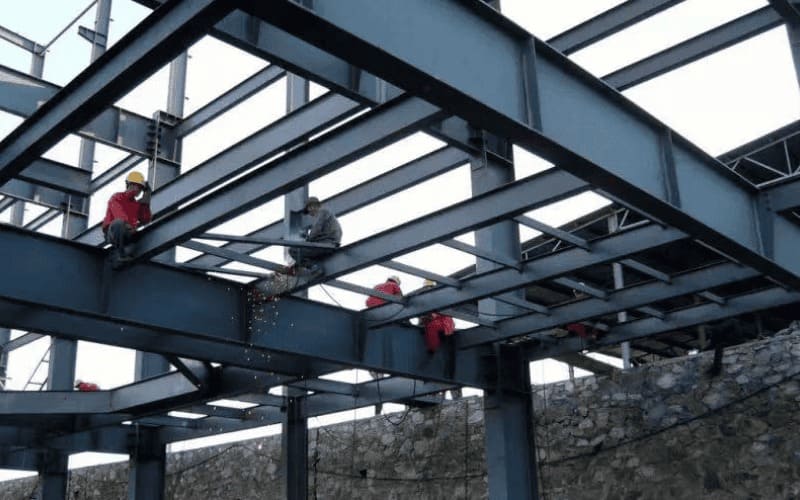
Primary Support
-
Vertical Columns – framework of high-rise buildings.
-
Primary Girders – bridges, crane runways.
-
Main Framework – warehouses, factories.
Secondary Support
-
Floor Beams – transfer slab loads to columns.
-
Bracing Elements – improve wind and seismic resistance.
-
Roof Trusses – large-span roofs in industrial buildings.
-
Mezzanine Floors – add space without compromising stability.
Best Steel Structure supplies factory-direct H Beams, customized to project-specific requirements, ensuring compliance with ISO/CE standards.
Advantages of H Beams in Steel Structures
| Advantage | Description |
|---|---|
| High Strength-to-Weight | Supports heavy loads efficiently |
| Wide Flange Design | Even load distribution |
| Buckling Resistance | Stability in tall and long-span structures |
| Versatility | Columns, beams, bracing, roof trusses |
| Easy Installation | Standardized shapes, efficient fabrication |
| Cost Efficiency | Long service life, lower maintenance costs |
Choosing H Beams from Best Steel Structure guarantees these benefits plus certified quality and wholesale pricing.

Common Standard Sizes of H Beams
| H-Beam Size | Typical Application |
|---|---|
| 100 × 100 mm | 1-storey houses, small structures |
| 150 × 150 mm | Light industrial, residential buildings |
| 200 × 200 mm | Warehouses, medium commercial facilities |
| 300 × 300 mm | Bridges, high-rise, industrial plants |
Small beams (100×100 mm) suit residential projects, while large beams (300×300 mm) are used in bridges and factories.

Other Common Types of Steel Beams
Besides H Beams, other beam types include:
-
I-Beam – narrower flanges, used in residential/light structures.
-
W-Beam – variant of H Beam, for heavy construction.
-
C-Beam (Channel) – C-shaped, used for frames and supports.
-
T-Beam – T-shaped, common in bridges and floor systems.
Best Steel Structure provides a complete steel beam supply solution, covering H, I, C, and T beams for diverse projects.
H Beam vs I Beam: Key Differences
| Feature | H Beam | I Beam |
|---|---|---|
| Cross-Section | H-shape, wide flanges | I-shape, narrow flanges |
| Flange Width | Wider, better load distribution | Narrower, vertical load focus |
| Load Capacity | High, vertical & horizontal loads | Moderate, vertical loads only |
| Buckling Resistance | Strong, stable for long spans | Weaker, may need reinforcement |
| Applications | Bridges, high-rises, PEB structures | Houses, light commercial |
| Cost Efficiency | Economical for large projects | Lower cost for small projects |
👉 For PEB and heavy-duty projects, H Beams are recommended due to their superior capacity.
How to Choose the Right Structural Beam
-
Heavy-duty projects (bridges, warehouses, PEB): choose H Beam.
-
Light projects (residential, small commercial): choose I Beam.
-
Special needs (flooring, frames, connections): use C Beam or T Beam.
Best Steel Structure engineers help clients select the right beam and supply it factory-direct with ISO/CE certification.
FAQ
Q1: What does “beam” mean in construction?
A beam is a horizontal load-bearing element. H Beams are among the strongest, widely used in PEB and industrial projects.
Q2: What sizes of H Beams are available?
Common sizes: 100×100, 150×150, 200×200, 300×300 mm. Custom sizes available.
Q3: Which H Beam size is best for a 1-storey building?
Typically 100–150 mm H Beams, depending on design load.
Q4: What’s the difference between H Beam and I Beam?
-
H Beam: wider flanges, stronger, for heavy-duty use.
-
I Beam: narrower, lighter, for residential/light structures.
📌 Final CTA
Tell us your project needs—Best Steel Structure will recommend the right beam and provide factory-direct pricing with certified quality.