Skip to content
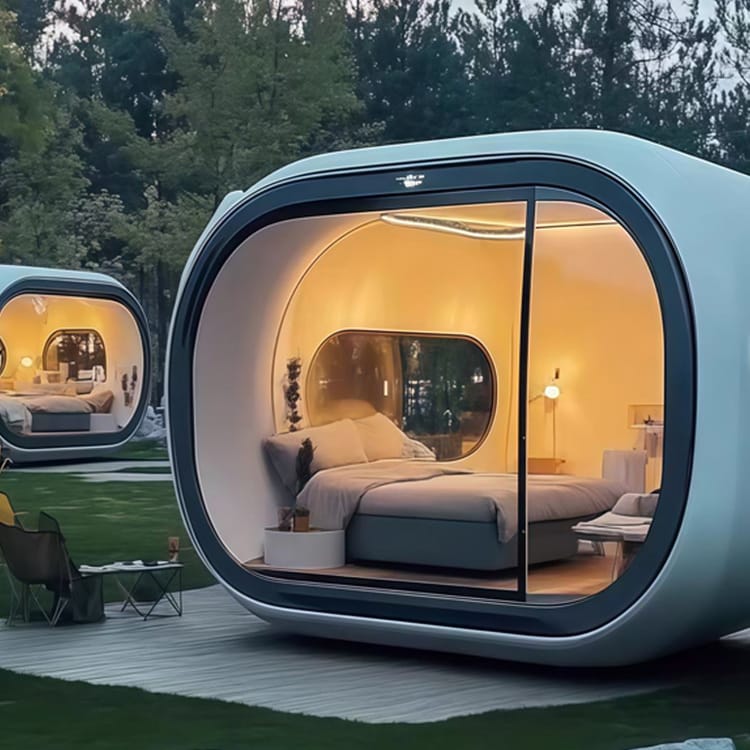
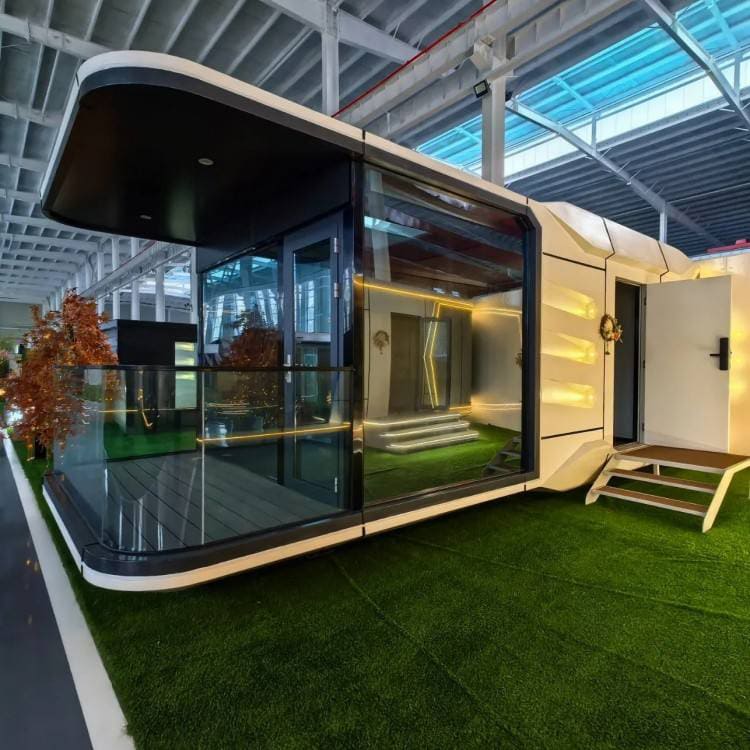
Capsule houses, also known as space pods or bean-shaped homes, are compact, modular living units designed for modern urban lifestyles. Typically under 500 sq. ft. (≈46 m²), they combine futuristic design, multifunctional interiors, and smart systems with prefabricated construction for fast installation.
These homes are popular in China, Japan, and other regions for residential, vacation, and commercial use due to affordability (starting around $4,800), portability, and quick assembly.
Understanding the lifespan of a capsule house is crucial before purchase, as durability depends on materials, environment, construction, and maintenance.
What is a Capsule House?
A capsule house is a prefabricated modular unit ideal for individuals or small families. Inspired by aerospace engineering, the design maximizes space efficiency while offering comfort and functionality.
Key Design Principles:
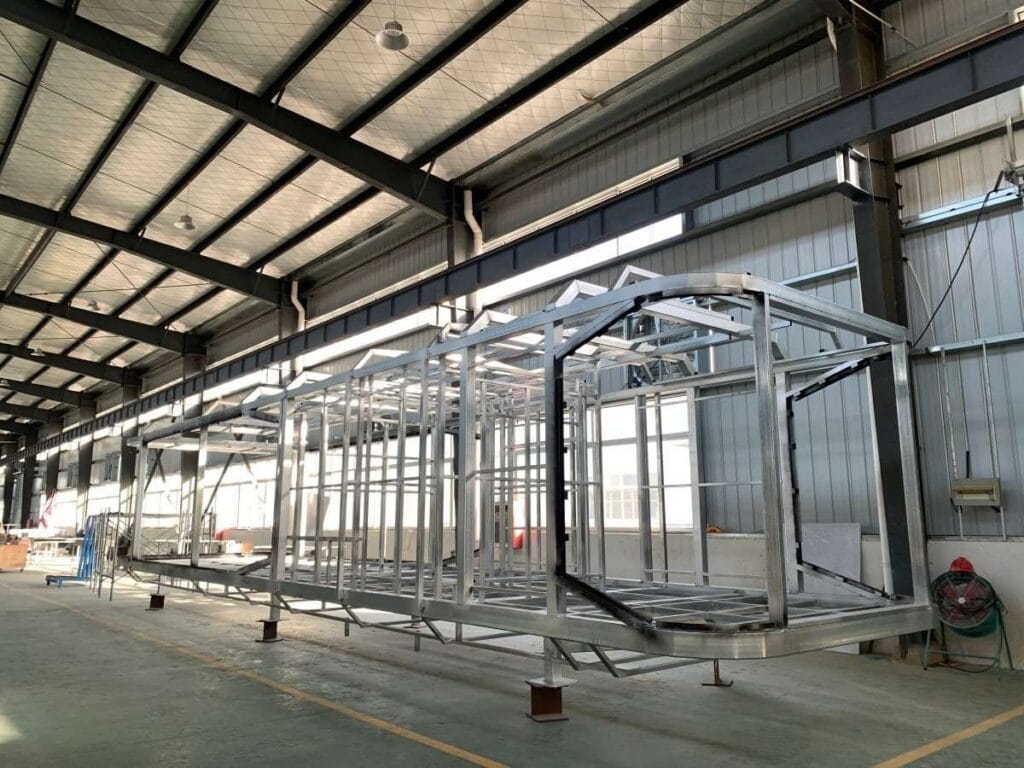
- Modular Structure: Steel frames and aluminum panels are pre-assembled in factories for fast on-site construction, easy transportation, and simple part replacement.
- Integrated Smart Systems: IoT sensors monitor temperature, humidity, and energy usage, enabling predictive maintenance.
- Sustainable Materials: Eco-friendly composites, solar panels, and low-impact coatings reduce environmental footprint and long-term costs.
Limitations: Compact design may compromise privacy; larger families may feel cramped. Improper stacking or modifications can introduce structural risks.

Materials Matter: How They Determine Lifespan
The durability of a capsule house largely depends on the materials used:
| Material Type | Characteristics | Lifespan Impact |
|---|---|---|
| Aerospace-grade aluminum (6061-T6) | Corrosion-resistant; retains 95% strength after 10 years | Long-lasting in harsh climates |
| Carbon fiber composites | UV & acid-resistant; <3% degradation after 20 years | Excellent durability |
| Fireproof & advanced coatings | Exterior Class A, interior Class B1 | Enhances safety, lowers maintenance |
| Low-quality metals/plastics | Faster wear | Lifespan may be <20 years |
High-quality capsule houses can withstand winds up to 70 m/s and 9-magnitude earthquakes, ensuring long-term reliability.
Estimated Lifespan
| Source | Lifespan | Notes |
|---|---|---|
| Manufacturers | 30–60 years | Comparable to traditional homes with proper upkeep |
| Prefab Experts | 30–50 years | Similar to site-built houses if maintained |
| Modular Specialists | 50–80 years | Pre-major renovation usage; some offer 10–25 year warranty |
| EU Standards (EN 16479) | ≥25 years | Baseline design lifespan |
| Historical Case: Nakagin Capsule Tower | ~50 years | Lack of modular replacement led to demolition |
Key Factors Affecting Lifespan:
- Environmental Exposure: Extreme cold, heat, or coastal air can reduce lifespan to 15–30 years without protection.
- Construction Quality & Compliance: Prefabrication reduces defects but modules must meet local building codes.
- Maintenance Frequency & Quality: Regular care like sealing walls, inspecting joints, and system checks is critical. Neglect can halve lifespan.
- Modular Design & Innovation: Replaceable components maintain 85% performance after 18 years.
Maintenance Tips for Longer Lifespan
- Seasonal Maintenance: Re-seal wall joints in spring, clean gutters before rain.
- System Maintenance: Replace HVAC filters quarterly; check sensors.
- Structural & Exterior Care: Repaint exterior every 6–8 years; avoid unapproved modifications.
- Special Environments: Apply extra anti-corrosion treatment in high-humidity or coastal areas.
Emerging self-healing materials reduce maintenance costs and improve durability.
Drawbacks & Considerations
- Limited space for multiple occupants.
- Structural risks if modified beyond design specifications.
- Durability heavily depends on manufacturer quality and real-life maintenance practices.
User Insights:
- Supporters praise cost-effectiveness and long-term reliability.
- Critics highlight small living space and modification risks.
Historical Insight: Nakagin Capsule Tower (Japan, 1972–2022)
- Modular units designed for 25 years; parts were replaceable.
- Lack of maintenance caused corrosion, leaks, and asbestos issues.
- Demolished after 50 years, demonstrating that modular design only extends lifespan with proper upkeep.
Conclusion
How long do capsule houses last?
With high-quality materials, proper maintenance, and adherence to building standards, capsule houses can last 25–80 years.
To maximize lifespan:
- Choose reputable manufacturers
- Follow modular maintenance protocols
- Use durable, high-grade materials
When cared for properly, capsule houses provide a modern, sustainable, and long-lasting housing solution for urban and modular living.